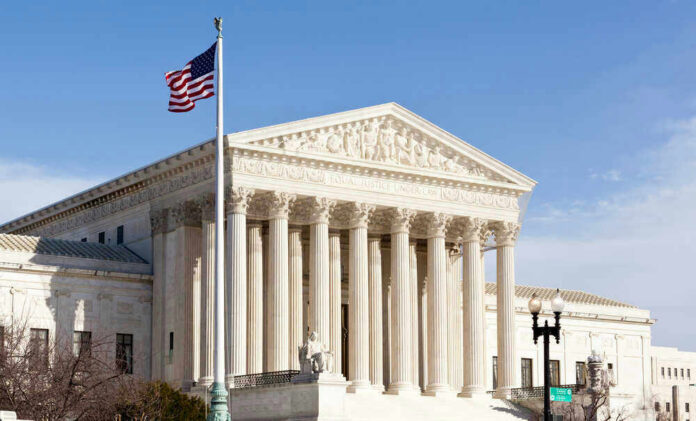
The Supreme Court’s stay keeps the federal voter-citizenship checks alive for November—and that changes everything.
Story Snapshot
- The Supreme Court stayed a lower-court block, allowing the program to run for now.
- States may use the Department of Homeland Security system to verify voter citizenship before the election.
- Dissenters warn the tool can mislabel lawful voters and violate privacy laws.
- The core fight pits election integrity aims against risks of false matches and bureaucratic overreach.
What the Court Allowed, Plain and Simple
The Supreme Court issued an emergency stay that paused a June district court order. That order had blocked the Department of Homeland Security from using its modified database for voter checks.
The stay means the government can keep running the tool while the appeal moves forward. The Cornell Law entry states the lower-court order “is stayed pending the disposition of appeal,” which is decisive for pre-election timelines. The order does not end the case. It sets the rules for now.
BREAKING: The Supreme Court allowed the Trump administration to resume its expanded voter citizenship verification program, which lets states use Social Security records to check voters' citizenship. Justices Sotomayor, Kagan, and Jackson dissented. pic.twitter.com/jEhmk13Om2
— SCOTUS Wire (@scotus_wire) September 25, 2026
Major outlets report that states can, for the time being, query the Department of Homeland Security’s Systematic Alien Verification for Entitlements to verify citizenship on voter rolls. The decision gives President Trump’s team a clear, if temporary, victory heading toward the midterms.
The Court’s three liberal justices dissented, urging caution about possible harm to eligible voters. The legal fight will continue in the appeals court, where hard questions about privacy laws and process will be central.
Why States Want It, and What It Actually Does
State election officials want a fast way to confirm whether a registered voter is a citizen. The Department of Homeland Security built the Systematic Alien Verification for Entitlements decades ago to check noncitizen status for public benefits.
The agency linked it with Social Security records and expanded its use so states could run voter-roll checks at scale.
Supporters say the federal government must answer lawful state data requests and help block noncitizen voting, which remains a red-line integrity issue for many Americans.
Backers argue that modern elections demand better data. They say states face tight deadlines and must keep rolls accurate without guesswork.
They see the Department of Homeland Security system as a single place to confirm records that would otherwise take longer to piece together.
They also note that the Supreme Court’s stay suggests the justices weighed the government’s claimed harms from being blocked more heavily than the challengers’ claims of voter harm at this interim stage.
The Legal Clash: Privacy, Process, and Power
Judge Sparkle Sooknanan had ruled that the overhaul broke several federal privacy and administrative laws and went beyond agency authority.
The order said the program risked wrongful challenges to lawful voters, especially naturalized citizens, due to stale or mismatched data.
Civil-liberties groups sued, saying the system was built for benefits checks, not elections, and that bulk voter queries stretch the law and common sense. They point to alleged flaws in Social Security data for citizenship as a weak link.
On the other side, the administration and its allies argue Congress set a clear role for federal agencies to share status information with states. They claim the tools now align with that duty and come with safeguards and error reviews.
A Florida judge also disagreed with the June ruling and ordered access for several states, showing real division among jurists about how privacy laws apply to this kind of election use case. That split sets up a high-stakes appellate test.
The Real-World Risk: False Positives vs. Clean Rolls
Critics warn that database matching can fire off “false positives,” sweeping in citizens who share names or birthdates with noncitizens, or whose records lag after naturalization. They worry that voters could be removed or forced to prove citizenship again under tight timelines.
A dissent from the Supreme Court’s order stressed those harms as both likely and hard to unwind after an election. Supporters answer that careful review, notice, and appeals can fix mistakes before anyone loses a vote.
📷📷Supreme Court lets Trump administration use revamped federal voter eligibility database for nowThe Supreme Court on Friday lifted restrictions on a controversial federal voter database before November’s election… pic.twitter.com/Y0o63TvZ6Q
— joe t (@jtinaglia) September 28, 2026
The government’s case is stronger today because the Supreme Court agreed the program should keep running while judges sort the details. The integrity goal is clear and legitimate.
But common sense also says the state should measure twice and cut once. If officials use the data with strict due process and transparent error checks, they can protect both the ballot and the citizen.
Sources:
law.cornell.edu, pbs.org, apnews.com, npr.org, bbc.com, theguardian.com, cbsnews.com, democracydocket.com, politico.com