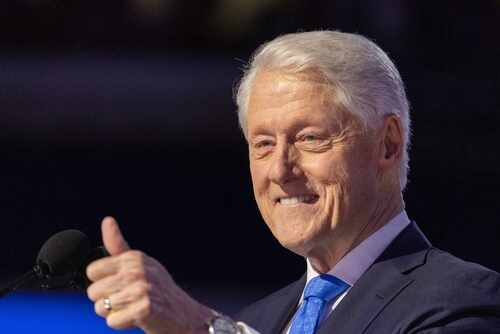
Bill Clinton mocked President Trump’s monument-and-branding streak as small-ball leadership that misses the country’s real needs.
Story Snapshot
- Clinton used his foundation’s summit to lampoon Trump’s triumphal arch and naming fights.
- Trump says the arch doubles as a security hub with drones and snipers, by military request.
- A federal judge blocked efforts to slap Trump’s name on the Kennedy Center.
- This clash shows how symbols steer agendas and drown out policy work.
Clinton’s Swipe: “Hard to Make Up”
Bill Clinton opened the Clinton Global Initiative in New York with a pointed riff. He tied Trump’s push for a Washington triumphal arch and a fight over the Kennedy Center’s name to a trend he called “majoring in the minors.”
He joked that he could spend his whole speech on the “self-evident wisdom” of building an Arc de Triomphe to store drones, then added, “Some of this stuff — it’s hard to make up”. He framed these choices as misplaced priorities, not one-off oddities.
Clinton’s case lands because it pairs spectacle with stakes. The Kennedy Center clash is not a Twitter spat; courts weighed in.
A federal judge ordered the John F. Kennedy Center for the Performing Arts to remove Trump’s name from the facade and blocked actions tied to a major renovation, citing the statute that designates it as the nation’s memorial to John F. Kennedy. That ruling cut through political noise and forced a pause grounded in law.
"Some days I can hardly believe what is happening in this country that I love so much."
Bill Clinton takes direct aim at President Trump, accusing those in power of creating "one set of rules for themselves and another set for everyone else."
The former president goes further,… pic.twitter.com/PnB0VmuBOd
— Fox News (@FoxNews) September 22, 2026
Trump’s Rationale: Security and Grandeur
Trump promoted the arch as both symbol and shield. He said he agreed, at the request of the United States military, to convert the project into a “top grade” military complex that could house drones and station snipers on the roof and plaza areas for national security.
Supporters pitched the design as a world-class work that honors Arlington National Cemetery and suits a global capital’s stature. The administration also acknowledged the site would bring “adverse effects” to nearby views, but called the location central to the plan.
These claims deserve a clear read. The security pitch names concrete capabilities and a military nudge, which gives it weight. Yet grandeur is not a plan by itself.
The legal guardrails around the Kennedy Center show Congress, not a board or a president, controls names on certain national memorials.
A court’s order carried the day, not a press release. That should guide how far any White House can go on cultural branding without legislators.
Why Symbols Keep Winning
Fights over arches and building names can feel petty. They are not. Political science research shows that naming and framing set what journalists cover and what lawmakers debate. A president who defines the stage shapes the headlines and, often, the agenda that follows.
That dynamic explains why cultural markers become power tools. Clinton warned that when leaders chase theater, real issues get crowded out. Common sense says secure borders, safe streets, and lower prices beat vanity projects every time.
Many may shrug at Clinton’s sermon, given his own baggage. Fair enough. But the facts at hand carry their own test. The court record on the Kennedy Center is firm, and the administration’s own documents admit scenic harms from the arch site.
Meanwhile, Trump’s security case rests on a single, sweeping post and supportive statements, not a transparent plan with timelines and trade-offs in the open record. On balance, Clinton’s “majoring in the minors” charge tracks with what the paper trail shows.
Sources:
abcnews.com, thehill.com, radaronline.com, politico.com, www1.ku.de, en.wikipedia.org