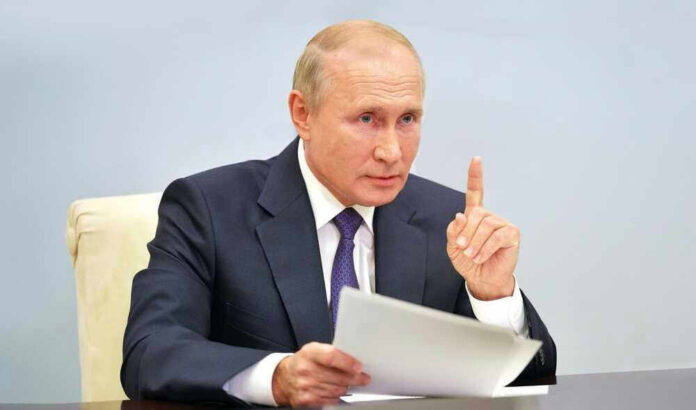
Russia released 74-year-old American Stephen Hubbard after more than four years in custody, and the handoff happened as a U.S. envoy sat with Vladimir Putin.
Story Snapshot
- Businessman Steve Witkoff confirmed Hubbard’s release during a meeting with Putin.
- Putin said Hubbard was taken to Pulkovo Airport in St. Petersburg after release.
- Hubbard is a retired Michigan teacher whom the State Department labeled wrongfully detained.
- President Trump said he pressed Putin on the case before Witkoff’s visit.
What Happened And Who Said What
Steve Witkoff, a private envoy who met Putin in St. Petersburg, said Russia released Stephen Hubbard during their meeting. Major outlets reported his on-the-record confirmation. Russian state media echoed the news and carried Putin’s statement. Putin said authorities took Hubbard to Pulkovo Airport after the release, which set the location and timeline around the summit setting. Hubbard’s identity is consistent across reports: an American, a retired teacher, and a Michigan native, age 74 at the time of his release.
Hubbard’s detention traces back to April 2022 in eastern Ukraine during the war’s heavy fighting. Russian officials accused him of serving with a Ukrainian defense unit and later convicted him. Coverage describes an October 2024 verdict and a sentence of six years and 10 months, often rounded to nearly seven years in other reports. The U.S. State Department had labeled him wrongfully detained, moving his case into a higher-priority channel for government engagement.
How The Release Took Shape
Witkoff traveled to Russia with a goal: secure Hubbard’s freedom. President Trump said he had already raised the case with Putin before the trip, placing the issue on the leader-to-leader track. This sequence matches a pattern where direct engagement pairs with specialized diplomacy to bring Americans home. Reports tied the release to the visit but did not show a signed deal, named exchange, or formal condition in public view. The facts as reported point to targeted, personal diplomacy that produced a result.
Putin’s public remark about moving Hubbard to the airport gave a concrete detail that anchors the event in place and time. That kind of contemporaneous note matters in hostage and detention cases. It signals to multiple bureaucracies that the switch from custody to transfer has occurred. For families, it is also the moment when hope changes into a travel plan. For Washington, it marks the handoff point for consular care and medical checks once a U.S. team can reach the individual.
Why This Case Stood Out
Hubbard sat at the tense intersection of Russia’s war posture and America’s policy for wrongful detentions. Russia framed him as a convicted mercenary. The United States called him wrongfully detained and moved his case to the Special Presidential Envoy team. That clash of labels often shapes the tools each side uses. The pattern is now familiar: Moscow treats such cases as criminal matters; Washington treats them as national priority detainees who merit negotiations rather than routine consular handling.
🇺🇸🇷🇺 Trump says numerous people who called for immediate sanctions on Russia have apologized to him, saying they did not know he was negotiating the release of Stephen Hubbard, which he described as a major and important deal for the U.S. He added that imposing sanctions would… pic.twitter.com/bDYlTbNuTz
— KOSO🇳🇬 (@KosoNwa1) October 21, 2026
The broader landscape shows why this playbook exists. Nonprofits and experts have tracked a rise in state-linked detentions of Americans in recent years. The average case can stretch years. Russia, China, and Iran figure heavily in the counts. That trend explains why the United States built clearer pathways to designate a case as wrongful and to mobilize senior-level talks faster. These steps aim to compress the timeline from years to months, or even weeks when windows open.
What Comes Next, And What To Watch
U.S. officials will focus on Hubbard’s health, reunification, and debriefing. Families want healing, not headlines. Still, the policy stakes remain large. If Moscow sees value in holding and later trading Americans, more detentions could follow. The strongest deterrent is raising the cost of such acts while keeping a channel open to bring citizens home. That balance—resolve plus dialogue—fits common sense and conservative principles: protect Americans, project strength, and close the deal when the moment comes.
Sources:
cbsnews.com, apnews.com, bostonglobe.com, edition.cnn.com, cnn.com, bbc.com, foxnews.com, reuters.com