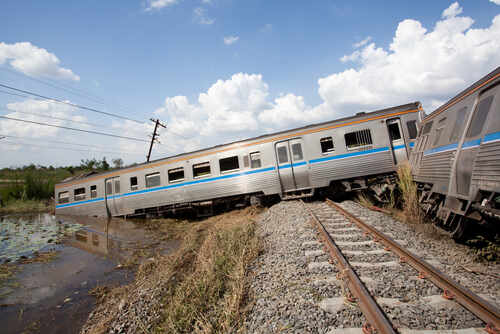
Seven people died, and more than 100 were injured when one passenger train slammed into the rear of another south of Cairo.
Story Snapshot
- Rear-end train collision in al-Ayyat district, Giza province, about 52 kilometers south of Cairo.
- Seven confirmed dead; more than 100 injured, with authorities citing 112 injuries in updates.
- Giza-to-Fayoum train struck the last carriage of a Cairo-to-Aswan train that had stopped on the same track.
- Prosecutors opened an investigation; emergency crews and cranes moved to clear the line.
What Happened On The Track
Egyptian authorities reported a deadly crash in the al-Ayyat district of Giza, about 52 kilometers south of Cairo. A Giza-to-Fayoum passenger train hit the back of a Cairo-to-Aswan service that had stopped on the same track. The impact crushed the rearmost carriage and caused a derailment. Officials confirmed seven deaths and more than 100 injuries, with the Health Ministry listing 112 injured in updates. The Chief Prosecutor’s office said the conductor of the striking train was among the dead.
Two trains collided south of the Egyptian capital of Cairo, killing at least four people and injuring nearly 90 others, authorities said.
The crash occurred in al-Ayyat district in Giza province, about 32 miles south of Cairo, when a train traveling to the southwestern Fayoum… pic.twitter.com/sfntXxzs3I
— CBS News (@CBSNews) November 8, 2026
Rescue teams reached the scene and pulled survivors from buckled carriages. The Egyptian Railway Authority said it deployed cranes and emergency workers to remove wreckage and restore service. Prosecutors opened a case and began taking testimony from crew and passengers. They also ordered a technical review of signals and dispatch records. Reported injury tallies varied by a few cases during the day, but independent outlets aligned on seven dead and over 100 injured by evening updates.
Where Responsibility May Land
Officials described the crash as a rear-end impact with the lead train, which was stopped on the same line. That pattern usually points to either a signal failure, a dispatch error, or a driver not braking in time. Authorities have not released a cause, and any firm judgment should wait for the technical readout. The Transportation Ministry and prosecutors identified the routes, the sequence, and the rearmost carriage as the point of impact. Those facts fit what witnesses and first images suggest at the scene.
Investigators will pull signal logs, track-occupancy data, and locomotive event records. They will also match radio calls with the timetable to see if the rear train passed a red signal or if the system cleared a block that was not empty. That process is standard in serious rail incidents. A rapid review can reveal whether a broken axle, a brake fault, or human error caused the strike. The Health Ministry’s 112 injury count offers a baseline as hospitals reconcile admissions and transfers.
Why This Area Rings A Bell
Giza’s al-Ayyat corridor has carried some of Egypt’s hardest rail days. The 2002 fire on a southbound passenger train killed more than 350 people and became a national marker of grief. Later crashes in the region kept safety in the public mind. Sunday’s collision is smaller in scale but grimly familiar in form. Rear-end impacts are among the most preventable crash types when signals, dispatch, and train handling all work as designed.
Egypt has pledged upgrades across track, rolling stock, and signal systems. This crash will test whether those promises took root where it counts most: block control, braking performance, and crew training. American conservative common sense says accountability matters more than press lines. If a device failed, fix the device everywhere. If a person failed, fix the process that let one mistake put hundreds at risk. Families deserve more than condolences; they deserve a system that learns and acts.
What To Watch Next
Prosecutors will release a preliminary timeline that should answer two clear questions. First, why was the Cairo-to-Aswan train stopped, and on whose order? Second, what signal and speed did the Giza-to-Fayoum train have as it closed the gap? The answers will show whether the fault sits with equipment, operations, or both. Clearing the line will be quick. Restoring trust takes longer. A clear report with practical fixes is the only path back for riders and crews.
Sources:
youtube.com, abcnews.com, bbc.com, thefacts.com