Chuck Schumer dropped an explosive claim: President Trump was warned about a spy risk tied to Nvidia’s CEO and did nothing.
Story Snapshot
- Senator Chuck Schumer says President Trump ignored a warning about Nvidia’s Jensen Huang and a suspected Chinese spy.
- Reports say Secretary of State Marco Rubio briefed Trump before a China trip that included Huang.
- Trump denies knowing at the time, says he later asked Huang and believed his denial.
- Congressional pressure is rising to tighten chip export rules and demand answers.
What Schumer Alleged And Why It Matters
Senate Democratic Leader Chuck Schumer said President Trump was briefed that Nvidia CEO Jensen Huang had a relationship with a suspected Chinese intelligence asset and failed to act. He called it a “dereliction of duty” on the Senate floor and tied it to national security risks in artificial intelligence and chips. The charge lands hard because chips power defense systems, cloud servers, and artificial intelligence tools. If China gains leverage there, the United States loses more than market share; it risks power.
Schumer pointed to press accounts that a classified memo circulated in spring and that Secretary of State Marco Rubio briefed Trump about Huang’s situation before a May trip to Beijing. Those stories say the warning came as export policy and high-profile meetings placed Nvidia at the center of United States–China tech tensions. If true, the timeline suggests the White House knew Huang could be vulnerable to pressure while he stood near the Resolute Desk and on the tarmac.
What Trump And Huang Say In Response
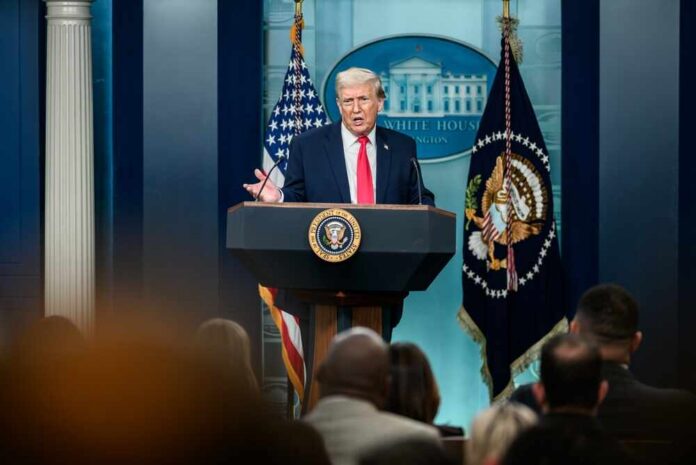
Trump pushed back. He said he did not hear about the allegation at the time of the trip and learned of it more recently from news. He also said he spoke with Huang, asked if he knew the woman was a spy, and believed Huang’s answer that he did not know. Trump praised Huang as a “high-quality” person and said law enforcement would look into it. This is a clean defense: deny early knowledge, credit Huang’s denial, and defer to the Federal Bureau of Investigation (FBI).
That defense rests on memory and trust, while Schumer’s case leans on reported briefings and a paper trail. A briefing-denial cycle like this is common in national security fights. Intelligence often warns in probabilities, not certainties. A president then weighs risk, diplomacy, and the economy. Even so, if Rubio’s briefing happened as reported, the White House owed the public a straight, dated account of what was shared and what steps followed, including any defensive briefing by the FBI to Huang.
The Semiconductor Stakes Behind The Clash
Nvidia is not just another company. It sits at the core of American artificial intelligence, and its chips drive data centers, weapons simulations, and scientific labs. United States export limits to China have shifted several times, and reports say approvals later allowed modified chips to flow with a revenue cut to the Treasury. This is not a niche fight; it is a live, high-dollar policy struggle where security and commerce meet at the chip level. Congress knows this, which is why calls to tighten loopholes are growing louder after the Huang story broke.
⚖️🇺🇸 SCHUMER DEMANDS ANSWERS:
Senate Democratic Leader Chuck Schumer said Tuesday that Congress must have a full accounting of President Donald Trump's defense of Nvidia CEO Jensen Huang, and he called on lawmakers to quickly approve new restrictions on U.S. chip exports to… pic.twitter.com/cvlBjNmj1i
— ThePeoplesAdOne (@ThePeoplesAdOne) November 10, 2026
Common sense says two things can be true at once. First, no one should rush to label Huang a knowing agent based on leaks. Second, the commander in chief must treat even a low-probability spy risk around critical tech as urgent. That means document the briefings, isolate potential influence, and order defensive steps. On the facts now public, Schumer’s “dereliction” line is sharp rhetoric, but the heart of his critique—that the Oval Office must move fast when chips and China mix—aligns with a hard-nosed security view.
What To Watch Next
Watch for three signals. One, whether the administration releases a timeline of any Rubio briefing and follow-on actions. Two, whether the Federal Bureau of Investigation provides or confirms a defensive briefing to Huang and what guardrails Nvidia adopts internally. Three, whether Congress advances tighter controls to curb indirect chip flows and cloud access by Chinese firms. If those steps stall, expect more hearings and subpoenas. If they move, the policy story will quickly outgrow the scandal.
Sources:
news.bloomberglaw.com, news8000.com, kansas.com, hawaiitribune-herald.com, latimes.com, cia.gov, politifact.com