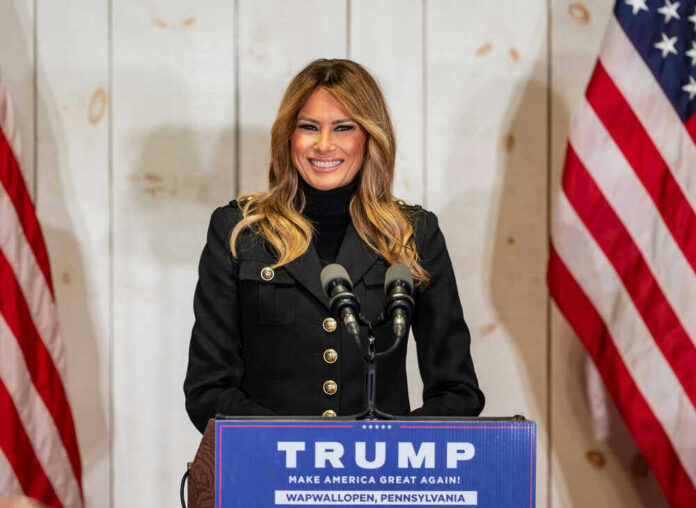
Melania Trump told Americans to be “vigilant” about artificial intelligence and to get educated fast, and she is tying that message to a growing push on AI literacy for children and families.
Story Snapshot
- Melania Trump urged caution and education on artificial intelligence during a national TV interview.
- Her Fostering the Future Together initiative links AI tools to child safety, literacy, and classroom use.
- The effort is signing tech partnerships and aligns with wider public-private coalitions on AI education.
- The core pitch: do not believe everything online; learn how AI works before you trust it.
What She Said And Why It Landed
Melania Trump used plain terms on The Big Money Show. She said people fear artificial intelligence, and she urged the public to be vigilant and use it wisely.
She added that Americans should not believe everything they see online and should learn enough to tell what is real and what is not. That simple test is the right on-ramp. It respects free choice and personal duty. It puts parents and citizens back in charge of their own judgment.
Her tone matched a larger plan she has pushed for a year: tie artificial intelligence to real gains for families and schools, but build guardrails through skills, not censors. Education first. Safety by design. Tools that help teachers and protect kids.
The Initiative Behind The Message
Fostering the Future Together is her flagship effort housed at the White House. The coalition brings first spouses and leaders together to support children through safe, smart use of advanced technologies, including artificial intelligence.
The roadmap stresses four lanes: artificial intelligence in education, classroom technology, online protection, and digital skills. That stack shows the bet: pair access with literacy. Put parents and teachers on the front line with simple rules and training that they can use tomorrow.
Melania Trump says Americans shouldn't fear AI, but they shouldn't blindly trust it either.
Speaking on FOX Business after ringing the opening bell at the New York Stock Exchange, the first lady says AI can be a powerful educational tool if people use it wisely and verify the… pic.twitter.com/1DwkOAMlqq
— FOX Business (@FoxBusiness) September 24, 2026
The initiative has also courted major firms to speed delivery. Reporting shows seven technology partnerships announced around the United Nations General Assembly, aimed at expanding tools and training for kids across countries.
This mirrors a broader White House push to link schools with private-sector resources for artificial intelligence education under a national task force, moving money, content, and training into classrooms. The coalition model is not abstract policy talk; it is a build plan.
Where It Fits In The Global Shift
The First Lady’s focus aligns with a wide pattern: large institutions now frame artificial intelligence literacy as a basic civic skill, not a niche track for coders.
Global development groups argue that public-private partnerships are essential to scale practical materials, teacher training, and guardrails that work in real schools.
Unions, universities, and companies are launching national teacher training programs, with safety, fairness, and transparency built into the coursework. The policy center of gravity has moved. The question now is how fast communities can adopt clear, age-appropriate steps.
That is why her specific call to “be educated” matters. The aim is not to flood classrooms with new gadgets and hope for the best. The aim is to teach students to question outputs, check sources, and use tools to learn, not to cheat. That approach keeps human judgment in charge.
It also lowers the risk of scams and deepfake hoaxes that target families and seniors online, where a pause and a known checklist can stop harm before it starts.
Practical Stakes For Families And Schools
Parents want to know what to do this week, not next year. The clearest steps start simple. Ask kids to name what a tool can and cannot do. Show them how to cross-check answers using a second source. Set rules that any image or clip can be fake until verified.
In the classroom, insist that tools explain sources, not just give neat writing. These moves reflect the First Lady’s warning: do not believe everything; learn enough to see how these systems make guesses.
Melania Trump Launches IMPERIA Initiative and Promotes AI Education https://t.co/X3o2QtEiy1 via @YouTube
— Joliet Jack ♞ (@jackhauman) September 24, 2026
Partnerships can speed this up if they deliver plain-language guides, short videos, and ready-to-teach lessons, free for schools that need them. That is where the coalition approach earns trust or loses it. If companies ship practical content with clear safety steps, parents will use it.
Sources:
foxbusiness.com, whitehouse.gov, yahoo.com, usatoday.com, documents1.worldbank.org, aft.org, knowledgeworks.org