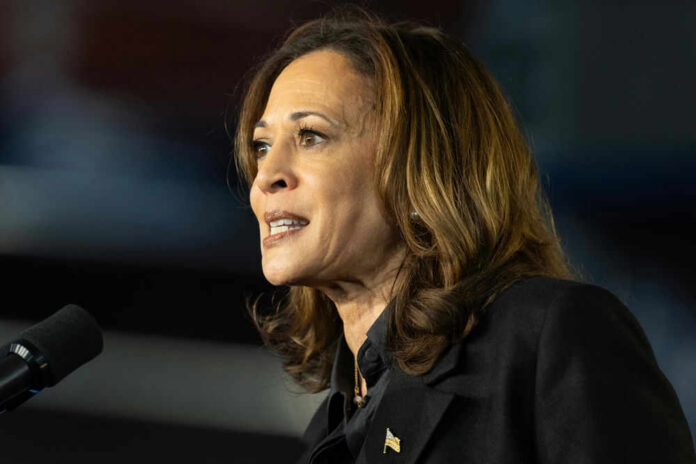
Kamala Harris’s Detroit NAACP appearance ignited a firestorm over her voice, not her message.
At a Glance
- Harris’s Detroit NAACP fireside chat drew scrutiny for a changed delivery critics called an “accent.”
- Local reporting confirms the event, venue, and the quotes that set the stage.
- Linguists say the speech shows code-switching and African American English features, not fakery.
- The clash echoes a larger pattern: adaptive speech becomes a political character test.
The Detroit Setting And The Line That Lit The Match
Kamala Harris spoke at a Detroit Branch National Association for the Advancement of Colored People fireside chat at Fellowship Chapel. Local coverage documented her push for turnout and her claim that Michigan must be “too big to rig,” along with sharper lines aimed at the White House.
The event drew several hundred attendees and clear interest from political media, which quickly focused on how she sounded rather than what she promised voters. The shift in coverage came fast and spread wide.
National outlets amplified clips from the Detroit stop and labeled her delivery a “new accent.” The framing was simple and viral: side-by-side video, same speaker, different sound. The charge resonated with critics who already doubt her authenticity.
That dynamic turned a union-forward message into a meme about vowels and rhythm. The attention crowded out policy talk, which is often the goal in partisan combat. The battle moved from content to cadence within hours.
Kamala Harris rolled out her fake black accent for the NAACP
It’s so bad.
Does this mean she’s running?🤣follow @17QStorm6RV pic.twitter.com/MxTydBNRuz
— QThestorm RV🦅🇺🇲 (@17QStorm6RV) September 23, 2026
What Linguists Heard Versus What Partisans Claimed
Trained ears heard something different. Linguistics commentary tied specific sounds in her Detroit remarks to features of African American English, such as reducing the “r” in “better” to “betta.” That trait appears across many Black speech communities and in informal settings.
Experts described this as code-switching, the normal shift in voice and style that many speakers use across audiences. They argued this is not a new identity but a familiar register Harris uses at times.
Defenders also noted that code-switching spans workplaces, churches, and campaign rallies. Many people change delivery for connection and clarity. That does not mean they fake who they are; it means they know their crowd.
Analysts place Harris’s shift within a long tradition of political speech, where cadence, phrasing, and prosody adapt by room. The better test of sincerity remains consistency in policy and results, not whether a consonant lands soft or hard.
Why This Fight Keeps Repeating In American Politics
This dispute follows a common script. A public figure adjusts tone to fit a community event. Opponents call it pandering. Supporters call it listening. The media posts a split-screen that magnifies style gaps. The argument becomes a referendum on character.
That loop rewards quick outrage and punishes normal human speech behavior. It also tugs on identity politics, especially when the speaker is a woman or a person of color whose voice is policed more harshly than others.
Kamala Harris accused of fake accent at Detroit NAACP rally eventhttps://t.co/X0GjnHTgHM
— Ahsan Ali (@imsn_official) September 23, 2026
A church basement sounds different than a union hall, which sounds different than a television studio. If a shift helps listeners engage without crossing into caricature, most Americans will accept it. The line gets crossed when performance drowns substance or mocks the audience. That is the fair boundary to enforce.
The Conservative Read: Focus On Substance, Not Sound
Conservatives can win this debate by keeping the spotlight on policy and outcomes. Michigan families want lower prices, safe streets, strong schools, and reliable jobs.
They do not benefit when campaigns fight about cadence over crime, or vowels over the value of work. Hold Harris to her record and promises made in Detroit.
Demand details, timelines, and tradeoffs. That approach respects voters’ intelligence and avoids the trap of theater-driven politics. It also travels well beyond one clip.
Sources:
foxnews.com, atlantablackstar.com