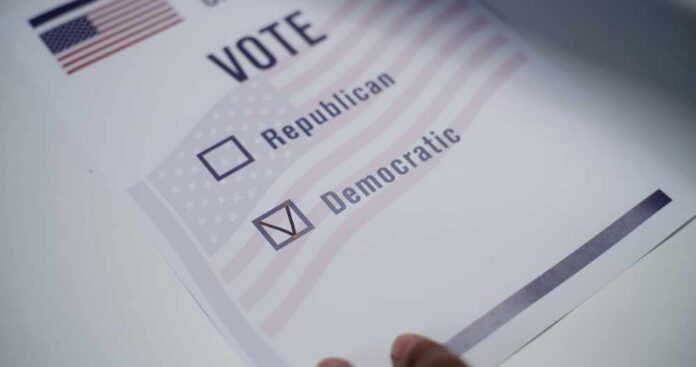
Democrats just grabbed an 8-point edge on the midterm ballot, even though most Americans cannot stand either party.
Story Snapshot
- CNN/SSRS generic ballot shows Democrats leading Republicans by 8 points heading into the midterms
- Both parties suffer deep negative favorability, but Democrats gain from “lesser of two evils” voters
- Democrats’ enthusiasm and motivation to vote sharply outpace Republicans in multiple CNN polls
- Poll history suggests an edge this size can signal a wave, but nothing is locked in for November
Democrats Open An 8-Point Lead In A Sour Electorate
CNN reports that Democrats now lead Republicans by 8 points on the generic congressional ballot among registered voters, based on a new poll conducted by SSRS. The generic ballot question is simple.
Voters are asked whether they would choose the Democrat or the Republican candidate for Congress if the election were held today. That clean, two-party choice lets analysts track national mood without getting lost in hundreds of separate House races.
The 8-point margin marks the strongest CNN-measured Democrat edge of this cycle so far, after months of smaller leads in the low-to-mid single digits.
Other outlets, including Fox News and Emerson College, have recently found Democrat generic ballot advantages in the high single or low double digits, which backs up the idea that Democrats now hold a real, if not yet massive, advantage heading into the fall.
An edge of this size does not guarantee a wave, but it should worry Republican strategists who watch this metric closely.
Voters Dislike Both Parties But Tilt Toward Democrats
The same CNN polling shows a striking paradox: voters prefer Democrats on the ballot even as they hold near-record low views of the party itself. Only about 28% to 29% of Americans say they view the Democrat Party favorably, while the Republican Party is only slightly higher in the low 30s. That means both brands are deeply underwater. Many Americans see Congress as broken and blame both sides.
A key group drives Democrats’ current advantage. Roughly one quarter of voters tell CNN they have an unfavorable view of both parties, sometimes called “double haters.”
Among those frustrated voters, Democrats hold a huge 31-point edge on the midterm ballot. That makes sense to many who value accountability.
When both parties fail, fed-up voters often pick the one they believe will at least slow what they see as the worst ideas, rather than reward the party they fear is more extreme.
Enthusiasm Gap Gives Democrats A Structural Edge
CNN’s series of SSRS polls shows that Democrats are not only ahead on the ballot, but they are also more eager to vote. In one survey, about 72% of Democrats and Democrat-leaning registered voters said they were “extremely motivated” to vote in the midterms.
Another poll found Democrat and Democrat-leaning voters reporting extreme motivation at about two-thirds, compared with roughly half of Republicans. That gap matters because midterms are turnout elections. The fired-up side usually wins the close races.
A new CNN/SSRS poll finds Democrats ahead by 8 points on the generic congressional ballot among registered voters. The survey also shows a stronger Democratic enthusiasm advantage as the 2026 midterms draw closer. https://t.co/J2mv1fob6Y
— james jackson (@jackgoesvirtual) July 30, 2026
From this perspective, this enthusiasm pattern sends a clear warning to Republicans. Many right-leaning voters are upset about inflation, foreign policy, and cultural issues, yet they are not matching Democrats’ energy level at the ballot box.
If Republicans believe Democrat policies range from reckless spending to weak border security, then staying home in November simply hands more power to those same policies. The numbers say Democrats are treating these midterms as do-or-die. Republicans risk acting like it is just another news cycle.
What An 8-Point Generic Ballot Lead Usually Signals
Generic ballot history gives this 8-point lead real meaning. CNN analysts and outside trackers like Ballotpedia note that when one party consistently leads the generic ballot by mid-to-high single digits, it often flips or defends dozens of House seats.
In 2006 and 2018, Democrats turned similar national advantages into big House gains. Those past cycles suggest that if Democrats hold something close to this margin through Election Day, Republicans will struggle to keep control of Congress.
Poll veterans also stress that the generic ballot is a national snapshot, not a district forecast. House seats are still won one by one, and the map can mute or magnify a national edge. A three- or four-point Democratic lead might still produce a narrow Republican House because of how districts are drawn.
By contrast, an 8-point national lead starts to push past that buffer. A party that loses the popular vote for the House by that much usually loses a lot of seats, even with friendly maps.
Limits Of The Poll And What Conservatives Should Watch Next
The CNN/SSRS poll is a standard national survey, with a sample of just over one thousand adults and a sampling error of a few points. That means the exact 8-point number can shift as new polls come in.
Other quality polls show Democrat advantages between about 5 and 11 points, so there is some real-world noise around the precise margin. No serious analyst claims that one survey can predict the exact seat count in November.
The deeper story is more stable. Americans dislike both parties, yet they currently give Democrats the edge when forced to choose. Democrats are more motivated to vote.
Republican favorability is also negative, though less historically low than Democrats’, which means neither side can claim a broad mandate from the public.
For conservatives, that mix argues for two things at once: sharper, clearer messages on bread-and-butter issues, and a serious effort to close the enthusiasm gap before the calendar runs out.
Sources:
cnn.com, youtube.com, transcripts.cnn.com, silive.com, ground.news, yahoo.com, cnbc.com