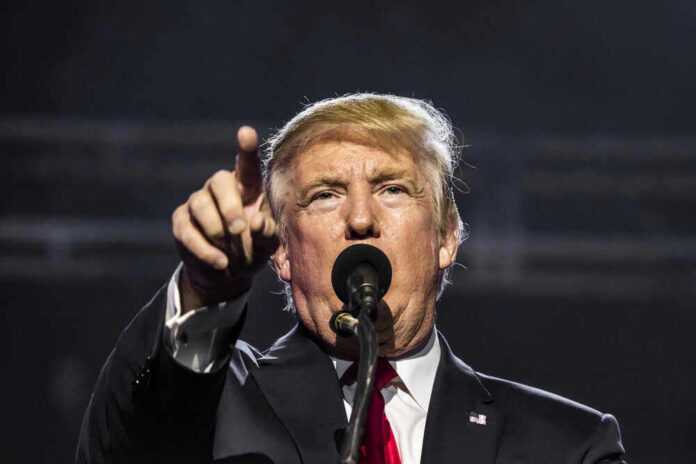
After months of chaos, mass arrests, and two U.S. citizen protesters killed, the Trump administration is shutting down its biggest-ever immigration surge in Minnesota—raising hard questions about enforcement, public order, and the limits of federal power.
See the video of Tom Homan below.
Story Snapshot
- Border czar Tom Homan told a Senate committee on Feb. 12, 2026, that Operation Metro Surge in the Minneapolis–St. Paul’s area is ending with President Trump’s concurrence.
- Federal officials say the operation resulted in more than 4,000 arrests and improved cooperation with local authorities, helping to justify a full drawdown.
- The surge triggered violent protests and controversy after two U.S. citizen protesters, Renée Good and Alex Pretti, were fatally shot by federal agents during demonstrations.
- Minnesota’s Democrat leadership fought the operation in court, but a federal judge rejected the state’s bid to stop it, citing limited legal footing to micromanage enforcement.
- The crackdown exposed the political and operational risks of large-scale interior enforcement—even as the administration vows broader deportation efforts nationally.
Homan’s Senate announcement ends “Metro Surge,” for now
Tom Homan testified Feb. 12 that the Trump administration will end Operation Metro Surge, a months-long federal immigration enforcement push centered on Minneapolis–St. Paul.
Homan said the decision followed President Trump’s agreement and came as a “significant drawdown” was already underway.
Earlier reporting indicated roughly 700 ICE officers had begun leaving, while more than 2,000 federal personnel remained temporarily as operations wound down.
Federal officials framed the surge as a public-safety effort aimed at criminal illegal immigrants and at reducing Minnesota’s reputation as a soft-touch “sanctuary” environment. Critics countered that the operation swept broadly and created fear far beyond serious offenders.
The available reporting does not provide a verified, single breakdown of how many of the more than 4,000 arrests involved serious crimes, minor offenses, or immigration violations, a key gap in evaluating the full impact.
A massive federal footprint collided with local resistance
Operation Metro Surge began in December 2025 with roughly 3,000 federal officers—an unusually large footprint that, according to published accounts, effectively tripled the size of local police presence in the metro area.
The operation became a flashpoint in a state led by Democrats, including Gov. Tim Walz and Attorney General Keith Ellison. State leaders argued the surge damaged the economy and inflamed community tensions, while federal officials emphasized removal and deterrence goals.
Minnesota immigration enforcement operation is ending, US President Trump's border tsar Tom Homan says
https://t.co/sGpCqOyRmG— BBC Breaking News (@BBCBreaking) February 12, 2026
The legal battle highlighted a familiar constitutional friction point: how far Washington can push interior enforcement when state leaders object.
A federal judge rejected Minnesota’s attempt to halt the surge on Jan. 31, 2026, finding the state’s evidence insufficient and noting there was no clear judicial precedent for courts to run day-to-day enforcement decisions.
That ruling effectively cleared the operation to continue, even as protests and political pressure intensified afterward.
Two protester deaths escalated scrutiny and public anger
Public scrutiny surged after federal agents fatally shot two U.S. citizen protesters during demonstrations tied to the operation.
Reporting identified the protesters as Renée Good, killed in late January, and Alex Pretti, killed about 17 days later in early February.
Those deaths were a turning point: Homan assumed more direct control after the first shooting, and the administration later signaled an intent to “de-escalate” amid worsening unrest.
Accounts of the operation also included allegations of racial profiling, enforcement activity near sensitive locations like courthouses and schools, and mass detentions that reportedly involved non-criminal detainees, including children and U.S. citizens.
The sources provided do not offer complete adjudicated findings on those allegations, but they do show the complaints were central to the backlash.
For constitutional conservatives, that distinction matters: aggressive enforcement should be effective and lawful, not sloppy or politically self-defeating.
Why cooperation, subpoenas, and politics all mattered to the drawdown
Homan attributed the drawdown in part to improved cooperation from local authorities, including access to jails and coordination that federal officials said was previously lacking.
Reporting also described federal subpoenas aimed at top Minnesota officials and local leaders, underscoring the pressure campaign behind the scenes.
Local corrections officials publicly discussed operational coordination problems before Homan’s deeper involvement, suggesting the surge’s scale created management and communication strains.
Politically, the end of Metro Surge lets the White House claim it delivered results—over 4,000 arrests—while stepping away from a confrontation that produced national headlines, resignations among federal prosecutors reported by outlets, and an AP-NORC poll showing many Americans viewed Trump’s immigration approach as “too far.”
The administration has not indicated a retreat from broader deportation goals. The unresolved question is whether future operations will be narrower, better targeted, and less combustible—or whether Minnesota was a preview of how quickly enforcement can spiral when leadership and local buy-in collapse.
Sources:
Trump To End Immigration Enforcement Surge In Minnesota: Homan
Judge rejects bid to end Trump administration’s immigration enforcement surge in Minnesota
Tom Homan federal immigration operation Minnesota news conference
Federal authorities announce end to Minnesota immigration effort
Trump ICE Metro Surge ends Minneapolis
Homan announces end to Minnesota immigration enforcement surge