A federal lawsuit forced the Trump administration to reverse an Interior Department flag policy at a politically charged national monument—raising new questions about who sets the rules on public land.
Story Snapshot
- The Department of the Interior agreed April 13, 2026, to fly the pride flag at Stonewall National Monument, settling a lawsuit over its February removal.
- The National Park Service said the removal followed guidance limiting non-agency flags, while plaintiffs argued the policy was applied in a viewpoint-discriminatory way.
- The settlement requires the Pride flag to be restored officially within seven days alongside the U.S. and NPS flags.
- The dispute spotlights a broader tension: uniform federal rules vs. site-specific historical interpretation on taxpayer-funded property.
Settlement Restores the Flag—But the Bigger Fight Is About Federal Control
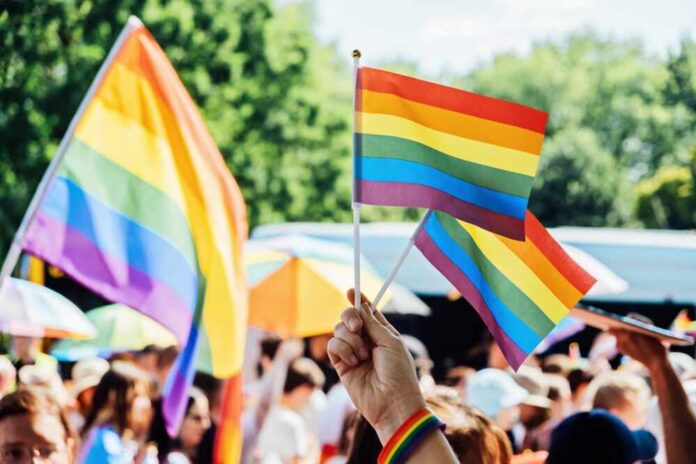
The Trump administration agreed on April 13, 2026, to restore the rainbow pride flag at Stonewall National Monument in New York City as part of a settlement resolving a federal lawsuit.
The agreement allows the flag to fly alongside the American and National Park Service flags, and it requires restoration within seven days. The dispute began after the NPS removed the flag in early February under Interior guidance limiting non-agency flags on federal property.
Trump administration agrees to keep flying a rainbow Pride flag at the Stonewall National Monument in New York: https://t.co/SKjMqLyLFU pic.twitter.com/pQJamjKUyt
— ksprnews (@ksprnews) April 13, 2026
The case landed in the U.S. District Court for the Southern District of New York after advocacy groups challenged the removal as unlawful. Plaintiffs included the Gilbert Baker Foundation, Village Preservation, Equality New York, and individuals tied to the monument’s community history, with legal representation from Lambda Legal and Washington Litigation Group.
Interior Secretary Doug Burgum and NPS officials were named defendants, making the outcome not only symbolic but directly tied to how executive-branch agencies interpret their own rules.
Stonewall’s Status Makes the Flag Question More Than Culture-War Theater
Stonewall National Monument covers Christopher Park and the area surrounding the Stonewall Inn in Greenwich Village, memorializing the 1969 uprising widely credited with energizing the modern LGBTQ+ rights movement.
The monument was designated in 2016 as the first federal monument focused on LGBTQ+ history, and its founding mandate calls on the NPS to interpret resources tied to the LGBT civil rights movement. That mission is why plaintiffs argued the pride flag is not a random banner but contextual interpretation.
Confusion over the flag’s “permanent” status also mattered politically. Reports describe a pride flag being installed permanently during the Biden era, with some accounts tying the key installation to 2021 and others to a permanent pole installed in 2022.
That discrepancy doesn’t change the core timeline: the pride flag was flying routinely before the early-February 2026 removal. For critics of bureaucratic overreach, the episode shows how quickly an agency’s internal guidance can reshape what the public sees at a historic site.
What the Government Said vs. What Plaintiffs Claimed in Court
The National Park Service defended the February removal as a consistency measure—enforcing federal flag rules that prioritize official government flags and limit non-agency flags except in narrow circumstances.
The agency also argued the monument could preserve history through exhibits and programs rather than a flag display. Plaintiffs countered that NPS policies allow contextual historical flags and that the Stonewall mandate supports interpretive displays linked to LGBTQ+ history, making the removal appear selective rather than neutral.
A key allegation from advocates was a double standard: if historic flags can appear at other NPS locations for interpretive reasons, then removing a pride flag at Stonewall looks like viewpoint discrimination.
That claim is politically potent because it reframes the issue away from whether someone likes the symbol and toward whether the federal government is enforcing rules evenly. The settlement avoids a definitive court ruling on the merits, but it still compels a practical reversal by the agency.
Political Fallout: A Win for Advocates, and a Warning Sign for Everyone Else
Democratic officials praised the settlement as proof the administration was “forced” to restore the flag, while advocacy organizations described the outcome as protection against shifting “political whims.”
From a conservative perspective, the episode cuts two ways: it reassures some voters that disputes can be resolved through legal process rather than street pressure, but it also highlights how litigation can shape federal property decisions—sometimes faster than voters or Congress can. The result may encourage more lawsuits over interpretive displays.
For Americans across the political spectrum who believe Washington is failing regular people, the real lesson may be institutional. When a monument’s message becomes a courtroom question, citizens are left watching agencies, judges, and national advocacy groups decide what public spaces communicate.
The Stonewall settlement shows how executive-branch policies, even when framed as “consistency,” can trigger rapid backlash and costly legal fights—another reminder that stable, limited, and clearly written rules matter on federal ground.
Sources:
Trump admin agrees to fly pride flag at Stonewall National Monument in resolution to lawsuit
Stonewall National Monument pride flag restored
Representatives of Pride Flag’s Creator Sue Trump Administration
Lambda Legal and Washington Litigation Group Sue Trump Admin Over Removal of Pride Flag at Stonewall