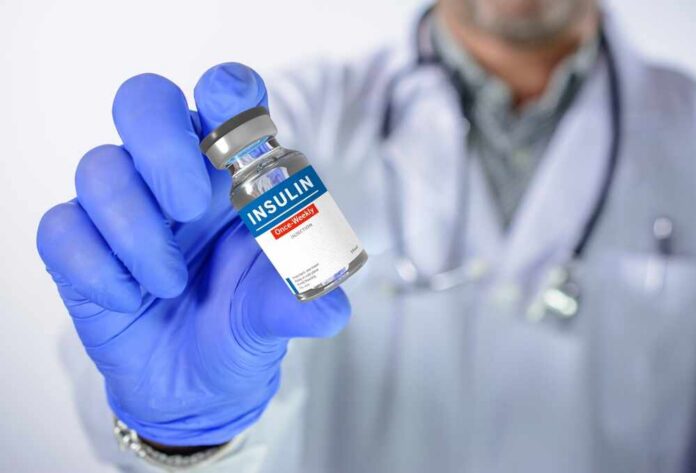
American patients can now purchase insulin for 92% less than they paid last month, thanks to a White House initiative that’s forcing pharmaceutical giants to bring foreign discount pricing home.
Story Snapshot
- Merck and Sanofi became the 12th and 13th companies joining TrumpRx.gov, adding diabetes drugs at discounts of up to 92%
- Sanofi’s Toujeo insulin drops from $428.57 to $35; Merck’s Januvia falls from $330 to $84.57
- Platform now offers 61+ medications using “most-favored-nation” pricing that matches the lowest global rates
- Trump administration credits tariff threats for bringing pharmaceutical companies to the negotiating table
- Thirteen major drugmakers have pledged over $150 billion in domestic manufacturing investments
The Power Play Behind Prescription Savings
President Trump wielded trade policy as a cudgel to extract concessions from an industry notorious for charging Americans more than patients anywhere else.
The strategy worked. Merck and Sanofi announced their participation in early April 2026, joining a roster that includes Pfizer, Novartis, Bristol Myers Squibb, and ten others.
The companies brought medications targeting conditions from diabetes to tuberculosis, priced at levels previously reserved for European and Canadian buyers. Trump’s explicit statement that firms “came to the table because of tariffs” frames this as economic hardball producing consumer wins.
Merck, Sanofi are latest companies to add medications to TrumpRx https://t.co/zscR6X2RjQ
— FOX Business (@FoxBusiness) April 13, 2026
The timing reveals calculated pressure. After autumn 2025 letters to pharmaceutical executives and December’s announcement of a nine-company pact, the February 2026 launch of TrumpRx.gov established the infrastructure. Bristol Myers Squibb added products in late March, setting the stage for Merck and Sanofi to follow.
Each addition expanded the catalog while reinforcing the administration’s narrative that American leverage, properly applied, forces multinational corporations to end pricing discrimination against U.S. patients. The sequential rollout suggests ongoing negotiations with additional firms.
Examining the Discount Details
Merck contributed three Type 2 diabetes medications: Januvia, Janumet, and Janumet XR, each priced at $84.57, down from the previous $330 retail price. Sanofi’s portfolio spans broader therapeutic categories.
Its Toujeo insulin represents the most dramatic cut, plummeting from $428.57 to $35 per month. The company also listed tuberculosis treatments and blood thinners, including Plavix, which dropped from $756 to $16.
These reductions exceed typical insurance copay adjustments, offering uninsured and underinsured patients access previously gatekept by formularies and prior authorizations.
The platform houses medications from thirteen manufacturers covering chronic conditions that drive healthcare spending: diabetes, HIV, high cholesterol, and inflammatory diseases.
AbbVie’s Humira, a blockbuster rheumatoid arthritis drug, appears at $950, while Amgen added Enbrel and Otezla. Gilead’s hepatitis C treatment Epclusa lists at $2,425.
The selection targets high-utilization drugs where price sensitivity matters most to household budgets. For patients managing multiple conditions, monthly savings compound quickly, potentially reducing annual out-of-pocket costs by thousands of dollars depending on their medication regimen.
The Patent Puzzle and Industry Response
Skeptics point out that several discounted medications face generic competition due to expired patents. Sanofi’s Plavix and GlaxoSmithKline’s Advair both lost patent protection years ago, making their inclusion less revolutionary than headlines suggest. Generic versions already compete on price through retail pharmacies and mail-order services.
The White House counters that TrumpRx consolidates access and guarantees most-favored-nation rates without insurance middlemen, but critics argue that the administration cherry-picked drugs in which concessions cost manufacturers little in actual revenue loss.
Pharmaceutical companies agreed to most-favored-nation pricing for Medicaid, alongside participation in TrumpRx, locking in discounts for the government program. In exchange, they secured regulatory stability and avoided escalating tariffs threatened under trade policy.
The December 2025 agreement included commitments exceeding $150 billion for domestic manufacturing and contributions to the Strategic National Stockpile.
Merck pledged 3.5 tons of the antibiotic ertapenem for emergency reserves. These side deals transform the arrangement from simple price cuts into a broader industrial policy reshaping of where and how drugs are produced.
Political Calculus and Patient Impact
Healthcare costs topped voter concern lists entering 2026, giving drug pricing intense political salience. The administration positioned TrumpRx as delivering tangible relief to families crushed by prescription expenses, framing pharmaceutical executives as finally putting “patients first” after decades of prioritizing foreign markets.
The optics work: a diabetic patient switching to TrumpRx insulin saves over $4,700 annually on Toujeo alone. Multiply those savings across millions managing chronic illness, and the policy carries genuine economic weight for households living paycheck to paycheck.
The Medicaid component extends benefits beyond individual purchasers. State programs gain access to most-favored-nation rates, potentially reducing budgetary pressure from pharmaceutical line items that crowd out other spending. Whether savings materialize as advertised depends on patient awareness, website functionality, and drug availability.
The platform launched with approximately forty medications in February and has grown to sixty-one-plus. Expansion pace and therapeutic breadth will determine if TrumpRx becomes a central procurement channel or a niche option for specific conditions.
What Comes Next for Drug Pricing
Johnson & Johnson remains conspicuously absent despite December 2025 speculation about an imminent deal. Additional manufacturers joining would validate the model’s momentum and expand patient options across more therapeutic areas. The real test arrives when patents protect profitable drugs.
The $150 billion domestic investment pledge represents a longer-term bet on reshoring pharmaceutical production. Supply chain vulnerabilities exposed during recent years demonstrated risks of overseas dependency for critical medications.
If tariff pressure and TrumpRx incentives genuinely shift manufacturing back to American facilities, the initiative’s legacy extends beyond individual drug prices to industrial capacity and national security.
Execution determines whether these commitments produce new factories and jobs or fade into paper promises once political attention moves elsewhere.
Sources:
Merck, Sanofi are latest companies to add medications to TrumpRx – Fox Business
Trump announces Merck, Sanofi drug price deal – Axios
TrumpRx signs agreement with nine new pharma manufacturers – MobiHealthNews
TrumpRx adds AbbVie, Genentech prescription drugs – CBS News