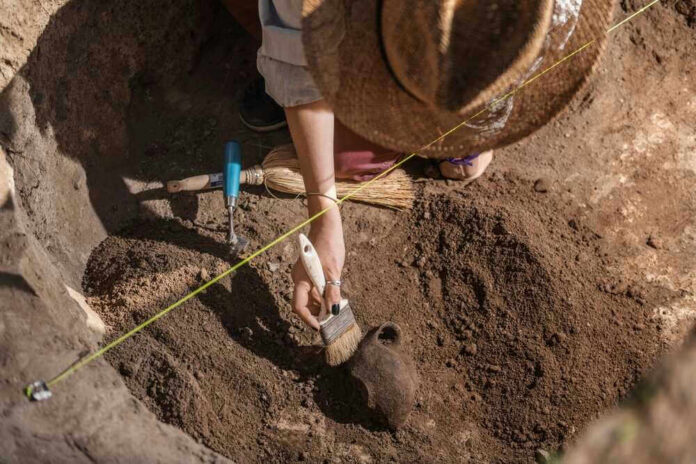
Thirty-plus Bronze Age storage jars and three stone anchors on the seabed off Turkey point to a 4,400–4,700-year-old shipwreck—an intact cargo scatter from when pyramids were new.
Story Snapshot
- Divers mapped more than 30 storage vessels and three stone anchors near Kekova Island.
- Archaeologists date the cargo to the Early Bronze Age by pottery style and comparisons.
- Turkey’s culture ministry backs the 4,400–4,700-year range for the assemblage.
- The find could reset the timeline for Mediterranean seafaring and early trade.
A Bronze Age cargo field emerges off Kekova
Archaeologists surveying near Kekova Island on Turkey’s southern coast documented a tight Early Bronze Age cargo field. The team reported more than 30 ceramic storage vessels, often called amphorae in news accounts, clustered with three stone anchors. This pattern signals a ship’s lost load rather than random trash. Reporters from multiple outlets placed the discovery within a mapped seabed scatter, consistent with a wreck site rather than isolated finds.
Professor Hakan Öniz of Akdeniz University led the Mediterranean Archaeology Association expedition. He described the site as a “time capsule at the bottom of the sea,” underscoring the value of a coherent assemblage. Named leadership and a stated field effort add weight. Media accounts also situate the site off Kekova, a known zone of ancient coastal routes and sheltered anchorages along Turkey’s storied Lycian shoreline.
How archaeologists fixed the age
The team dated the cargo by its shapes and surface details, which match Early Bronze Age pottery from other sites. That typology places the assemblage between about 4,400 and 4,700 years ago, a span that overlaps the era of Old Kingdom pyramid building in Egypt. The National reported that the wreck was first documented during a 2024 Akdeniz University underwater survey, which supports a measured research timeline rather than a one-off dive.
Turkey’s Culture and Tourism Ministry publicly echoed the dating. Officials stated that amphorae found near Kekova Island fall in the 4,400–4,700-year window. That alignment between field archaeologists and the ministry strengthens the chronology presented to the public. Major international outlets reported the same range after the statement, signaling broad acceptance of the basic timeframe for the ceramics.
What “world’s oldest shipwreck” really means
Newsrooms framed the site as the world’s oldest known shipwreck, or potentially so, based on the Early Bronze Age date and the cohesive cargo scatter. That claim rests on the definition of “shipwreck” used by archaeologists: a seafloor context where artifacts from a single lost vessel remain together in a pattern. The key is not surviving wood. Many ancient wrecks lack hulls because wood decays faster than stone or fired clay in shallow marine settings.
Archaeologists often rely on transport jars to date wrecks, since jars travel with ships and carry region-specific traits. A peer-reviewed study in Antiquity urges teams to add independent anchors like radiocarbon when organic materials survive, since pottery-based ranges can be approximate. That guidance matches best practice and helps explain why Early Bronze dates from ceramics are common across many Mediterranean wrecks.
Why this site matters for trade and seamanship
The Kekova cargo pushes clear, organized seafaring further back in time. Thirty-plus storage jars suggest bulk transport, not a fishing trip. Stone anchors point to a vessel able to hold station and manage coastal stops. That combination hints at regular routes and exchange networks linking ports and islands long before classical navies. The assemblage invites fresh study of who crewed these boats, what they carried, and how early captains read this coast’s winds and coves.
Archaeologists uncover what’s left of ancient shipwreck dating back 4,400 years near Turkish island https://t.co/hzZ536emKq pic.twitter.com/CWgkJusrcf
— bulletinindy (@bulletinindy) October 14, 2026
The team and ministry have not released residue test results for the jars. Reports describe olive oil or wine as possible contents, which fits the jar forms used in many ancient trades. A simple caveat applies: cargo contents need lab confirmation before they graduate from “likely” to “certain.” The next phase should log each vessel’s position, analyze residues, and publish a catalog so scholars can compare fabric, origin, and workshop styles with known Early Bronze networks.
Sources:
cbsnews.com, bbc.com, aa.com.tr, cnn.com, thenationalnews.com