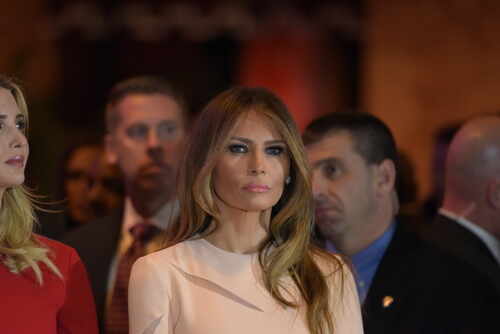
The White House says First Lady Melania Trump personally brokered a localized ceasefire in war-torn Oleshky to open a lifeline for civilians.
At a Glance
- The White House credited Melania Trump as “Exclusive Intermediary” for an Oleshky truce.
- Russia and Ukraine officials confirmed a limited ceasefire focused on aid and evacuation.
- Ukraine’s human rights ombudsman outlined a three-step plan: pause, aid, evacuation.
- Conflicting start dates and missing fine print raise questions about duration and terms.
What the White House Put on the Record
The White House stated that First Lady Melania Trump initiated talks with both Moscow and Kyiv and worked through a representative “directly with Russian and Ukrainian leadership” to define the terms. The statement credited her with securing a localized ceasefire for Oleshky, aimed at allowing humanitarian aid and setting up a civilian evacuation route, with a named start date and a clear humanitarian focus. That claim assigns an unusual, concrete negotiating role to a First Lady, not a symbolic one.
Russian and Ukrainian officials acknowledged the narrow ceasefire. Reporters cited Kremlin spokesman Dmitry Peskov affirming her coordinating role, while coverage also noted that negotiators from Russia, Ukraine, and the United States reached a limited arrangement. These confirmations do not settle every detail, but they establish that a truce framework existed and that both sides publicly recognized it at some level, which is rare and vital in a hot war.
How Ukraine Described the Plan on the Ground
Ukraine’s human rights ombudsman, Dmytro Lubinets, laid out the operational logic. He said Melania Trump’s attention triggered the process “under her coordination,” and he broke it into three stages: a firing pause, delivery of aid, and then evacuation. That sequence reflects best practice for local ceasefires: deconflict the area, bring in supplies, and only then move civilians. He stressed the humanitarian aim, not politics, which matches what aid groups push for in frontline towns.
The timetable, however, showed friction. The White House placed the start on October 29. Russia and Ukraine provided local times suggesting activity as early as October 27. These mismatched dates may reflect distinct phases, time zones, or bureaucratic clocks. They also show the common reality of ad hoc ceasefires: announcements can run ahead of synchronized orders, and implementation often rolls out in pieces.
Verification, Gaps, and What Would Close the Case
The White House said non-military teams from Russia and Ukraine would contact residents and arrange transport, with an unnamed American media outlet documenting the process. That promise, if backed by video, logs, and manifests, would turn a claim into a record. The missing parts are the signed text, the exact rules, and confirmed aid deliveries or evacuation counts. Those items are the standard yardsticks for judging whether a ceasefire worked in practice.
FIRST LADY MELANIA TRUMP SECURES CEASEFIRE BETWEEN RUSSIA AND UKRAINE, LOCALIZED TO OLESHKY https://t.co/d8tvoEqFGK pic.twitter.com/zDpBXUfwQt
— JohnTitor17 (@JTitor17) October 26, 2026
Some accounts dispute how much credit belongs to Melania Trump alone. Vatican officials said Pope Leo XIV engaged both leaders days earlier, and a senior Ukrainian negotiator described a longer process that involved both the Pope and the First Lady. Those claims do not refute the existence of the Oleshky pause; they contest authorship. On the facts available, the split-credit view seems plausible, while the core humanitarian aim remains intact.
Why This Local Truce Matters Beyond One Town
Localized ceasefires are not peace deals. They are tools to cut violence and move supplies when full talks are impossible. Success rests on clear terms, shared maps, and simple rules that soldiers can follow under stress. If Oleshky saw even a short, verified pause that allowed aid and evacuation planning, that would mark a concrete win for civilians. If it also showed that unconventional channels can pry open narrow windows, policymakers should learn from it, then publish the receipts.
Sources:
abcnews.com, cnn.com, apnews.com, bbc.com