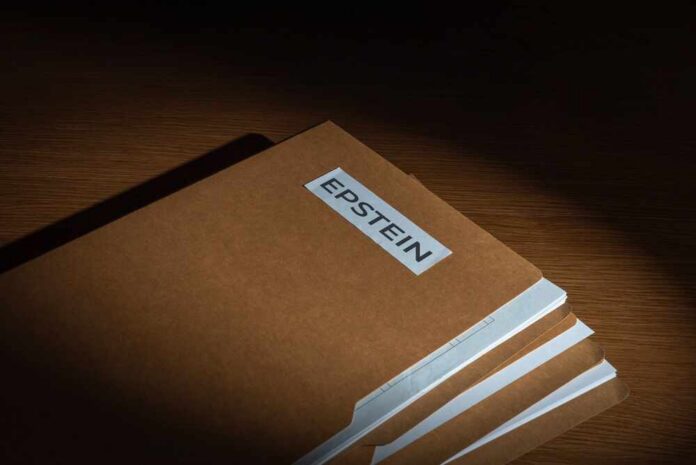
Congressman Thomas Massie just forced a choice on Congress: vote to release the missing Epstein files, or explain to voters why not.
Quick Take
- Massie filed a discharge petition Monday night that could force a House floor vote if 218 members sign it.
- The petition targets the Epstein Files Transparency Act II, which would widen access to Epstein records for victims, state prosecutors, and lawmakers.
- Members of Congress have already reviewed unredacted files in restricted DOJ reading rooms starting in February 2026.
- Lawmakers say at least six men remain shielded by heavy redactions, including one tied to a partially unredacted 2019 FBI document.
- The Justice Department says its redactions protect victims, not powerful men, and insists it has already met its legal disclosure duties.
A Discharge Petition Aims Straight At House Leadership
Massie filed his discharge petition Monday night, according to the Washington Times. The move forces a floor vote on the bill if 218 House members sign on, sidestepping leadership’s control over what reaches the floor. It’s a rare procedural weapon, used when a bill has support but gets stuck in committee or ignored by leadership calendars.
Congressman Ro Khanna’s office laid the groundwork weeks earlier. A House press release on the Epstein Files Transparency Act II warned that if the House didn’t take up the bill within seven legislative days, a discharge petition would follow.
Massie’s filing turns that warning into action, with bipartisan sponsors including Khanna, Teresa Leger Fernandez, Jeff Merkley, and Ben Ray Lujan behind the bill.
On the House floor tonight, I read the names of several Epstein coconspirators who should be investigated and prosecuted.
I also began collecting 218 signatures for the discharge petition to force a vote on Epstein Files Transparency Act II. pic.twitter.com/fgpebvxNpP
— Thomas Massie (@RepThomasMassie) August 31, 2026
Massie has spent months publicly pressing this issue, framing it as a test of whether powerful figures receive special protection from disclosure laws that apply to everyone else. That message has found an audience well beyond Capitol Hill, judging by the traffic his public comments on the topic have drawn.
What Lawmakers Actually Saw Behind Closed Doors
The pressure didn’t start with the petition. Back in February 2026, the Justice Department allowed members of Congress to view unredacted Epstein files in controlled reading rooms, banning phones and copies while logging every search. That access gave lawmakers something rare: a direct look at what redactors chose to black out, rather than a summary from officials.
What they found fueled the current fight. Al Jazeera reported that at least six men were named in Congress as figures protected by heavy redactions, and that the Justice Department later partially unredacted one internal FBI document dated August 15, 2019, which referenced Les Wexner as a coconspirator. It was separately reported that lawmakers suggested a half-dozen men were being shielded from public view through over-redaction.
The Guardian reported that House members later sought an inquiry into how the Justice Department tracked their research activity in those reading rooms, after learning that the department logged every search lawmakers ran.
That detail struck many members as backwards: the people demanding answers were being monitored more closely than the redactions they were investigating.
The Justice Department’s Defense Rests On Victim Protection
The Justice Department has not stayed silent on any of this. Its public Epstein disclosure page states plainly that officials made “all reasonable efforts” to redact personal information about victims and other private individuals before publishing materials.
A department spokesperson said 500 reviewers examined millions of pages specifically to meet transparency law requirements while shielding victims, and that thousands of victims’ names had already been redacted.
An FBI memo from July 2025 went further, stating the bureau would not release child sexual abuse material and concluding that “no further disclosure would be appropriate or warranted” after its review.
Attorney General Pam Bondi echoed that stance when she released the first phase of declassified files, saying remaining documents would only go public after review and redaction to protect victims’ identities.
That’s a legitimate government interest, and no serious person wants victims’ names splashed across the internet. But it doesn’t fully explain why a redaction tied to a named businessman’s alleged status as an alleged coconspirator needed to be blacked out in the first place.
Protecting victims and protecting powerful associates are not the same job, and conflating them only deepens public suspicion that something other than victim privacy is driving the pace of disclosure.
Why This Fight Isn’t Going Away Quietly
BBC reported lawmakers directly accusing the Justice Department of stonewalling on the files, a charge that carries weight because it comes from members who’ve actually seen the underlying documents, not outside speculation. That’s a meaningful distinction.
This isn’t activists guessing what might be hidden; it’s sitting members of Congress, from both parties, saying the redactions go beyond what victim protection requires.
Massie’s discharge petition now puts every House member on record. Sign it, and you’re voting for broader access to Epstein records for victims, prosecutors, and Congress.
Refuse, and you’re explaining to constituents why you blocked a floor vote on a bill built around cross-partisan support. For a Congress that talks endlessly about transparency, that’s not a comfortable spot to sit in.
The next several weeks will show whether 218 signatures materialize, and whether the Justice Department’s victim-protection rationale can survive sustained scrutiny once more documents surface.
Either way, the pressure Massie applied this week didn’t come from nowhere. It came from lawmakers who read the files themselves and didn’t like what they didn’t see.
Sources:
washingtontimes.com, lawcommentary.com, aljazeera.com, cbsnews.com, theguardian.com, axios.com, apnews.com, en.wikipedia.org, friedman.house.gov, khanna.house.gov