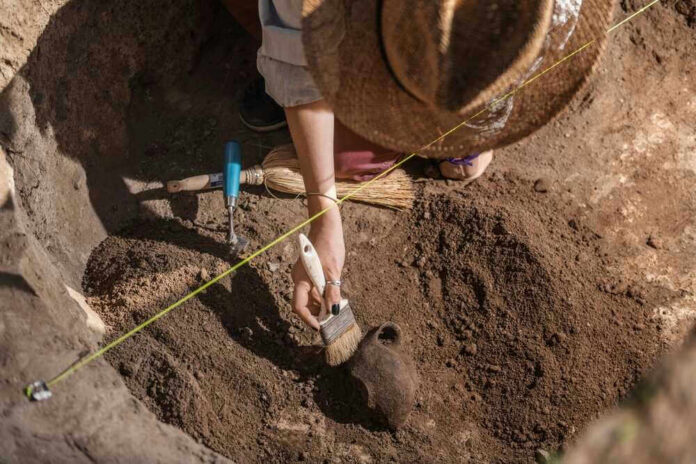
Archaeologists digging beneath the Church of the Holy Sepulchre say the soil still remembers olive trees and vines.
Story Snapshot
- Soil samples under the church contained olive and oak-type pollen, plus grape evidence.
- Excavation reports describe a shift from ancient quarry to cultivated garden near rock-cut tombs.
- The find aligns with John 19:41’s “garden” next to the tomb, but does not settle all debate.
- Scholars long favored this site over the Garden Tomb on archaeological grounds.
What Was Found Beneath Christianity’s Holiest Church
Archaeologists took micro-bits of soil from drill cores and trench edges under the Church of the Holy Sepulcher. Lab work flagged olive pollen, oak-type pollen, and signs of grape, all embedded in layers tied to pre-church activity.
The team called this the first palynological evidence from the basilica, meaning the first pollen-based environmental data recovered there. The pattern points to trees and vines, not a barren lot. That matters when checking a claim as old as the Gospels.
Excavations beneath Jerusalem’s Holy Sepulchre reveal a burial landscape resembling New Testament descriptions. https://t.co/XytU9iBiB5
— Newsweek (@Newsweek) August 28, 2026
Separate field reports mapped the area’s earlier life. Stone cutters once quarried the soft limestone here. Work later stopped. People filled parts of the pit and worked the soil.
The layer cake of quarry debris, imported earth, and garden-use traces fits a known switch in land use before and during the Roman period. The same reports also logged nearby rock-cut tombs, the kind used in that era, which tighten the link between a garden and burial space.
Why This Speaks Directly To John 19:41
The Gospel of John places a new tomb in a garden near the crucifixion site. Critics long waved this off as a literary touch. Pollen and plant remains, however small, move the claim from poetry to history’s workbench.
They do not “prove” who lay in any single tomb, but they show the landscape could match the text at this location. That is why recent coverage ties the garden evidence to the biblical scene, while stating the work remains ongoing.
The technical angle deserves plain words. Pollen grains cling to soil and stone. Under a microscope, trained eyes can spot olive, oak-type, and other markers. If the grains come from layers linked to the pre-church ground surface, they reflect real plants on or near that spot.
Add grape seeds or plant charcoal, and the case for cultivation grows thicker. That is what the early reporting from this dig suggests, pending full publication.
What The Debate Gets Right—and Wrong
Skeptics stress a simple point: a garden near tombs does not equal the exact tomb of Jesus. That is fair. Even careful defenders admit no one can tag a single tomb with absolute certainty after two millennia. The real weight of this discovery sits one step upstream. It strengthens the setting described in the Gospel.
Some favor the Garden Tomb north of Damascus Gate. Yet key studies argue that tomb was cut back in the Iron Age, long before the New Testament era, which undercuts its claim to be the original burial place.
On balance, several scholars have said that the archaeological vote goes to the Church of the Holy Sepulcher as the stronger candidate, though not beyond doubt. That view now gains fresh soil-based support from the garden evidence under the church.
How To Read Early Results Without Overreach
Media love the word “proves.” Science works with “supports.” The best reading lands here: multiple lines—quarry-to-garden shift, olive and grape signals, and known tombs—now back the Gospel setting at this specific site. That is a factual upgrade, not hype.
For believers, it affirms that the texts grow out of real ground. For doubters, it raises the bar for rival claims. Either way, the shovel and the slide rule have moved the needle.
Sources:
foxnews.com, archaeologymag.com, crosswalk.com, youtube.com, sacerdotus.com