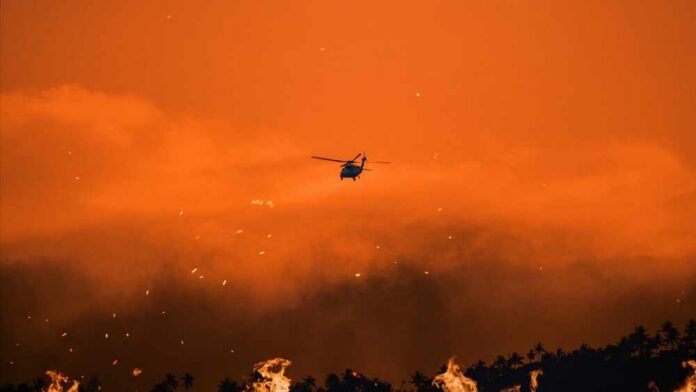
Positano’s mayor says the Amalfi Coast fires look deliberate—and the pattern is hard to ignore.
Story Snapshot
- Positano’s mayor Gabriella Guida says the wildfire was probably deliberate.
- Multiple starts in nearby towns raised suspicion of coordinated ignition.
- Winds fanned flames and slowed air and ground attack across steep terrain.
- Fire guides say many starts can suggest arson but still require proof.
Mayors point to deliberate ignition across the coast
Positano Mayor Gabriella Guida told Italy’s national news agency that the fire above the town was probably set on purpose. She said several blazes appeared at once along the coast, raising alarm. Reports described flames racing through brush and scrub on slopes near Nocelle and Laurito.
Local leaders ordered evacuations at tourist sites, while homes stayed safe for now, according to travel reporting citing Italian press and local officials. Steep cliffs, tight roads, and smoke made suppression harder.
🚨 Positano, Italy 🇮🇹
What has happened in these days is horrifying
The Amalfi Coast, the Positano area, and other small villages, has been hit by numerous fires that appear to have been deliberately set
The mayors are furious
The territory is extremely fragile
Hectares of… pic.twitter.com/Uz6tHbeI0B
— Mambo Italiano (@mamboitaliano__) September 16, 2026
Guida linked her view to what she called a suspicious pattern. She said fires started in several places, which did not feel like chance, and that she discussed this with Civil Protection staff, according to regional coverage.
Other outlets echoed her claim of a likely arson origin and noted that strong winds fed the flames and disrupted both aircraft and ground crews. German and regional papers carried the same core quotes from Guida: multiple starts, high wind, and a working hypothesis of arson.
Why multiple starts change the risk and the response
Fire behavior shifts when embers fly ahead of the main front, but separate starts in different towns at the same time point to a different threat profile. Commanders must split crews, stretch air assets, and defend access roads that tourists and locals both need.
That drove closures and delays along the coastal highway as responders moved between ignition points and tried to keep flames from homes and hotels. Local wildlife advocates warned of harm to Mediterranean scrub and bird habitat, compounding the long-term cost.
Wind and topography stacked the deck. Gusts pushed fire uphill and along canyons, which acted like chimneys. That forced aircraft to time drops between gusts while crews cut lines in rocky ground.
Mayors described how wind made the fire grow and blocked suppression efforts, a tactical problem that often turns a small start into a regional event. This is the kind of window arsonists choose because fires spread fast and overwhelm early attack, making origin work harder and damage wider.
What “probable arson” means—and what it does not
Wildland fire cause manuals used by investigators lay out a simple rule: treat multiple starts as a clue, not a verdict. Investigators must trace each advancing area back to a small origin, then test it against natural, accidental, and deliberate causes.
The training guide used in the United States stresses building a hypothesis from physical evidence and scene patterns before naming a cause. That method protects truth from guesswork and helps courts hold the right people to account.
Sources:
foxnews.com, ansa.it, ilmattino.it, merkur.de, baden24.de, lagazzettadelmezzogiorno.it, nau.ch, climate-adapt.eea.europa.eu