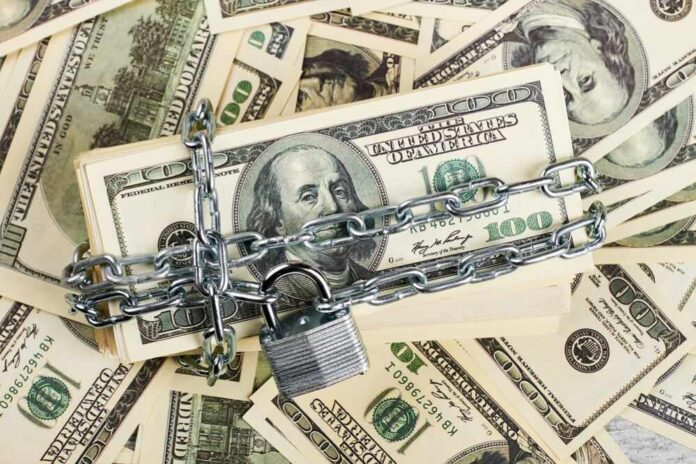
When a major American bank quietly cut off more than 300 Trump Organization accounts, it was not a protest — it was a compliance machine at work.
Story Snapshot
- Capital One says it closed Trump-linked accounts after a long anti-money-laundering review, not politics.
- About 385 accounts tied to Trump businesses were shut down in 2021 after more than a decade of banking together.
- The Trump Organization calls it “woke” debanking and claims political discrimination and free speech harm.
- A federal judge has already tossed one version of Trump’s lawsuit but left the door open to try again.
How Hundreds Of Trump Accounts Suddenly Went Dark
Capital One told a federal court that its break with the Trump Organization started the way many bank crackdowns do: with strange-looking transactions on a computer screen.
The bank said “transaction patterns” in Trump-linked accounts matched activity types federal regulators tell banks to flag in anti-money-laundering programs.
That triggered months of review by its financial crimes team, which the bank notes includes staff with long law enforcement experience. After that internal probe, Capital One decided to shut down roughly 385 accounts tied to Trump businesses.
Capital One said in a court filing late Friday that it closed accounts belonging to President Donald Trump’s sprawling real estate company in 2021 for legitimate reasons after an internal review by the bank’s anti-money laundering team. https://t.co/OIS1fsSBws
— Bloomberg (@business) August 1, 2026
The accounts covered a wide mix of Trump ventures, from a winery and bottled water company to golf development and other real estate entities that had used Capital One for more than ten years.
Capital One says its contracts allowed it to close any account “at any time, for any or no reason and without notice,” and that Trump’s companies agreed to those terms.
The bank also stresses one key point that cuts through the online noise: it is not accusing the Trump Organization of illegal money laundering, only saying the activity raised compliance risk that justified ending the relationship.
Trump’s Side: A “Woke” Bank And Political Payback
The Trump Organization paints a very different picture in its lawsuits and public claims. In a complaint filed in Florida state court, Trump-affiliated entities and Eric Trump say Capital One abruptly sent them letters in March 2021, telling them “hundreds” of accounts holding millions of dollars would be closed by June.
The companies say the bank did not explain why, did not give them a chance to respond, and left them scrambling to move funds and keep their businesses running.
The Trump side argues that the timing tells the real story. The closures came just months after the January 6 assault on the United States Capitol, in the middle of an intense campaign by media, activists, and some corporations to distance themselves from President Trump and his supporters.
Their lawsuit claims Capital One bowed to “political and social motivations” and “woke beliefs” that breaking with Trump would please the crowd.
They frame it as part of a wider pattern where banks “debank” right-of-center customers based on their views, chilling speech and punishing businesses for being conservative rather than for breaking the law.
What The Court Has Done So Far
A key early round in this fight ended with Trump’s lawsuit on the ropes. In March, United States District Judge Roy Altman granted Capital One’s request to dismiss the Trump Organization’s federal suit that claimed political discrimination and illegal debanking.
The judge did not rule that Capital One was right, but he did say the complaint was “deficient,” meaning it did not lay out enough specific facts to support the claims. He allowed Trump’s team to try again with a stronger, more detailed filing if they chose.
Capital One, for its part, is pushing hard to keep the case from moving forward at all. In its motion to dismiss, the bank says both its own records and Trump’s allegations show the accounts were closed for anti-money-laundering reasons.
The bank accuses the Trump side of leaning on “cherry-picked quotations” and ignoring the full context of its compliance review.
Under standard values of rule of law and contract freedom, the bank’s position has weight: if a private company followed written terms and regulatory guidance, then turning that into a civil rights storyline requires very clear proof, not just suspicion based on timing.
Debanking, Compliance, And The Bigger Question
This clash fits a wider trend that should make every politically engaged adult pay attention. Across the country, people claim banks are closing accounts based on ideology rather than behavior. At the same time, banks insist they are simply following stricter rules on money flows, sanctions, and risk.
Anti-money-laundering rules force banks to watch for odd patterns, file reports, and sometimes cut ties. Those reviews are secret by design, which leaves customers in the dark and fuels political stories on all sides.
Capital One says it closed Trump Organization accounts over money-laundering concerns : NPR https://t.co/V3RGNLUnl7
— FreedomisnotFree (@Freedom34612646) August 3, 2026
Two truths sit side by side. First, private banks must be free to manage risk and follow the law, or the whole financial system is at risk. Second, if large institutions start targeting people for their politics, that threatens basic American liberty, especially for those outside the current cultural mainstream.
The Capital One–Trump case has not yet proven such targeting. Right now, the solid record shows a bank citing compliance rules, a customer crying politics, and a judge asking for more facts before he will call it discrimination.
Sources:
feedpress.me, finance.yahoo.com, apnews.com, seekingalpha.com, virginiabusiness.com