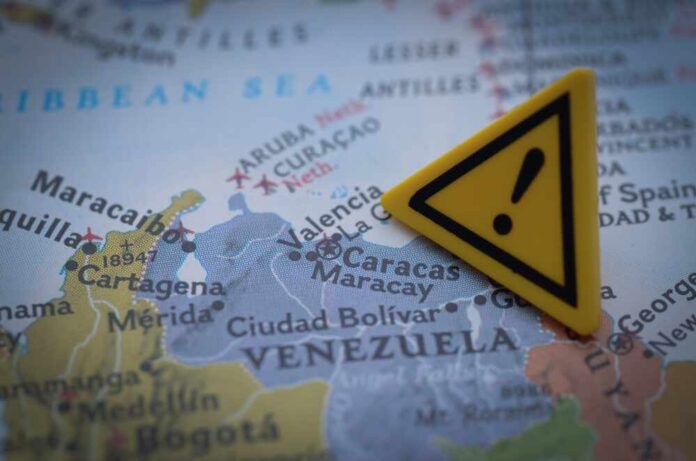
In a rare display of bipartisan unity, the Senate has moved to curb President Trump’s military ambitions in Venezuela, signaling a profound challenge to executive overreach.
Story Highlights
- The Senate voted 52-47 to advance a War Powers Resolution to limit Trump’s military actions in Venezuela.
- Five Republican senators broke ranks, joining Democrats to challenge Trump’s unilateral war powers.
- The move follows a major U.S. operation that captured Venezuelan leader Nicolás Maduro without prior congressional approval.
- Trump’s plans to “run” Venezuela and “take” its oil have sparked significant constitutional concerns.
Senate’s Bold Move Against Executive Overreach
The Senate’s decision to advance the War Powers Resolution marks a significant pushback against President Trump’s military actions in Venezuela. By a vote of 52-47, the bipartisan measure aims to prevent the President from engaging U.S. armed forces in Venezuelan hostilities without explicit congressional authorization.
This move comes in the wake of a major U.S. operation that led to the capture of Venezuelan leader Nicolás Maduro, an action undertaken without congressional approval.
Five Republican senators—Rand Paul, Susan Collins, Lisa Murkowski, Todd Young, and Josh Hawley—joined Democrats in a rare rebuke of Trump’s unilateral war powers.
Their alliance underscores a growing concern about unchecked executive authority, particularly in military engagements. This bipartisan coalition signals a potential shift in how Congress asserts its constitutional role in war-making decisions.
Constitutional Concerns and Trump’s Ambitions
The operation in Venezuela has raised significant constitutional questions, especially concerning the separation of powers. The Trump administration labeled the capture of Maduro as a law enforcement operation facilitated by the military.
However, many on Capitol Hill view it as a major incursion or invasion. Trump’s subsequent comments about “running” Venezuela and tapping into its oil reserves have only intensified the debate over executive overreach and resource interests.
Senate pushes back on Trump’s military threats against Venezuela with war powers vote https://t.co/DZHr6yDKsq
— WKBN 27 First News (@WKBN) January 9, 2026
Senator Tim Kaine, a key advocate for the resolution, has been vocal about the need to reassert congressional authority over war powers. He, along with other senators, emphasizes the importance of maintaining constitutional checks and balances to prevent unauthorized military actions.
The Political Dynamics and Future Implications
The Senate’s decision reflects a complex political landscape where traditional party lines are blurring on issues of national security and executive power. While Trump remains a dominant figure within the GOP, the defection of five Republican senators highlights a willingness to challenge the status quo when constitutional principles are at stake.
As the resolution moves to the House, its fate remains uncertain. Previous attempts to limit Trump’s military actions in Venezuela have been defeated. However, the current momentum and public scrutiny may influence future congressional actions. Trump’s expected veto could further complicate the legislative process, requiring a supermajority to override.
In the broader geopolitical context, Venezuela’s vast oil reserves and strategic location heighten the stakes of U.S. involvement. The outcome of this legislative effort could set a precedent for future engagements and the balance of power between the executive and legislative branches.
Sources:
Senate advances war powers resolution to rein in Trump on Venezuela
Senate votes to curb military action in Venezuela in rare Trump rebuke
Senate votes to move ahead with War Powers Resolution
Missouri Sen. Josh Hawley draws Trump’s wrath on Venezuela War Powers Resolution