A brutal car bombing outside a Mexican police station is exposing just how dangerous cartel terror has become right on America’s doorstep.
Story Snapshot
- Car bomb outside a Michoacan police station kills five, including three officers, and injures three more.
- Multiple U.S.-designated terrorist cartels operate in the region, turning western Mexico into a war zone.
- Cartels increasingly use military-style explosives, drones, and car bombs to intimidate police and civilians.
- The attack highlights long‑ignored security failures that now directly threaten U.S. border and national security.
Deadly Car Bomb Strikes Police Headquarters in Coastal Michoacan
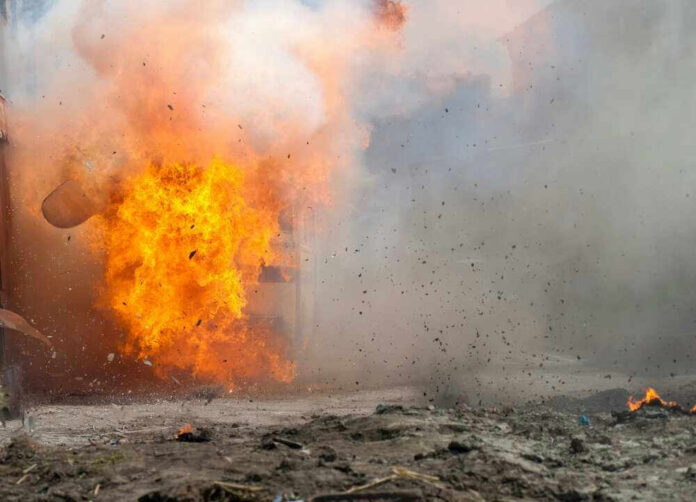
Mexican authorities report that a car exploded shortly before noon in front of the police headquarters in the coastal city of Coahuayana in the western state of Michoacan.
Officials initially counted three dead but later raised the toll to at least five, including three local police officers, with three additional people injured. Investigators from Mexico’s Attorney General’s Office have taken over the case, underscoring the seriousness of the attack.
Local community police commander Héctor Zepeda described the explosion’s devastating force, saying it was so powerful that human remains were scattered across the surrounding area.
That level of destruction is consistent with a professionally prepared explosive device, not a crude improvised blast. For residents, the attack reinforced a grim reality: even standing in front of an official police building in broad daylight offers little protection when heavily armed criminal organizations decide to send a message.
Mexican authorities on Sunday said at least five people died and three more were injured after a car exploded near a police station in the restive western state of Michoacan. https://t.co/xaBiBLppxE
— CBS News (@CBSNews) December 8, 2025
Cartel Stronghold Where Terrorist-Designated Groups Compete for Power
Authorities acknowledge that at least three of the six drug cartels designated as terrorist organizations by the Trump administration operate in Michoacan: Jalisco New Generation, United Cartels, and The New Michoacan Family.
They are joined by numerous local splinter groups, some backed by the powerful Sinaloa Cartel. For two decades, these organizations have battled over Michoacan because it serves as a strategic gateway for chemical precursors used to manufacture synthetic drugs that ultimately flood the U.S. market.
Drug trafficking is only part of the cartels’ business model in the region. Extortion has become another lucrative revenue stream, targeting farmers, small producers, and local businesses.
In October, Bernardo Bravo, a prominent leader of lime growers, was murdered after repeatedly denouncing cartel extortion demands on producers.
His killing sent a chilling warning to anyone considering speaking out. The Coahuayana bombing fits into this broader pattern of ruthless intimidation against both officials and civilians who challenge cartel control.
Escalating Use of Military-Style Explosives Against Police and Civilians
Security officials in Michoacan have documented a disturbing evolution in cartel tactics. Criminal groups increasingly deploy explosives dropped from drones, buried like land mines, or hidden along rural roads.
These methods mirror insurgent warfare in failed states, not ordinary criminal activity. Although such devices have become more common, placing explosives in cars and detonating them near a police station remains unusual, suggesting an intentional effort to escalate fear and grab national and international attention.
The targeted police force in Coahuayana grew out of a civilian self‑defense movement created more than a decade ago to resist cartel violence.
Over time, the state government formalized many of these community police units, integrating them into official security structures.
However, authorities admit that in some regions these forces have been infiltrated by criminal elements. The attack therefore lands in a murky environment where honest officers, compromised units, and heavily armed cartels all operate side by side, leaving ordinary families caught in the middle.
Political Backdrop: Violence Erupts as Mexico’s Leaders Celebrate Power
The car bomb exploded while Michoacan’s governor, Alfredo Ramírez Bedolla, was in Mexico City participating in a public event with President Claudia Sheinbaum to celebrate seven years of rule by the Morena party.
The timing highlighted a stark disconnect: national leaders praised their political project in the capital while frontline officers were blown apart in a cartel-dominated coastal town.
For many Mexicans, that contrast reinforces doubts about the federal government’s willingness or ability to confront organized crime decisively.
The bombing followed another high-profile act of violence in the state. In November, Uruapan mayor Carlos Manzo, a 40‑year‑old politician who built his reputation as a crusader against organized crime, was assassinated.
His killing triggered two days of youth‑led protests, with demonstrators setting fire to public buildings and clashing with police, leaving more than 100 people injured.
Together, the assassination and car bombing underscore how elected officials and local law enforcement face direct, lethal retaliation for challenging cartel power.
Implications for U.S. Security and Conservative Concerns
For American conservatives, the Coahuayana car bombing is not just another foreign crime story; it is a warning about the chaos festering just beyond the southern border.
Cartels designated as terrorist organizations are perfecting tactics that resemble those used in Middle Eastern conflict zones, while profiting from synthetic drugs and extortion that undermine both Mexican stability and American communities.
Weak past approaches, open-border policies, and tolerance for lawless regions have allowed this threat to grow stronger and more sophisticated.
With President Trump back in office and his administration already moving to classify additional Latin American cartels as terrorist entities, events like this bombing will likely fuel calls for even tougher cross‑border cooperation and pressure on Mexico’s federal government.
Conservatives who prioritize national security, controlled borders, and defense of American families will see Michoacan’s violence as proof that half‑measures and appeasement have failed. The core question now is whether Mexico’s leaders will match U.S. resolve in confronting the cartels’ terror tactics.