Iran’s embassy told two named U.S. Navy officers, “We will find you,” on the very day their warship came home.
Story Snapshot
- Iran’s embassy in South Africa posted a threat naming two USS Spruance officers.
- USS Spruance returned to San Diego after a 12-month combat deployment.
- The Navy says Spruance launched dozens of Tomahawks at Iranian military targets.
- Spruance also shot down drones and missiles and engaged a blockade runner.
Embassy’s Post Names Two Officers And Vows To Find Them
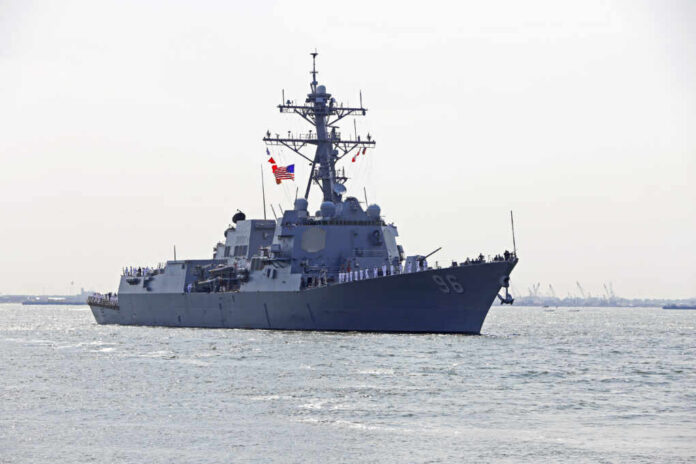
The Iranian embassy in South Africa posted the words “We will find you” on X and paired them with images naming Cmdr. Leigh R. Tate and Lt. Cmdr. Jeffrey E. York as senior officers of USS Spruance. The post appeared the day the destroyer returned to San Diego after nearly a year at sea. The embassy’s message read like a hunt notice, not a policy memo. It was public, direct, and targeted at individuals, not a ship or a flag.
Iran is threatening to track down two U.S. Navy officers just one day after President Trump warned Tehran against assassinating senior American officials.
"We will find you," Iran's embassy in South Africa posts, identifying the commander and executive officer of the USS… pic.twitter.com/NdvxO8kfl2
— Fox News (@FoxNews) November 16, 2026
Public threats against named Americans fit a long pattern in Tehran’s playbook. U.S. briefings and media reports have tracked Iranian or Iran-linked plots and threats against U.S. officials since the 2020 strike that killed Qassem Soleimani, and officials warned in late 2026 that targeting efforts had increased. The method is simple: name, shame, and scare. The aim is pressure, deterrence, and distraction. It risks spillover if a lone actor decides to “help” the regime by harassing families at home.
What Spruance Did In Combat And Who Was In Command
The Navy says USS Spruance launched dozens of Tomahawk Land-Attack Cruise Missiles against Iranian military targets between February and August 2026. The destroyer also helped kick off early strikes in Operation Epic Fury, then spent months guarding high-value units at sea. Cmdr. Leigh R. Tate served as the commanding officer during these operations. He later described intense combat and an air-defense role protecting the carrier and the force from drones and cruise missiles.
Spruance’s record from the deployment shows a ship that stayed busy and lethal. The Navy reported that the crew destroyed 12 unmanned aerial vehicles and four anti-ship cruise missiles. The ship also used its five-inch gun against an Iranian cargo vessel, M/V Touska, after it tried to run a blockade. None of that is armchair rumor; it comes from official accounts and on-the-record statements. The embassy’s post responded to a real combat resume, not a paper drill.
Threats At Individuals Cross A Line Most States Avoid
Governments fight governments. They do not usually single out mid-grade officers by name on social media and tell the world they will hunt them down. That is not deterrence; that is intimidation. It also invites copycats who ignore the laws of war. The law of armed conflict makes all uniformed service members lawful targets during hostilities, but that applies inside combat, not as a license for cross-border stalking of named families on the internet. The embassy’s phrasing looked like a dare.
American common sense says you do not menace people’s homes to win a policy debate. Conservative values prize duty, chain of command, and clarity about who decides to use force. Ship-level actions belong to national command authority, not to individuals to be harassed after the fact. The Navy’s releases show the ship fought Iran’s military and proxies as ordered. The embassy’s post did not show legal analysis. It showed a desire to make two officers pay a personal price for state-versus-state war.
Three Distinct Questions The Public Keeps Mixing Up
Coverage often blurs three different issues. First, did Spruance use force against Iranian targets? Yes. The Navy says it did, with Tomahawks and air defense kills, across many months. Second, did a specific civilian casualty event in Minab occur due to Spruance? Public reporting cited the claim, but did not show independent proof. Third, can named officers be singled out for personal blame or retaliation? The embassy asserted that, but command records and legal findings were not presented in the sources.
Precision matters here because strategy hates confusion. Blurring ship actions with personal guilt helps Tehran paint a simple villain and dodge a harder fight at sea. Splitting the issues keeps America focused. Celebrate the crew’s performance, verify any civilian harm with facts, and reject doxxing as a tactic. That is how a serious country handles both war and law. That is also how you deny an adversary the psychological win they sought with a single taunting sentence.
What Comes Next If Tehran Keeps Naming Names
Expect tighter force protection for the officers and their families. Expect platform moderation on posts that amplify their personal data. Expect allied capitals to take note, because if embassies start posting “we will find you” at naval commanders, every democracy with a blue-water fleet has a problem. The United States will keep combat decisions inside lawful chains, and ships like Spruance will keep their eyes on missiles, not hashtags. Let sailors fight wars; let states settle scores state to state.
Sources:
redstate.com, the-express.com, newsfinale.com, globalsecurity.org, whmi.com, ground.news, warwick.ac.uk