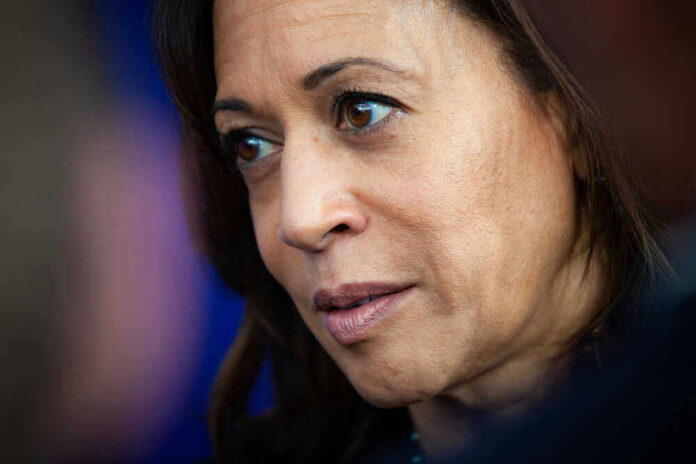
Kamala Harris plans to rally Democrats in Michigan alongside Abdul El-Sayed, testing whether her brand sparks turnout or backfires in a battleground built on razor-thin margins.
At a Glance
- Harris is stepping into key states to boost Democrats, including Michigan and Georgia.
- Some Democrats in tougher states say her presence could hurt their chances.
- Others welcome her for fundraising and base motivation in blue-leaning metros.
- The payoff depends on where she appears, who she helps, and what message she carries.
Michigan Stop Underscores a High-Risk, High-Reward Strategy
Harris linking up with Abdul El-Sayed in Michigan fits her new push to campaign where media attention and donor energy can scale. Reports said that she will also campaign with Senator Jon Ossoff in Georgia and headline a Fulton County Democrats dinner.
It signals a broader midterm tour focused on mobilizing core Democrat voters and raising money. Michigan rewards this math if events stay in friendly areas, but a single misstep can hand opponents easy contrasts in swing suburbs.
Former Vice President Kamala Harris will campaign with Michigan Senate candidate Abdul El-Sayed next week as Democrats battle to hold onto the seat and take control of the Senate in November. https://t.co/J8KeF3wqnj
— The Washington Times (@WashTimes) September 16, 2026
Michigan is not just about yard signs and cheers. It is about math. Metro Detroit can deliver large margins if the base shows up. Turnout machines love a national figure because the press comes with her, and donors open wallets.
That boost helps candidates like El-Sayed build volunteer lists and media oxygen. The gain shrinks if the stop drifts outside safe ground into purple turf where independents lean on inflation, schools, and crime as simple litmus tests.
Welcome Mat Here, Cold Shoulder There
Harris draws a split-screen across the map. Politico and other outlets report that some Democrats in red or purple states don’t want her on stage, arguing her brand could cost swing votes they need to survive. She has waved off the snubs, saying candidates should do whatever helps them win.
That response lands as practical politics. It also hints at her own calculus: help where she lifts turnout; avoid where she could hand Republicans a closing ad.
Georgia offers a case of controlled exposure. Senator Ossoff stands to benefit from fundraising and a media spike tied to Harris’s appearance, anchored inside the Atlanta orbit where Democrats often bank votes. The same approach maps onto Michigan’s core counties.
The plan works if the events speak to local costs and public safety first, then pivot to base issues. Voters over 40 reward the candidate who talks about bills due next month more than debates from last year.
What the Evidence Says About Surrogates and Turnout
Political science suggests surrogates can move results a bit, mostly by energizing loyal voters and shaping news coverage. Effects are real but often small, and they vary by place and message.
The best use is targeted: show up where the crowd agrees with you and where organizers can turn buzz into votes and donations. Broad blasts can fizzle, but narrow strikes can matter at the edge, especially in close states decided by a few thousand ballots.
A national figure helps when the crowd wants a show and a shove to vote. The same figure hurts when the county leans the other way and just wants calm.
By that measure, Harris’s stated view that candidates should choose whether to use her is sound, but the proof will come from precinct reports, not podium lines.
How Harris And El-Sayed Can Make Michigan Count
Message discipline decides the swing. Michigan voters need to hear about jobs, energy costs, and safer streets in plain talk. Tie national themes to local gains and local pain. Hold events where Democrats can grow votes, not just cheer.
Let local leaders carry the mic on potholes, policing, and taxes. Use Harris to frame stakes and raise money, then move the spotlight to the candidate who will face the swing voter at the grocery store tomorrow morning.
The risk is drift. Broad attacks or national wish lists will flood the zone and blur the local case. Republicans will frame Harris as the face of policies that many independents rejected in 2024.
Democrats can counter by showing smaller class sizes, faster permits for small business, and concrete help for auto jobs with supply chains rooted in the state. If the stop sticks to that lane, the visit can add more than a headline. If not, it becomes an ad for the other side.
Sources:
townhall.com, silive.com, politico.com, bbc.com, nypost.com