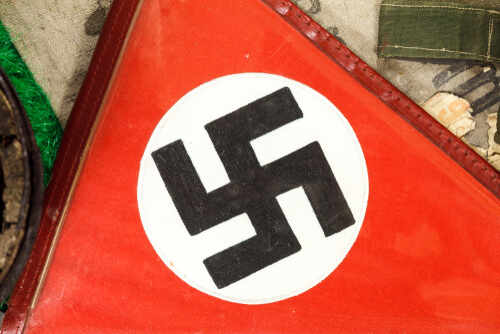
Austria has turned Adolf Hitler’s birthplace into a police station, aiming to strip the site of its pull for neo-Nazi pilgrims.
Quick Take
- The house in Braunau am Inn is now a police station, not a shrine.
- Austrian officials said the change was meant to block Nazi-style pilgrimage.
- The building’s history made it a lasting problem for the state.
- The move also sends a blunt message: the site belongs to democracy, not glorification.
How Austria Reclaimed a Toxic Address
The building where Adolf Hitler was born sat under a cloud for years. Austrian officials worried that its fame could feed extremist nostalgia. The government took control of the property after legal and political battles, then chose a use that would undermine the place’s old meaning.
By reopening it as a police station, Austria turned a symbol of hate into a working arm of the state.
Austria is inaugurating Hitler's birthplace in Braunau as a police station, ten years after the government seized the three-story building to stop it from becoming a neo-Nazi pilgrimage site pic.twitter.com/nI6aOxeHA5
— Reuters (@Reuters) July 21, 2026
Officials did not hide their purpose. They said the point was to make the house unattractive to people who glorify Hitler and to prevent it from becoming a place of pilgrimage.
One Austrian interior ministry official said the goal was to “prevent any association with Adolf Hitler” and strip the site of its mystique. That is the heart of the policy. It was never just about renovation. It was about control of memory.
Why This Particular Site Mattered So Much
Braunau am Inn is not an ordinary town address. It is the birthplace of the man who led Nazi Germany and helped drive the Holocaust. That fact made the building a long-running embarrassment and a real security concern.
Reports from several outlets say neo-Nazis and far-right admirers had been drawn there over the years, which gave the site a dangerous second life. A memorial stone nearby already warned visitors with the words “Never again fascism.”
The new use fits a simple idea: if a place can be abused as a symbol, fill it with a stronger symbol. A police station says order. It says public authority. It says the state does not surrender a historic site to extremists.
Austrian reporting also notes that human rights training is part of the plan, which deepens the message. The building now points away from Nazi myth and toward democratic duty.
The Debate Behind the Walls
This was not a quick or easy decision. Austria debated the future of the house for years. Reports say the government expropriated the property in 2016 and later settled on police use after rejecting other options such as demolition or a museum.
That matters because the state did not simply react to a headline. It went through a slow process to decide how to handle a place loaded with historical poison.
🚨🇦🇹 NEW: Austria has opened a police station at the site of Adolf Hitler’s birthplace
The building in Braunau am Inn has been converted into a police station in an effort to prevent it from becoming a neo-Nazi pilgrimage site
[@BBCNews]
— Politics Global (@PolitlcsGlobal) July 22, 2026
That slow process tells you something important about memory politics. Governments cannot always erase a bad place, and they cannot always preserve it without risk. So they choose a use that reverses the message. In this case, Austria chose to overwrite fascination with authority.
What the Move Does, and Does Not, Prove
The conversion shows intent, not final results. The reporting is strong on purpose: deter pilgrims, reduce the site’s myth, and keep the building from becoming a Nazi landmark. What it does not yet show is hard proof that the strategy works over time.
There are no public visitor counts here, no before-and-after security study, and no measured decline in extremist attention. So the policy is symbolically powerful, but its real-world payoff still needs watching.
That said, the choice makes practical sense. Police presence changes the tone of a place fast. It narrows the space for souvenir worship, public loitering, and covert admiration. It also tells locals that the town is not accepting Hitler’s birthplace as a permanent badge of shame.
Instead, Austria has recast it as a place where the law stands guard. For a nation trying to close a wound, that is a meaningful move.
Sources:
insiderpaper.com, aljazeera.com, apnews.com, nytimes.com, dw.com, facebook.com, brusselstimes.com, bloomberg.com, straitstimes.com