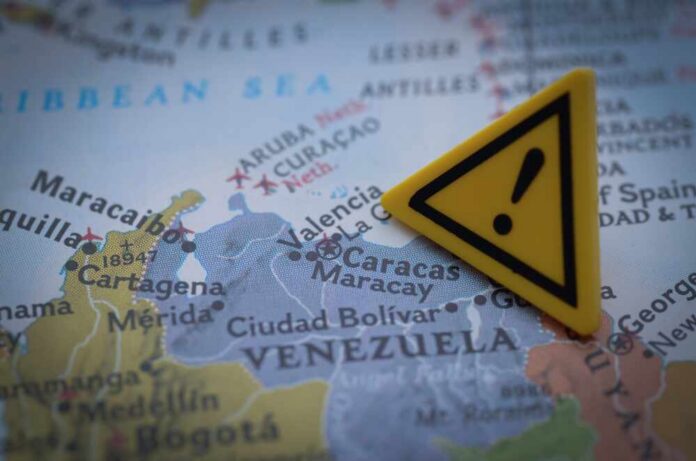
The most chilling number in Venezuela’s earthquake disaster is not 3,800 dead, but 50,000 missing and uncounted.
Story Snapshot
- Official death toll moved from 3,342 to 3,535, then jumped past 3,800 with 3,811 confirmed.
- Venezuelan National Assembly president Jorge Rodriguez now fronts the higher toll of 3,811 deaths and 16,740 injured.
- United Nations estimates tens of thousands missing, far beyond any official body count.
- Years of economic collapse and shaky institutions make both low and high death tolls hard to trust.
How Venezuela’s earthquake numbers climbed past 3,800
The story of “3,800 dead” in Venezuela did not begin in a newsroom. It began with slow, official updates that looked too neat for a country where apartment blocks were folded like paper.
On July 5, the Venezuelan Information Ministry reported 3,342 dead, 16,470 injured, and over 17,000 homeless, numbers that major outlets like Reuters and CBC repeated worldwide.
One day later, the Ministry of Communication nudged that toll to 3,535 deaths and 16,740 injured. For days, that 3,535 figure felt like the ceiling.
The ceiling cracked when Jorge Rodriguez, president of the National Assembly, stepped forward. In fresh remarks carried by American and regional outlets, he said the death toll had climbed to 3,811, with 16,740 injured.
That single jump pushed the narrative from “mid-3,000s” into “over 3,800” territory, and headlines followed. ABC News described more than 3,800 dead after the June 24 quakes, citing Rodriguez’s update.
Press TV reported almost the same figures. Suddenly the higher number had a named political figure behind it, not just a rumor in a crowded morgue.
An animal shelter in La Guaira, Venezuela, rescued more than 530 pets after the twin earthquakes, with workers going out at night to save animals from rubble as the death toll climbed to 3,685 pic.twitter.com/WO0ZcrdKGZ
— Reuters (@Reuters) July 8, 2026
Official counts, political voices, and a gap you can drive a truck through
Even with Rodriguez’s statement, the numbers still do not line up cleanly. On paper, the strongest government-backed figure remains the Ministry’s 3,535 deaths, last updated July 6.
Rodriguez’s 3,811 sits slightly off to the side, hanging on his authority as Assembly president but not yet anchored by a detailed ministry report or hospital audit. That gap matters.
At the same time, international bodies have not rushed to certify 3,800-plus as the final truth. United Nations briefings still lean on the mid-3,000 range for confirmed dead, while warning that the real human cost could be much higher once missing persons are counted.
United Nations officials and outside analysts talk about tens of thousands unaccounted for, which makes both 3,535 and 3,811 look more like waypoints than final answers.
The result is a strange split: the higher number dominates headlines, but the lower official figure still shapes formal aid planning and diplomatic language.
The missing: why 3,800 might be both true and far too low
To understand why serious people suspect undercounting, look at the missing. Crowdsourced sites like “Venezuela Looks for You” and “Desparecidos Terremoto Venezuela” logged tens of thousands of names, with one platform listing around 31,000 missing by early July and another over 18,000.
The United Nations under-secretary for humanitarian affairs spoke openly about more than 50,000 people still missing after the quakes. When you set those figures next to 3,811 confirmed dead, the math becomes morally uncomfortable.
BREAKING: As rescue efforts continue in Venezuela following devastating earthquakes, desperate families are frantically searching through rubble for missing relatives. Officials fear damaged buildings may be demolished before all remains are recovered. The death toll continues to…
— Usa in spotlight (@UsaInspotlight) July 9, 2026
Research on disasters in poorer, more unequal countries helps explain the discomfort. A study of 57 nations from 1980 to 2002 found that weak institutions and high inequality tend to push reported death tolls down, even when actual deaths are much higher. In plain terms, governments with broken systems struggle to find and count their dead. Venezuela fits that picture.
Years of economic collapse hollowed out hospitals, emergency agencies, and basic communications. That same fragility lets officials release neat numbers while whole neighborhoods dig out bodies on their own.
Credibility, common sense, and what conservative instincts see here
For many Venezuelans, the numbers are not just statistics; they are a test of trust. Local reporters and content creators describe days without cell service, a lack of a central aid hub, and citizens organizing rescues on social media rather than waiting for orders from Caracas. That chaos breeds skepticism.
When a government under heavy criticism for “delayed and inadequate” response presents tight casualty figures, people with conservative instincts for transparency and competence question whether politics is shaping the math.
At the same time, this warns against treating 3,800-plus as pure hype. Morgues overflow. International rescue teams from more than two dozen countries have worked through hundreds of collapsed buildings, and United Nations officials talk about 10,000 to 100,000 possible deaths based on damage models.
Venezuela has been here before; a 1999 disaster saw official figures lag far behind United Nations estimates of around 30,000 dead. Against that history, a lawmaker citing 3,811 deaths looks less like fearmongering and more like a partial correction.
What the numbers really tell us about the disaster’s scale
In the end, the fight over “3,535 versus 3,800” distracts from the deeper truth. Both numbers describe a mass death event in a country already on its knees.
Both are almost certainly below the final toll once missing people are accounted for and more rubble is cleared. The more important lessons are structural.
When a nation’s systems are weak, its dead stay invisible longer. When politics filters every announcement, families must rely on their own lists and their own eyes. The numbers will keep moving. The real measure of this disaster is how long it takes for the counting to catch up with reality.
Sources:
abcnews.com, reuters.com, miamiherald.com, youtube.com, x.com, facebook.com, nbcnews.com