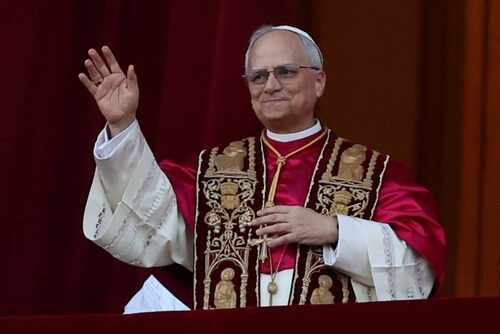
An American-born pope just used the Fourth of July to tell his native country that its soul is at stake at the border.
Story Overview
- Pope Leo XIV urged the United States to welcome and defend immigrants as part of a consistent pro-life ethic.
- He made the appeal from Lampedusa, a frontline migrant island, tying policy debates to real human suffering.
- The pope linked immigration to Catholic teaching on human dignity and defending life from conception to natural death.
- President Trump’s hardline laws and orders show how far current U.S. policy sits from the pope’s vision.
A July 4 message from a migrant island to a nation of immigrants
Pope Leo XIV chose a place that smells of salt water and fear to talk to America about freedom. On July 4, he stood on Lampedusa, the Italian island where overloaded boats full of desperate people keep washing up, sometimes with more bodies than survivors.
Then he addressed the United States on its 250th birthday and said that a country built by immigrants must “welcome, protect, and defend” them as part of its deepest values.
Pope Leo marked the 250th anniversary of U.S. independence on Saturday with an appeal to Americans to welcome and protect immigrants. MORE: https://t.co/XXrK11KyP4 pic.twitter.com/CDNkj89xVJ
— NEWSMAX (@NEWSMAX) July 4, 2026
The pope did not frame this as a charity project or a soft-hearted plea. He spoke about immigration as a matter of basic human dignity, the kind that does not vanish at a border checkpoint or with a missing document.
He praised the long American story of people who arrived poor and unknown yet helped shape the nation’s character and strength. In his view, remembering that legacy is not nostalgia; it is a moral mirror for how America treats newcomers now.
What the pope means by pro-life immigration
Pope Leo has made one big point over and over: you cannot claim to defend life in the womb and ignore life in the desert or the detention center.
In a major address to diplomats, he tied immigration straight into Catholic teaching about protecting life “from conception to natural death,” saying that policies must guard the vulnerable at every stage, not just one. That turns immigration from a side issue into a core test of pro-life integrity for Catholic leaders and voters.
He has backed that up by pressing American bishops to speak clearly. In 2025 he urged them to support immigrants as federal deportation actions ramped up, even in his hometown of Chicago.
He publicly endorsed their special message on immigration and told Catholics and “people of goodwill” to read it and treat migrants with real respect. His line is simple but demanding: charity is never opposed to order, so enforcement must protect families and dignity, not treat undocumented people as criminals just for existing.
A pope’s moral appeal meets a hardline policy machine
While the pope talks about human faces on crowded boats, U.S. policy talk focuses on statutes, budgets, and bans. Under Trump’s second administration, Congress passed the Secure America Act, pouring about $69.5 billion into immigration enforcement through 2029.
Trump signed the Laken Riley Act, which forces detention of immigrants arrested or charged with certain crimes, locking in a more aggressive enforcement posture. These moves show a system built to restrict and punish, not to welcome.
Executive orders deepened that approach. One order froze new refugee admissions for 90 days, claiming they harmed the United States. The United States Citizenship and Immigration Services changed rules so many people must leave the country to adjust their status, squeezing legal paths to stay.
The State Department canceled tens of thousands of visas and paused immigrant visas from dozens of countries. These are not minor tweaks; they form a web of rules that treats fewer arrivals and faster removals as the main success metric.
Tension between dignity, sovereignty, and common sense
For many conservatives, national sovereignty and border control are non‑negotiable. They hear a papal call to “welcome” migrants and worry that it means open borders and lost control. Pope Leo has tried to answer that fear.
In other comments, he has said clearly that every country has the right to decide who enters and how. Catholic social teaching, which he follows, supports lawful order while insisting that migrants never lose their God‑given dignity. That is a tougher line than either “no borders” or “shut the doors.”
Still, some conservative Catholics and commentators view his July 4 appeal as political interference by a U.S.-born pope who knows how American media works.
They point to his criticism of Trump on immigration and war and argue he leans left. From a common‑sense view, the strongest part of their concern is about security and crime. Yet the hardline case rarely comes with detailed data on economic costs or crime trends that match the depth of the pope’s focus on actual suffering.
Why this clash will not go away
Pope Leo’s July 4 message is not a one‑off moment; it fits a long pattern. Pope John Paul II once urged the United States to guard the “natural right” to move freely across borders and to welcome the stranger as part of the universal common good.
Pope Francis condemned mass deportation plans as “a disgrace” and told American Catholics to defend migrants against hateful narratives. Pope Leo now stands in that same line, but with a personal twist: he is talking to his own homeland.
On one side stands a pope who sees migrants at sea and on the border as today’s test of whether we believe every person bears an image of God. On the other side stands a government investing tens of billions in fences, detention, and bans.
The distance between those two visions is the debate American Catholics and conservatives cannot dodge. The question is no longer whether immigration is a problem. The question, after Lampedusa, is whether a nation of immigrants still knows what welcoming means.
Sources:
cnbc.com, vaticannews.va, vatican.va, reuters.com, youtube.com, facebook.com, aclu.org, nafsa.org, whitehouse.gov, brookings.edu, medillonthehill.medill.northwestern.edu, justiceforimmigrants.org, avemarialaw.edu