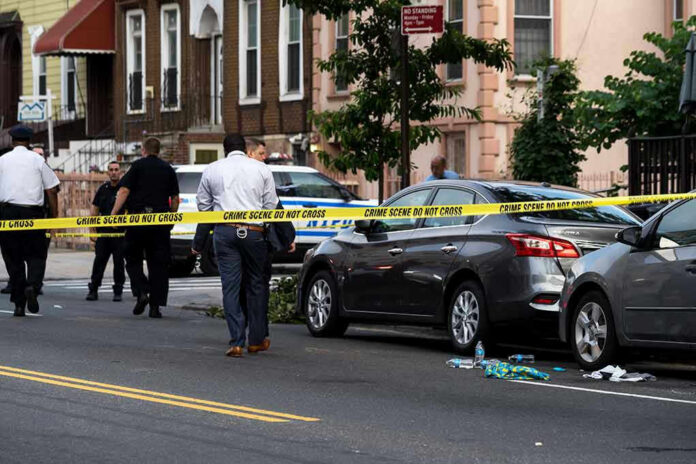
Eight people, including two children, were shot and killed at a home in Erie, Pennsylvania, and the suspected gunman also died, police said.
Story Snapshot
- Police found eight victims on Perry Street; the suspected shooter died at the scene.
- Victims included a one-year-old girl, a five-year-old boy, and several adults, police said.
- Officers responded just before 5 p.m. after reports of gunfire near East Seventh Street.
- Authorities described a horrific scene and continue to investigate motive and ties.
Police Response And What They Found
Erie police rushed to the 700 block of Perry Street after multiple calls about shots fired just before 5 p.m. Officers found victims both outside and inside the home. Police said eight people were killed, including two children, and the suspected shooter was also found dead from an apparent self-inflicted gunshot wound. A police technology alert reported two rapid shots, which matched the tight response window officers described at a briefing the next day.
Officials identified the youngest victims as a one-year-old girl and a five-year-old boy. Police Chief Rick Lorah said four women and two young men were also among the dead. Initial reports from local and regional outlets used different totals when counting the suspected shooter, which often happens in early hours after large-scale crimes. The chief stressed the gravity of the scene and the impact on first responders and neighbors who heard the gunfire.
The House, The Timeline, And The Shooter
Witnesses told police they saw a man firing outside the Perry Street home before he went inside. Officers followed the trail to the residence and later located the suspected gunman dead there, along with several victims. Local coverage reported that the first 9-1-1 calls came at 4:52 p.m., lining up with the short gap between shots, dispatch, and officers on site. The Erie County Coroner later classified the deaths as homicides and the gunman’s death as suicide.
Police said they were examining the shooter’s background, mental health history, and connections to people inside the home. Authorities did not release a full motive but said the scene pointed to a targeted attack tied to the residence rather than a random public rampage. Reporters on the ground described a heavy investigative presence through the night, with blocked streets and detectives canvassing each property on the block for shell casings, footage, and witnesses.
Why Numbers Differ In Early Reports
The back-and-forth over whether eight or nine people died partly reflects how different organizations define “mass shooting.” The Congressional Research Service explains that some groups track four or more people shot, while others focus on four or more killed; that split can change how totals get reported in the first hours. The Gun Violence Archive uses the “four or more shot, not including the shooter” mark, while the Federal Bureau of Investigation (FBI) standard for mass murder counts those killed.
9 killed in mass shooting at a home in Erie, Pennsylvania https://t.co/ohVKcv1pK2 via @YouTube
— ZEITZEUGIN (@GerritMarn78968) October 11, 2026
This Erie case also fits a pattern where violence inside a home, often tied to family or domestic issues, draws fewer sustained headlines than public stranger attacks. That coverage gap clouds how people think about risk and solutions. Common sense says count what happens where people actually live and sleep. If most mass deaths start at kitchen tables, then prevention must begin there too, with faster threat reporting, better crisis response, and strong prosecution when warning signs are ignored.
What Comes Next For Erie
Detectives will map the home, trace each bullet, and build a timeline. The coroner’s work will fix time of death and confirm causes. Investigators will collect phone records and messages to learn what set the attack in motion. The police chief’s comments suggest a close review of the shooter’s links to the victims and any restraining orders, threats, or prior calls to the address. That process is slow by design but crucial to prevent the next tragedy.
Public leaders face two clear tasks. First, support the families with fast aid and privacy. Second, harden the system where it failed. That can mean better data sharing on violent threats, stronger enforcement of existing gun laws, and quicker mental health interventions when a person spirals. Communities do not need more vague promises. They need a plan that keeps dangerous people away from the people they target, before another door gets kicked in.
Sources:
cbsnews.com, nbcphiladelphia.com, erienewsnow.com, goerie.com, wpxi.com, usatoday.com, congress.gov, gunviolencearchive.org