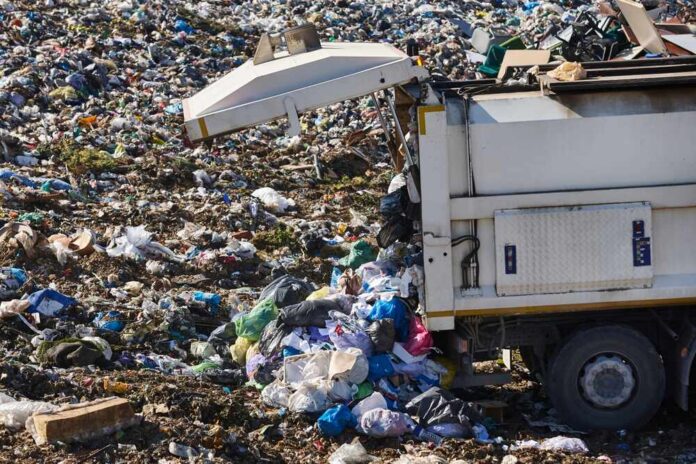
Thirty people died when a mountain of garbage collapsed in Conakry before dawn after heavy rain, crushing homes and lives in seconds.
Story Snapshot
- A massive waste mound gave way around 2 a.m. in Conakry’s Dar Es Salam area.
- Officials reported 30 dead, plus serious and minor injuries.
- Heavy overnight rain triggered the collapse, burying nearby shacks.
- The government had moved to close the unsafe landfill and relocate waste.
What happened, where, and when
Guinea’s government said a towering pile of waste at the Dar Es Salam landfill in the capital, Conakry, collapsed at about 2 a.m. after heavy overnight rain. The slide buried nearby tents and shacks in the Gbessia commune.
Officials reported 30 people dead, with six seriously injured and 16 lightly injured. Prime Minister Amadou Oury Bah went to the site to oversee the response and assess damage, signaling the gravity of the event and the state’s direct involvement.
Rescuers hunt for survivors after a landslide at a landfill in Guinea's capital killed 30 people. Heavy rains overnight prompted the collapse of a massive mound of waste that engulfed nearby tents and shacks https://t.co/5PaVINmF4g pic.twitter.com/z4vwxZNqZA
— Reuters (@Reuters) August 24, 2026
The Dar Es Salam site is the largest landfill in Conakry. Witness accounts reported by international outlets describe a sudden roar and a wall of debris pushing into fragile homes.
Government statements and wire reports align on the core facts: the rain came hard overnight, the waste slope failed, and dozens died. Some early tallies varied as rescue teams worked, which is common in disasters, but the official count settled at about 30 dead as operations continued.
Why the landfill was already on the brink
Authorities had labeled the landfill unsafe and announced plans to close it and move dumping outside the city. The government had also ordered expulsions and safety measures around the site due to fear of a collapse.
These steps show the risk was known, even if the downpour provided the final push. This pattern matches other cities where unmanaged open dumps turn into unstable “garbage mountains” that fail under rain or load, with tragic results.
Reports across major outlets point to the same sequence: heavy rain, a weakened waste slope, nearby informal housing, and a deadly slide. That mix is not unique to Guinea.
United Nations urban initiatives and city studies have tracked similar collapses tied to poor drainage, excess piling, and the spread of makeshift homes at the dump edge. The Conakry tragedy sits squarely in that known risk map and should not be treated as a freak event.
How rain and poor dump design turn deadly
Rain drives water into the waste mass, adding weight and pressure. Leachate—dirty liquid formed inside dumps—can build up and lubricate layers. Without proper drainage, buttressing, or engineered slopes, the waste mound can shear and slide.
When homes press up against the dump, a failure zone becomes a kill zone. Basic controls like drainage channels, slope limits, and buffer zones reduce this danger. Cities that skip them gamble with lives each rainy season.
At least 30 people have died after a landslide hit a landfill near Guinea’s capital, Conakry. Rescue teams are searching for survivors trapped under the debris, days after authorities announced plans to close the dangerous site.#Guinea #Conakry #Landslide #Africa #BreakingNews pic.twitter.com/EX0y49aECl
— FOLIN TV NEWS (@FOLINTV) August 24, 2026
A practical fix list is not exotic. Enforce a no-build buffer around the waste footprint. Shape and cap slopes to safe angles. Install drains that work in monsoon bursts. Move active tipping to a stable working cell. Track height with an independent inspector who can halt dumping.
Publish the closure order, the safety plan, and the daily loads. Simple, transparent rules turn a dump from a landslide risk into a managed facility. That is common sense and good governance.
What leaders did, and what must follow
The government sent top officials to the scene and announced a landfill shutdown and relocation. That response shows command attention, but the follow-through will decide lives.
Closing a dump is a process, not a press release. Waste still comes every day. It needs a safe site, trucks, fees that get paid, and guards who hold the line on buffer zones. Rescue and mourning come first; then comes enforcement so the same rain does not write the same headline again.
The hard lesson for fast-growing cities
Open dumps grow faster than budgets if leaders delay tough calls. People build where land is cheap and rules are thin. Rain then exposes every shortcut. Conakry is not alone, and that is the warning. The choice is not between growth and safety.
It is between planning that saves money and lives, or cleanup that spends both. The truth is plain: engineered landfills, clear buffers, and posted rules cost less than funerals and bulldozers at 2 a.m..
Sources:
reuters.com, apnews.com, instagram.com