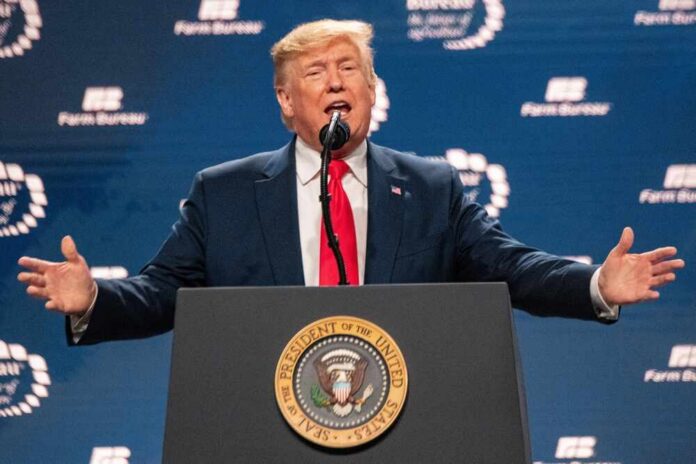
President Trump expanded his Most Favored Nation drug pricing plan with nine more drugmakers, pushing U.S. prices toward the lowest paid in peer nations.
Story Highlights
- Nine midsized drug companies joined the White House pricing plan, bringing total participants to 26.
- The policy aims to align American prices with the lowest in comparable developed countries.
- Covered medicines span hemophilia, Parkinson’s, glaucoma, cancers, transplants, and more.
- The White House projects more than $600 billion in savings over a decade.
Nine More Companies Sign On To MFN Pricing
On August 31, the White House announced new pricing agreements with nine midsized drugmakers under President Trump’s Most Favored Nation policy.
The new participants are Alcon, Astellas Pharma, BeOne Medicines, BridgeBio, CSL, Kyowa Kirin, Sun Pharma, Teva Pharmaceuticals, and UCB, according to multiple reports released the same day.
The administration said these deals build on earlier agreements, bringing total participating manufacturers to 26, a group it says captures a large share of the branded market.
The White House previously detailed that the policy ties United States prices to the lowest prices paid in comparable developed nations for the same medicines.
August 31 coverage reports that the nine new companies expand access across major disease areas, including hemophilia, Parkinson’s disease, glaucoma, liver disease, several cancers, transplants, and infectious diseases. This expansion follows earlier deals that set the structure and terms for companies to opt into the program over time.
Scope, Market Coverage, And Patient Impact
White House materials earlier stated that prior agreements covered roughly 86 percent of the branded market; with the nine new companies, coverage approaches about 90 percent by the administration’s framing.
The initiative includes exchange terms reported earlier in the year, such as tariff relief and the ability for companies to sell directly to consumers through the TrumpRx.gov channel, signaling a defined policy framework rather than ad hoc discounts.
Specific monthly price points have been cited for some high-demand drugs like GLP-1 therapies for weight loss and diabetes in adjacent agreements.
President Trump announces an expansion of a drug pricing initiative: "Nine new pharmaceutical companies are committing to deliver their lowest drug prices for American patients." pic.twitter.com/IA9kMN0URG
— CSPAN (@cspan) August 31, 2026
Officials say this broader participation means real relief at the counter for seniors and families. The administration highlighted a projection of more than $600 billion in savings over ten years tied to Most Favored Nation alignment, a figure it has promoted since the spring.
That estimate reflects the view that American list prices have been higher than those abroad for many top medicines and that pegging prices to peer nations can narrow that gap quickly for patients and taxpayers.
How MFN Works And What Comes Next
Under the Most Favored Nation approach, the government sets or negotiates prices to match the lowest level paid among comparable wealthy countries, then companies agree to supply products at those benchmarks in the United States.
Earlier reporting documented that at least some agreements run for about three years, implying the policy cycle includes renewals and updates as markets move. The White House has presented the August 31 expansion as part of a steady march to full participation across major therapeutic areas.
President Donald Trump announced an expansion of his Most Favored Nation drug pricing initiative on Monday afternoon from the White House.#WGXA #TNND #NationalHeadlineshttps://t.co/BOICmD5EeH
— WGXA (@WGXAnews) September 1, 2026
For many, the thrust is simple: the administration is using America’s market power to stop price gouging and put patients first. President Trump’s team says tying prices to peer nations brings common-sense discipline to a system long tilted toward special interests.
While the $600 billion savings figure is a projection rather than an audited result, the policy mechanics and the named company roster are now public and expanding, raising the stakes for continued enforcement and visible savings at the pharmacy.
Sources:
washingtontimes.com, detroitnews.com, whitehouse.gov, npr.org, amcp.org, statnews.com, thegatewaypundit.com