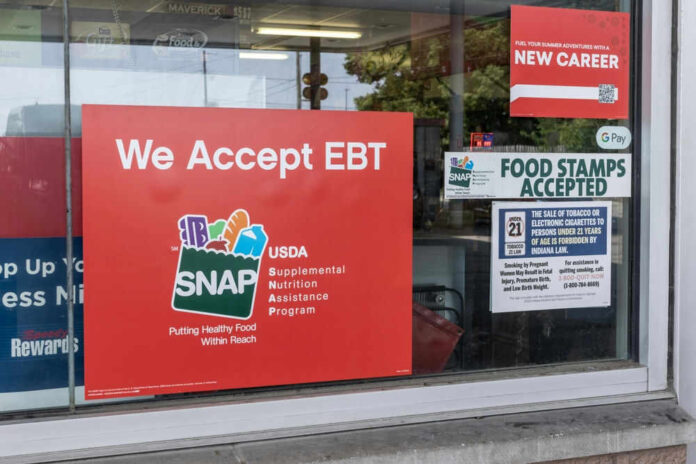
The Trump administration uses SNAP benefits as leverage in the government shutdown standoff, refusing to deploy $5 billion in contingency funds while Congress remains deadlocked over healthcare subsidies.
Story Snapshot
- USDA announces complete halt of federal food aid, including SNAP benefits, starting November 1
- Administration deliberately chooses not to use $5 billion in available contingency funds.
- Nearly one in eight Americans who rely on SNAP face immediate food insecurity
- The month-long government shutdown continues, with Democrats demanding negotiations on ACA subsidies.s
Administration Takes Hard Line on Food Benefits
The U.S. Department of Agriculture posted an official notice on October 27 confirming no federal food assistance will be distributed starting November 1.
The Trump administration made the strategic decision to withhold approximately $5 billion in contingency reserves that could extend SNAP benefits through the shutdown.
This calculated move demonstrates the administration’s commitment to using every available tool to pressure Congress into ending the nearly month-long government closure.
Democrat Obstruction Prolongs Crisis
Congressional Democrats continue blocking government funding while demanding negotiations over Affordable Care Act subsidies as a precondition for reopening. Republicans maintain the principled position that budget negotiations should occur only after restoring essential government services.
This Democrat strategy of holding basic government functions hostage to advance their healthcare agenda exemplifies the party’s willingness to sacrifice American families for political gain.
Vulnerable Americans Pay Price for Political Games
Approximately 42 million Americans rely on SNAP benefits for basic nutrition assistance, representing roughly one in eight citizens. The program’s vulnerability during shutdowns highlights the problematic dependency created by decades of expanding federal welfare programs.
While the immediate impact on families is concerning, this situation underscores the need for reforms that reduce reliance on federal assistance and strengthen local community support systems.
BREAKING | The USDA says SNAP benefits will not go out Nov. 1: “Bottom line, the well has run dry.” https://t.co/snTVkAxZpB pic.twitter.com/3neDwqdfMj
— WFAA (@wfaa) October 27, 2025
Food banks and charitable organizations across the nation are preparing for increased demand as federal assistance lapses.
Local grocery retailers, particularly in lower-income communities, anticipate significant revenue decreases as SNAP spending power evaporates. The ripple effects extend beyond individual families to entire communities that depend on federal food assistance programs for economic stability.
Constitutional Principles at Stake
This standoff represents more than budget negotiations; it reflects fundamental disagreements about federal government scope and spending priorities. The Constitution grants Congress the power of the purse, making legislative approval essential for government operations.
Democrats’ refusal to pass clean funding legislation while demanding unrelated policy concessions violates the principle of governing through compromise and negotiation rather than hostage-taking tactics.