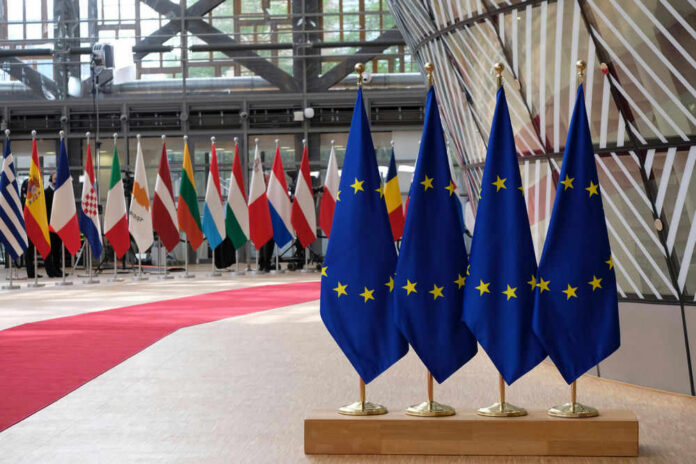
At the NATO summit in Turkey, President Trump openly warned that the United States “could remove all of our soldiers out of Europe,” putting decades of business-as-usual in the alliance on notice.
Story Snapshot
- Trump told NATO leaders the U.S. could pull all troops from Europe, directly challenging the alliance’s dependence on American power.
- His administration is already cutting specific forces and capabilities tied to NATO, even as critics insist the overall posture is mostly unchanged.
- Europe and Canada rushed to raise defense spending by about $139 billion, but media spin still paints Trump’s stance as “misguided.”
- Congress has tried to limit a formal NATO exit, yet Trump can still shrink America’s role and demand real burden-sharing.
Trump’s Summit Warning: Troops Out Of Europe Is On The Table
President Trump used the NATO summit in Ankara to send a clear message that the days of Europe enjoying a near-free ride on American defense might be ending. In a meeting with Turkish President Recep Tayyip Erdogan, Trump said, “We could remove all of our soldiers out of Europe,” tying that threat to frustration over allies’ behavior from Iran policy to Arctic and Greenland disputes.
For many in Europe, this sounded like shocking brinkmanship. For many at home, it sounded like overdue tough love for wealthy nations that still lean on U.S. taxpayers.
Trump renews Greenland threats at NATO summit, says U.S. could remove troops from Europe https://t.co/UU16k4XkS7
— CNBC (@CNBC) July 7, 2026
Trump’s warning did not come out of nowhere. Analysts have traced a real plan inside his administration to reduce traditional ground and air forces stationed in Europe over the next several years.
That discussion includes ideas like pulling the 2nd Cavalry Regiment from Germany, canceling a combat brigade’s rotation into Poland, and cutting three fighter squadrons by around 2030. These changes would not fully end the U.S. role, but they would push Europe to carry more of the load instead of treating American troops as a permanent subsidy.
Concrete Cuts Behind The Rhetoric
Defense policy writers note that Trump already ordered a withdrawal of about 5,000 troops from Germany after Chancellor Friedrich Merz publicly trashed U.S. Iran policy.
That move was paired with decisions not to send certain long-range missile units or extra rotations to Europe, signaling that Washington is serious about trimming commitments when allies mock American strategy yet still demand protection.
At the same time, these reductions have been limited so far. Some experts point out that the overall U.S. troop posture in Europe remains broadly similar, meaning Trump’s threats are still partly a bargaining tool rather than a full break.
NATO officials, and many in the media, are working to calm fears about a sudden vacuum. One senior officer stressed that Trump’s Germany withdrawal order “does not change anything for NATO’s deterrence and defense,” a line repeated in European coverage.
NATO Secretary-General Mark Rutte has also insisted that the United States is not currently pulling its nuclear forces from Europe, and that core deterrence plans remain intact. These statements aim to reassure European publics. But they also try to blunt Trump’s leverage by suggesting that, no matter what he says, NATO will continue on roughly the same path.
Europe Boosts Defense While Critics Attack Trump’s Approach
Facing Trump’s pressure, Europe and Canada have sharply increased their own defense spending. Rutte highlighted roughly $139 billion in extra “core defense expenditure” over the past year, about a 20 percent jump. That surge helps prove a point Trump has made for years: when Washington threatens to step back, NATO countries can find the money to meet their promises.
Public opinion backs this up, showing that talk of U.S. withdrawal makes European voters more willing to raise defense budgets, even as it slightly lowers trust in American reliability.
Despite these tangible results, mainstream commentators keep framing Trump’s troop stance as “misguided and misunderstood.” One widely cited analysis claims his rhetoric confuses allies and does not match the scale of real changes so far. Another report from the Council on Foreign Relations warns that an “accelerating decoupling” of U.S. security from Europe is a negative trend for the alliance.
These critics focus on potential risks to NATO’s unity and on Europe’s anxiety, while downplaying the simple fact that American voters are tired of paying for wealthy nations that can defend themselves.
Legal Limits, Political Leverage, And What Comes Next
Congress tried to tie Trump’s hands in 2023, passing a law that makes it harder for any president to formally pull the United States out of NATO without legislative approval. That means Trump cannot just sign a paper and end the alliance overnight. But he does not need to.
By adjusting troop numbers, cutting certain pledged forces, and questioning automatic support in crises, he can reshape America’s role within NATO while staying technically inside the treaty. That approach keeps pressure on European capitals to step up, without triggering a full legal break.
NATO Meets in Ankara. Trump Is Already Threatening to Walk.
NATO leaders will gather in Turkey this week with the alliance under more strain than at any point since its founding. Trump has threatened to withdraw from NATO, pulled troops from Germany, and is furious that most…
— RANE (@RANEnetwork) July 6, 2026
This fight is about more than Europe’s defense. It is about defending the U.S. Constitution from endless foreign entanglements, guarding American taxpayers from open-ended commitments, and rejecting globalist habits that treat U.S. soldiers as the world’s permanent police force.
Trump’s warning that “we could remove all of our soldiers out of Europe” forces NATO to face reality: if allies want security, they must carry real responsibility and stop relying on American power as a cheap, guaranteed service. The coming months will show whether Europe truly changes course—or whether Washington once again shoulders the burden while critics complain from the sidelines.
Sources:
cnbc.com, euronews.com, warontherocks.com, defensepriorities.org, washingtonpost.com, youtube.com, facebook.com, reuters.com, aljazeera.com, pbs.org, cfr.org, bbc.com