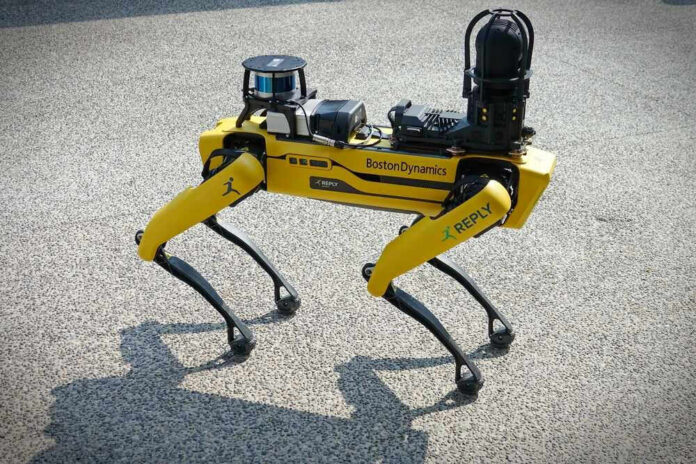
The United States just decided some foreign robots are too risky to be allowed in, and that tells you everything about where the tech war with China is heading.
Story Snapshot
- The Federal Communications Commission (FCC) banned new imports of foreign-made humanoid and quadruped robots on national security grounds.
- The ban also sweeps in connected power inverters used for solar, batteries, and data centers, tying robotics to the power grid.
- Officials say advanced robots can be turned into roaming spy tools or hacked to disrupt critical infrastructure.
- China calls the move discriminatory and threatens retaliation, framing it as protectionism, not security.
Why Washington Is Suddenly Worried About Walking Robots
The Federal Communications Commission did not wake up one morning and decide robots look creepy. It moved because advanced robots now carry cameras, microphones, location tools, and network links everywhere they go. That turns every humanoid or four-legged machine into a rolling sensor tower.
Regulators say foreign-built robots could quietly stream data back overseas, feeding foreign intelligence agencies or hostile hackers.
US MOVES to BAN Chinese HUMANOID ROBOTS
‘NATIONAL SECURITY THREATS’ — CNBC pic.twitter.com/f1IM7H1iPg
— RT (@RT_com) July 28, 2026
The national security document behind the ban spells this out in blunt terms. It warns that modern robots are constantly connected and updated over the air, which creates “broad attack surfaces” for data theft and remote disruption. Imagine a robot in a warehouse near a military base, quietly logging patterns, faces, and access routines.
Now imagine someone in Beijing pushing a software update that changes what it records or who controls it. That is the nightmare scenario U.S. officials are trying to cut off early.
The Covered List And A Bigger Strategy To Secure Supply Chains
These robots were not banned with a tweet; they were added to the FCC’s formal Covered List, the same risk register that previously hit Chinese telecom gear.
Once a device lands there, it effectively cannot get the equipment authorization needed to enter the U.S. market. The key detail: the ban focuses on future models, not an instant recall of robots already in the country.
That signals strategy, not panic. Washington wants to stop dependence before American industry and infrastructure lean too heavily on foreign robotic platforms.
Brendan Carr, the FCC chair, explicitly tied this to protecting supply chains. He warned that relying on foreign robots means those supply chains can be “disrupted or degraded… at a time of their choosing.” That fits a broader principle: do not let hostile regimes hold a switch over your economy.
People complain about regulation until their lights go out or their factory stops because someone abroad decides it is time to apply pressure. This ban is meant to avoid that moment by drawing a bright line early.
From Battlefields To Warehouses: Robots As Dual-Use Weapons
The national security document is clear that these machines are not just toys; they will “dominate on the battlefield” and help “secure our homeland.” A humanoid robot that can open doors and carry gear is useful to firefighters, soldiers, and police.
That same robot could map floor plans, watch movements, or be turned against its users if remote control is compromised. Senators Tom Cotton and Chuck Schumer already pushed a bill to keep Chinese robots out of federal ground operations on these grounds.
The government concern extends beyond spying. Advanced robots can physically interact with the world. A quadruped robot that can climb stairs could be pointed at a data center, a substation, or a crowded public space. If a foreign adversary can take control during a crisis, that robot stops being a tool and becomes a weapon.
For a country that must plan for worst-case scenarios, treating foreign-made robots as potential dual-use threats is not paranoia; it is basic risk planning.
Why Power Inverters Ended Up In The Same Crosshairs
The ban did not stop at robots. It also targets connected power inverters, the devices that manage electricity flow from solar panels, batteries, and data centers into the grid. Those systems sit at the heart of America’s energy transition.
If hostile code can reach them, attackers can do far more than collect data; they can flick switches and disrupt entire regions. Officials warn that such equipment could create cybersecurity risks that threaten critical infrastructure.
BREAKING: The FCC banned imports of new foreign-made humanoid robots and quadruped robots on Tuesday, citing national security risks.
The move targets China, which dominates the global humanoid robot market with an estimated 85% share. Chinese-made power inverters — critical for…
— Finance Spot (@financespotnews) July 30, 2026
People sometimes dismiss this as overreach, but ask a simple question: would you plug your home’s electrical system into hardware controlled by a foreign government? Many Americans would say no without hesitation.
The FCC is applying that same instinct at national scale. In an age where energy, data, and security overlap, drawing a line at foreign control points in the grid reflects priorities of sovereignty and resilience, not trade games.
China Cries Protectionism, But Offers No Technical Rebuttal
Beijing reacted fast, accusing the United States of discrimination and suppression of Chinese companies. Chinese officials claim Washington is using national security as an excuse to block their rise in robotics and artificial intelligence. That fits their broader talking points in this tech rivalry.
But what they have not offered, at least publicly in this record, is a careful technical answer to the core charge: that foreign robots can be used for spying or remote sabotage. The pattern is familiar.
American regulators describe how robots gather data, phone home, and receive over-the-air updates. They warn that this combination can be abused by “malign actors” to surveil Americans or commandeer machines. Chinese responses focus on the politics, not the firmware.
For readers who care about American security first, that matters. When one side shows a clear threat model and the other side only shouts “protectionism,” it is reasonable to side with the people trying to guard your grid and your streets.
What This Means For American Consumers And Industry
For now, the ban mainly affects future imports. Robots already authorized can still be sold and used. That means no instant shock to hobbyists, warehouses, or police departments that bought foreign robots earlier. But the long-term message is clear.
If you build key systems around foreign humanoid or quadruped platforms, expect those options to shrink. Domestic robotics firms will likely see an opening as Chinese brands are shut out of approvals.
Some will call that industrial policy in disguise. In practice, security and industry often move together. When the government decides foreign tech is unsafe, domestic alternatives gain room to grow.
For Americans who want strong borders, reliable energy, and less leverage in the hands of Beijing, restricting foreign robots is not regulatory capture.
It is a line in the sand that says: if a device can see, hear, move, and connect, Americans will decide who builds it before it walks through their front door.
Sources:
cbsnews.com, nbcnews.com, forbes.com, thehill.com, bbc.co.uk