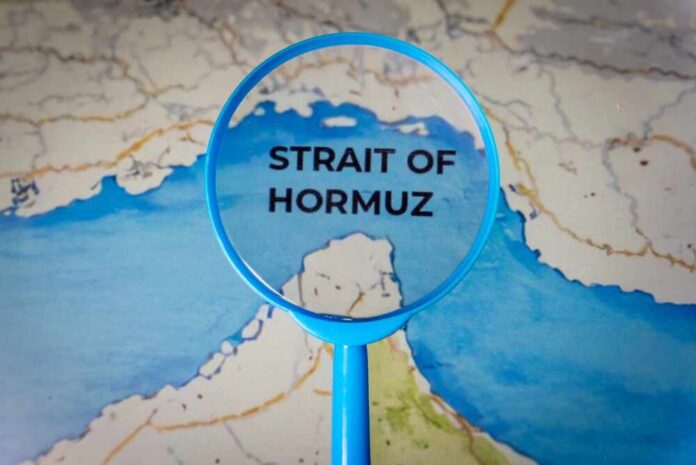
A Louisiana farmer’s fertilizer budget is $130,000 over — and the Strait of Hormuz is a big reason why.
Story Snapshot
- Nitrogen fertilizer prices at the Port of New Orleans jumped 32% in a single week after the Iran conflict began, from $516 to $683 per metric ton.
- Nearly half of all global urea exports come from the Persian Gulf, so closing the Strait of Hormuz sent fertilizer prices spiking almost overnight.
- One Louisiana agriculture pilot saw jet fuel costs jump from $2.46 to $4.11 per gallon, adding more than $30,000 to a single fuel purchase.
- Not every farmer is in crisis — those who locked in fertilizer prices before the conflict started are largely shielded from the worst of it.
A Price Spike That Hit Before the Dust Settled
Within days of the Iran conflict starting, fertilizer prices at the Port of New Orleans surged 32%, jumping from $516 to $683 per metric ton. That is not a gradual market drift. That is a shock.
Purdue University’s Commercial Agriculture program traced the move directly to the closure of the Strait of Hormuz, which cut off nearly half of the world’s urea exports almost immediately. For Louisiana farmers who had not yet bought their fertilizer, the timing could not have been worse.
High energy costs from Iran war heighten pressure on struggling Louisiana farmers: "It's a game of survival" https://t.co/cE0IxSoi8h
— CBS News (@CBSNews) July 12, 2026
One farmer in northeast Louisiana — identified as Guerrero in CBS News reporting — found his fertilizer budget running $120,000 to $130,000 over his planned budget. That is not a rounding error.
That is the kind of number that forces hard choices about what to plant, what to cut, and whether the operation survives the season. American Farm Bureau president Zippy Duval warned that fuel and fertilizer costs were expected to climb even further for Louisiana growers.
Jet Fuel Tells the Same Story From the Air
Louisiana agriculture pilot Reed Cahi watched jet A fuel prices climb from $2.46 per gallon in February to $4.11 per gallon by May. On a 7,500-gallon purchase, that price increase added more than $30,000 to his costs in a single transaction.
Rural households across the country also felt the squeeze, paying an extra $26 per week for gasoline compared to pre-war levels. These are not abstract economic statistics. They are real numbers hitting real budgets every single week.
Diesel prices reached their highest point since 2022. Farmers run diesel in every tractor, every irrigation pump, and every truck that moves crops to market. When diesel climbs, every cost on the farm climbs with it. The squeeze is not coming from one direction — it is coming from every direction at once.
The War Did Not Create This Vulnerability, But It Exposed It
Louisiana farmers were already under pressure before the first shot was fired. Veteran farmer Lee Webster described a drought he called one of the worst in living memory, forcing him to use expensive irrigation just to keep crops alive.
CoBank chief executive Tom Halverson noted that farmers have faced a combined squeeze from lower commodity prices, inflation, and trade disruptions dating back to 2018 and 2019. The Iran conflict did not build this trap. It just snapped it shut faster.
This pattern is not new. The 1974 oil crisis sent farm fuel costs up 43%. The 2022 Russia-Ukraine war caused nearly identical spikes in urea and diesel prices.
Middle East conflicts and fertilizer price shocks have gone hand in hand for decades because nitrogen fertilizer is made using natural gas, and natural gas prices move with the broader energy market. When a major supply route closes, the price signal travels from the Persian Gulf to a Louisiana cornfield faster than most people realize.
Who Got Hurt and Who Got Lucky
Here is the part that gets lost in the headlines. Purdue’s analysis makes clear that farmers who contracted fertilizer in fall 2025 or early winter 2026 locked in prices between $330 and $380 per metric ton. Those farmers are largely protected for the 2026 growing season.
The pain is real, but it is not spread evenly. The farmers in crisis are the ones who were still in the market when the Strait closed. Timing, not just the conflict itself, determined who got hit.
That nuance matters. It does not soften the blow for Guerrero, Cahi, or anyone else staring at a six-figure budget overrun. But it does mean the story is more complicated than a single headline can capture. Some farmers planned ahead and dodged the worst of it.
Others did not, or could not, and now they are the ones describing this season as a game of survival. In American agriculture, the margin between those two outcomes has always been razor thin. The Iran conflict just made that painfully clear.
Sources:
cbsnews.com, americanprogress.org, ag.purdue.edu, facebook.com