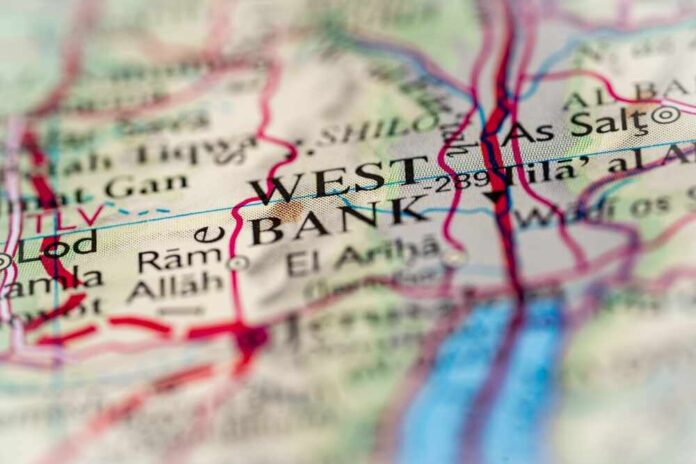
As Washington pressures Israel to accept a “pathway” to a Palestinian state, Israel’s government is accelerating West Bank settlement growth that could make that vision nearly impossible to implement.
Story Snapshot
- Israel’s Cabinet just approved 19 new settlements in the West Bank, bringing total new sites to 69 in two years.
- The move directly clashes with U.S.-brokered plans tying a Gaza ceasefire to a “pathway” toward a Palestinian state.
- Settlement expansion is reshaping facts on the ground, raising questions about long-term U.S. policy and regional stability.
- United Nations officials condemn settlements as illegal and link them to rising violence in the West Bank.
Israeli Cabinet Greenlights 19 New Settlements in Contested Territory
Israel’s Cabinet has approved 19 new settlements in the occupied West Bank, a major step in a long-running expansion drive that is transforming the region’s demographic and political map.
The plan, announced by Finance Minister Betzalel Smotrich, includes two communities evacuated under Israel’s 2005 disengagement plan, effectively reversing part of that earlier withdrawal.
This decision signals that the current Israeli government remains committed to permanently entrenching Jewish communities across the territory despite sustained international criticism.
According to Smotrich, the new approvals bring the total number of settlements established over the last two years to 69, sharply accelerating a process that had already been under way for decades.
An Israeli group that tracks settlement activity reports that the number of recognized settlements in the West Bank has jumped from 141 in 2022 to 210 following this latest move, an increase of nearly 50 percent. That scale of growth in such a short period underscores how aggressively this government is working to consolidate control.
19 new Jewish settlements in the occupied West Bank approved by Israeli Cabinet https://t.co/2q4dtkHhWz pic.twitter.com/7nUsR50vao
— The Independent (@Independent) December 21, 2025
Clash Between U.S. Ceasefire Diplomacy and On-the-Ground Expansion
The timing of the Cabinet decision is especially significant because it comes as the United States is pressing Israel and Hamas to advance the next phase of a Gaza ceasefire agreement.
That arrangement, which took effect in October 2025, is built around a broader diplomatic framework that explicitly mentions a possible pathway to a Palestinian state. By authorizing dozens of new settlements at this moment, Israel’s leadership is effectively tightening its grip on land Palestinians claim for that envisioned state.
Israeli officials and settlement advocates make little secret of that intent. Smotrich has promoted a settlement expansion agenda for years and has indicated that the new communities are meant to block efforts to create a sovereign Palestinian state in the West Bank.
The Cabinet decision also retroactively legalizes previously unauthorized outposts and incorporates them as formal neighborhoods or stand-alone settlements.
For American observers, the episode highlights how U.S. diplomatic language about future statehood often collides with hard realities created by building, roads, and permanent infrastructure.
International Law, UN Condemnations, and Demographic Realities
Israel captured the West Bank, East Jerusalem, and Gaza during the 1967 war and has since settled more than half a million Israelis in the West Bank, with over 200,000 more living in East Jerusalem.
Those communities are scattered among Palestinian towns and villages, connected by Israeli-controlled roads, and protected by the Israel Defense Forces.
The United Nations and most foreign governments consider the settlements illegal under international law, a position Israel disputes, arguing historical, security, and religious claims to the land.
Critics warn that each new approval deepens an already fragmented territorial picture that complicates any two-state formula. The current Israeli government features prominent figures from the settler movement, including Smotrich and National Security Minister Itamar Ben-Gvir, who oversees the police.
Their influence means policies increasingly reflect the priorities of ideologically motivated settlers rather than narrow security considerations alone. For Americans who value clear, enforceable borders and national sovereignty, this expansion underscores how border and security debates abroad mirror similar struggles at home.
Rising West Bank Violence and Limited Accountability
United Nations agencies report that settlement growth has coincided with a surge in attacks by settlers against Palestinians in the West Bank. During the October olive harvest, UN monitors recorded an average of eight such incidents per day, the highest rate since recordkeeping began in 2006.
Those attacks reportedly continued through November, with at least 136 additional cases documented by late in the month. Palestinian officials accuse settlers of burning vehicles, vandalizing mosques, damaging factories, and destroying cropland in multiple communities.
Israeli authorities have condemned the violence publicly but have made relatively few arrests compared with the number of reported incidents. That gap fuels Palestinian accusations of impunity and draws further criticism from international organizations.
For American conservatives focused on law, order, and equal application of justice, the pattern highlights the dangers when any state fails to consistently enforce its own laws. The cycle of expansion, tension, and sporadic enforcement risks locking both Israelis and Palestinians into a more volatile and less governable reality.