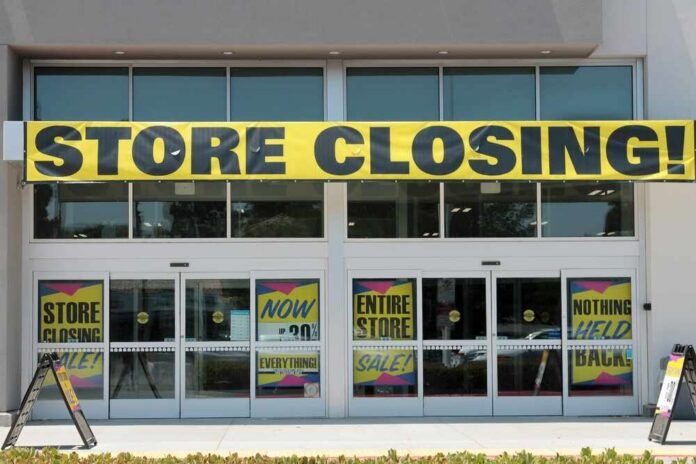
JD Sports paid $1.1 billion for Hibbett Sports in 2024, and now it plans to close roughly 175 of those stores — which raises a fair question about exactly what it thought it was buying.
Story Snapshot
- JD Sports bought Hibbett Sports in 2024 for about $1.1 billion and is now closing roughly 175 of its U.S. stores over the next three years.
- JD Sports CEO Régis Schultz called it a move to build “fewer, bigger, and better” stores and cut underperforming locations.
- Hibbett has historically served small and mid-sized markets in the Southeast, Southwest, and lower Midwest — the exact markets now being trimmed.
- No independent financial review has confirmed which stores are truly underperforming, leaving the company’s own word as the main public explanation.
A $1.1 Billion Deal That Now Needs a Rewrite
JD Sports, the British athletic retail giant, closed its deal to buy Hibbett Sports in 2024. [1] The price tag was roughly $1.1 billion. The stated goal was to grow JD’s footprint in North America, especially in smaller U.S. markets where Hibbett had deep roots. [3]
That strategy now looks different. Just two years after the deal closed, JD Sports is cutting nearly 175 Hibbett locations. The company says it is the right call. The optics, however, are harder to spin.
Hibbett Sports owner plans to close 175 underperforming stores in major North American reorganization https://t.co/SYgGFpK67q
— FOX Business (@FoxBusiness) June 8, 2026
To be fair, post-acquisition store trimming is not unusual. Big retail mergers almost always leave behind overlapping leases, aging locations, and stores that made sense under old ownership but not under new management. JD Sports is following a well-worn playbook.
The question worth asking is whether the closures reflect a smart cleanup or a quiet admission that the acquisition was priced too high for what it actually delivered.
What JD Sports Says and Why It Sounds Familiar
On a recent earnings call, CEO Régis Schultz said JD Sports would close around 170 underperforming stores over the next three years as part of its North American restructuring. [1]
The company’s chief financial officer echoed the same line: the goal is fewer, bigger, and better stores in more productive locations. [7]
That language is straight from the retail restructuring handbook. Every chain that closes stores says roughly the same thing. That does not make it wrong, but it does mean the claim deserves scrutiny that the public record has not yet provided.
Hibbett has always been a small-market chain. [5] Its stores sit in the kinds of towns that bigger retailers skip — places in the Southeast, Southwest, and lower Midwest where Hibbett was often the only serious athletic shoe option on the block.
Closing 175 of those locations does not just affect a balance sheet. It pulls a familiar retail anchor out of communities that do not have many other options to fill the gap.
The Numbers Behind the Closures Have Not Been Made Public
Here is what the public record does not include: a store-by-store breakdown showing which locations are actually losing money, how much, and why. [6] JD Sports controls the narrative here.
The company decides which stores are underperforming, announces the closures, and explains the rationale — all without an independent audit or a detailed financial disclosure that outside observers can check. That is legal and common in retail. It is also a setup where the company’s word is the only word available. [6]
🏬 Overview:
A major U.S. sporting‑goods retailer — Hibbett Sports, owned by JD Sports — is set to close 175 stores across the United States as part of a multi‑year reorganization and cost‑cutting strategy.📉 Core Facts:
– Hibbett store closures — JD Sports will shut about 175…— Washington Report (@Washington_Rep) June 8, 2026
That gap in the public record matters more than it might seem. Landlords, local governments, and workers in affected towns have no way to verify whether their specific location was genuinely struggling or simply caught in a broad sweep designed to hit a corporate savings target.
Those are two very different situations, and right now there is no public document that separates them. This suggests JD Sports would not voluntarily close stores that were profitable. But “underperforming” can mean many things, and the company has not had to define it precisely in public.
What This Means for Small-Town Retail and the People Who Work There
Hibbett built its brand by going where the big chains would not. [5] That strategy worked for decades. Now the parent company is pulling back from that same footprint, and the communities left behind will not likely see a JD Sports flagship move in to replace what closes.
The stores going dark are in smaller markets, which means the economic ripple is felt more sharply there than a closure in a major metro would be. [4]
For workers and local shoppers, this is not an abstract restructuring story. It is a real store, a real job, and a real gap in the local retail landscape.
JD Sports may well be making the right financial move. Cutting stores that drag on earnings is responsible management, and a leaner Hibbett footprint could genuinely perform better. But the company spent over a billion dollars building that footprint just two years ago.
Calling 175 of those stores underperforming now is either a sign of disciplined follow-through or a quiet acknowledgment that the deal did not deliver on its promises. The company has not had to answer that question directly yet — and so far, no one is making them do so. [2]
Sources:
[1] Web – Hibbett Sports owner plans to close 175 underperforming stores in …
[2] Web – Hibbett Sports owner plans to close 175 underperforming stores in …
[3] Web – Hibbett Sports to Close 175 Stores in JD Sports Restructuring
[4] Web – JD Sports to close 175 Hibbett stores as restructuring continues
[5] Web – Popular Athletic Footwear Chain To Close Underperforming Stores
[6] Web – Hibbett Sports – Wikipedia
[7] Web – JD Sports to shut down 175 Hibbett stores – CoStar