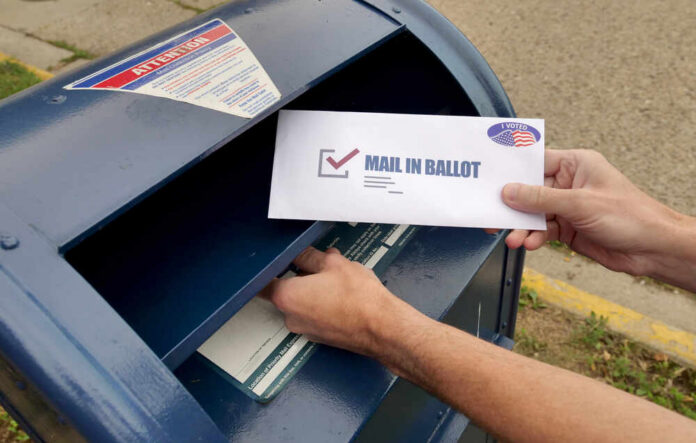
The Postal Service just moved from delivering ballots to checking them at the door—and that changes the game.
Story Snapshot
- USPS proposed and then issued rules tying ballot mail to voter lists and unique barcodes.
- States would enroll in a federal portal and submit names, addresses, and barcode data for ballot envelopes.
- USPS says serialized barcodes boost tracking, compliance, and law-enforcement support.
- A court fight may decide if and when any of this takes effect.
What USPS Actually Put On The Table
The U.S. Postal Service published a proposed rule in June 2026 that set a new condition for handling mail ballots in federal elections: states would provide lists of intended ballot recipients and attach unique serialized barcodes to outbound and return envelopes, with data entered in a federal ballot mail portal.
Reuters later reported a final rule posted in August that formalized these standards, though implementation hinges on the courts. The Postal Service frames this as logistics plus accountability, not election refereeing.
The core mechanism is simple on paper and heavy in practice. Election officials would enroll in a portal and submit each voter’s name, address, and a barcode linked to that voter’s ballot envelopes before USPS accepts those envelopes into the mail stream.
USPS materials already direct how election mail should look and be handled, but barcode serialization and pre-acceptance list checks push the agency closer to a gatekeeping role than to a pure carrier role. That shift drives both the praise and the pushback.
The United States Postal Service has released a new rule adding verification requirements to all mail-in ballots. https://t.co/How6zwugny
— ABC News (@ABC) August 23, 2026
Why USPS Says The Barcodes Matter
USPS defends the plan: unique barcodes and pre-submitted lists make it easier to verify that ballots are issued by officials, reach intended recipients, and are returned through traceable channels. The agency says this improves adherence to federal law and helps law enforcement if something goes off course.
Standardized design, machine-readable identifiers, and clear data flows reduce manual errors and create a cleaner audit trail. On paper, that looks like airline-grade tracking of ballots rather than guesswork.
Supporters argue this closes known gaps. A coalition of state attorneys general said the rule addresses real vulnerabilities and would standardize envelopes and tracking to tighten the chain of custody.
Americans applaud visible tracking, clear logs, and simple tools to spot duplicates or mismatches. If a ballot lacks a proper serialized code tied to a listed voter, the system can flag it before it vanishes into the mail stream. That is prevention, not a post-mortem.
The Friction Point: Who Decides What Gets Mailed?
Opponents say the system hands USPS a lever over ballot access. A multistate comment letter summarized the concern: states would send USPS the list and matching barcodes, and USPS would verify outbound ballots against that list before acceptance.
Critics argue that crosses from delivery to decision, a role they say belongs to state election officials and, if needed, Congress. They also warn that compressing new tech and data feeds into tight election calendars invites delays or errors.
Reuters reporting adds another wrinkle: USPS says it will retain data from ballot envelopes, including addresses and barcodes. Privacy advocates see risks in centralizing identifiable voter mail metadata.
Technologists counter that mail already carries machine codes and that serialized barcodes simply add accountability. Both can be true.
The question is data governance: what is collected, who sees it, how long it is kept, and how misuse is prevented. USPS has not foregrounded a granular data-retention plan in the public record surfaced here.
Does The System Solve A Real Problem At Scale?
Critics press for proof. The public record shows USPS stating that the plan will help with compliance and enforcement, but it does not show a study demonstrating that serialized barcodes plus pre-acceptance lists will catch meaningful fraud at scale beyond current checks. Experts note that states already verify registration, confirm eligibility, and check signatures or identification on return.
The USPS Published its Mail-In-Ballot Rules For the Midterm Elections…This is HUGE.
The USPS just published a new rule implementing Trump’s executive order on mail-in ballots.
States that want the Postal Service to handle their mail-in or absentee ballots must now:
-Turn… pic.twitter.com/EuVuak4Stk
— Americaforever (@onetexgal9) August 23, 2026
There is also the clock. States say building a portal workflow, aligning print vendors, and syncing barcodes across outbound and return envelopes cannot happen overnight.
Other reports the rule would require list uploads before ballots enter the mail stream, a step that could slip schedules if systems lag or lists update late.
A good process beats a rushed process, especially with elections. If this rule stands, phased rollout and clear waivers for edge cases would show respect for federalism and basic competence.
The Bottom Line Most Likely To Stick
USPS has long set mail standards for ballots—envelope design, markings, and handling. The new move ties eligibility signals to a federal data check before the mailpiece moves. That is bigger than a template tweak.
The clean win would be traceability without federal overreach: narrow data, clear retention rules, tight access controls, transparent audit logs, and a published, independent evaluation of error detection and delivery performance after pilots. Until then, the courts will decide when and how the switch flips.
Sources:
abcnews.com, reuters.com, oag.ca.gov, grayhairsoftware.com, about.usps.com, nul.org, krishnamoorthi.house.gov