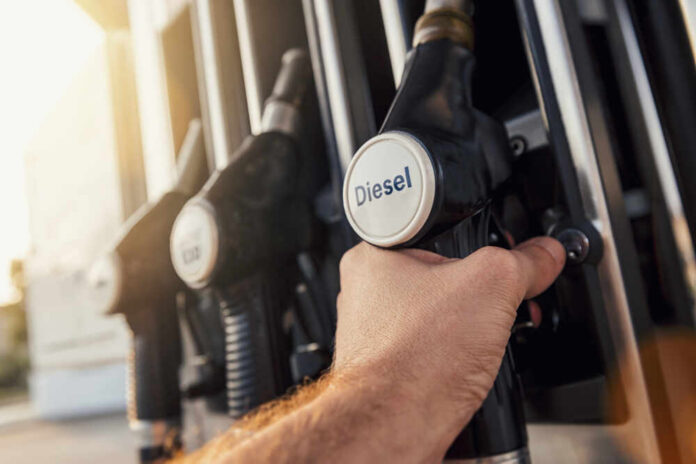
President Trump eased Russia sanctions after saying Vladimir Putin would release diesel to cool a price spike.
Story Snapshot
- Trump announced specific Russian diesel volumes and an accelerated timeline.
- Treasury issued a temporary license to let Russian diesel reach the global market.
- Diesel prices were unusually high, stoking pressure to act before midterms.
- Critics say the plan undercuts sanctions and offers little price relief.
What Was Announced, And Why It Landed Like A Thunderclap
Trump said Russia would ship more than 300,000 tons at once, 500,000 tons in November, and 1 million tons soon after, with a possible 3 million tons to follow. He framed the move as relief for both American and global markets facing severe diesel pain. The Treasury Department followed with a temporary general license that permits qualified Russian diesel deliveries into the global market through April 2027. The sequence gave the plan legal cover and an immediate talking point: more barrels, fast.
The price context was stark. National data showed diesel well above typical levels and far higher than a year before, which amplified the urgency to show visible supply gains before the midterms. Russia also signaled it would lift its own export curbs ahead of schedule, and said shipments to the United States could begin in October, which buttressed the White House claim that material volumes could hit water quickly.
The Legal Valve: How The Sanctions Door Was Opened
The Treasury license matters because sanctions, not just shipping logistics, had blocked Russian diesel from many transactions. The license, as described by outlets that reviewed it, authorizes supply of Russian diesel to the broader global market through a set window. That wording is key. It enabled trading houses and insurers to engage in deals they had stepped back from, but it did not by itself guarantee direct U.S. imports, pricing, insurance rates, or terminal delivery slots. Markets need legal clearance and buyers who will commit and receive.
Critics argue the license contradicts the overall sanctions push that followed Russia’s invasion. They see a policy reversal that weakens leverage without a binding peace concession. That line landed hard with allies of Ukraine and several Democrats who called the decision a betrayal of partners and U.S. interests. From a conservative lens, energy security and price stability are legitimate aims, but the rule should be clarity: if you ease sanctions, define the terms, the guardrails, and the end-state metrics in public, so taxpayers know what they are buying.
Will Added Barrels Cut Prices At The Pump?
Traders and analysts flagged a scale problem. The first 300,000 tons equal roughly half a day of U.S. diesel use. That is not a game changer on its own. Experts also warned global flows can reshuffle rather than rise. If U.S. buyers pull Russian barrels, prior customers will turn to other suppliers, leaving the net global balance little changed. In that case, the benefit looks like a local, short-term easing rather than a broad, lasting drop in retail prices.
A second challenge is execution. The public record did not, at the time, show purchase terms, payment channels, vessel lineups, or discharge points. Without firm contracts and delivery data, the plan is a policy announcement with legal permission, not proof of supply at U.S. racks. Russia also faced its own domestic constraints after export stops and refinery issues, which raised doubts that the full schedule could hold. Conservative common sense says count barrels on deck, not promises on paper.
The Political Crossfire And The Conservative Read
Ukraine’s President Volodymyr Zelenskyy called the move weak and a gift to Putin, arguing that allowing Russian petroleum sales funds the war rather than ends it. U.S. lawmakers across parties echoed that worry, with some saying the agreement hands Moscow a windfall without lowering American prices. These critiques focus less on price math and more on wartime incentives and alliance cohesion. In politics, that frame is sticky because it is moral, simple, and hard to disprove in real time.
I have just concluded a highly successful discussion with President Vladimir Putin, of Russia, wherein it was agreed that Russia will immediately supply over 300,000 Tons of Diesel Fuel to the American and Global Marketplace, another 500,000 Tons during the month of November, and… pic.twitter.com/1bED6Q3KV7
— Commentary Donald J. Trump Truth Social Posts On X (@TrumpTruthOnX) October 9, 2026
The conservative test is outcomes over optics. If the license and shipments produce measurable, sustained price relief without undermining core sanctions goals, the policy earns its keep. If volumes slip, if prices barely move, or if allies fracture, then the tradeoff fails. The next steps are straightforward: publish the license text and guidance, show signed contracts and delivery logs, and track wholesale and retail prices by region. Put the proof in front of voters and let the data speak.
Sources:
nytimes.com, bbc.com, cbc.ca, cnn.com