A 40-year-old Philadelphia police officer was shot and killed during a late-night call about a man with a gun, and prosecutors have charged a 35-year-old suspect with homicide of a law-enforcement officer.
Story Snapshot
- Officer Shane Seiber, 40, was shot and killed in West Philadelphia; a second officer was wounded.
- Prosecutors charged Eric Lewis, 35, with homicide of a law-enforcement officer and related crimes.
- Police say officers encountered an armed man, and both were shot during a struggle.
- Officials say shots were also fired toward nine other responding officers.
What Happened On North 52nd Street
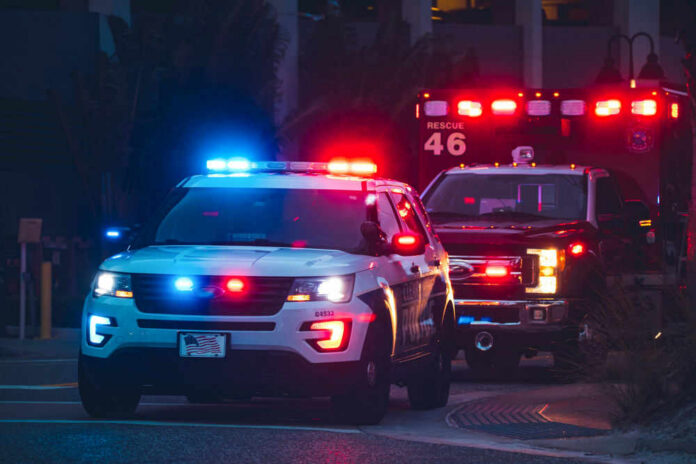
Police say the shooting unfolded around 1 a.m. on the 100 block of North 52nd Street in West Philadelphia. Officers responded to a report of a man with a gun. During the encounter, Officer Shane Seiber, a 10-year veteran and father, was shot and killed. A second officer was also shot multiple times and survived. Reporters identified the sequence based on statements from police and prosecutors at the scene and in later briefings.
Philadelphia District Attorney Larry Krasner later named Eric Lewis, 35, as the charged defendant. Prosecutors filed counts including homicide of a law-enforcement officer, murder, and multiple related charges tied to the gunfire that hit Seiber and wounded his partner. Police Commissioner Kevin Bethel publicly identified Seiber and noted his decade of service to the city, underscoring the loss to his family, his unit, and the community they served.
The Charges And The Case Theory
Prosecutors allege Lewis shot both officers during the encounter and then fired toward nine other officers who rushed to the scene. Reporters cataloged a long charging list that includes attempted homicide or attempted murder, aggravated assault, reckless endangerment, and weapons crimes. Police accounts describe an armed man and a struggle in close quarters, during which both officers were hit several times. The scale of the alleged conduct helps explain the fast, forceful response by city leaders.
Authorities and local media framed the incident as an ambush or a brazen act of violence. That language often appears after attacks on police, especially when rapid updates follow a chaotic scene. The label matches the intensity here, given one officer dead and another shot many times. The case will still move through the courts like any homicide prosecution. The defendant is presumed innocent unless and until a jury says otherwise.
What We Know About The Suspect And The Fallen Officer
Public records and local reports say Lewis had prior convictions for assault, theft, and firearm offenses. One report cited a 2015 guilty plea tied to a 2013 weapons case. Prosecutors did not base the new charges on that past record, but they did identify him as the man confronted by officers at the scene. Police identified Seiber as 40 years old, with 10 years on the force. Colleagues described a steady partner who showed up for tough calls and did the job without drama.
The second officer survived after being shot multiple times. Reports said he was in serious or critical condition, stabilized by fast care. Those details matter because they reflect the case’s stakes. When someone fires at police, the harm ripples out: families, units, neighborhoods all feel it. American conservative values emphasize law, order, and accountability. On those terms, the case demands a full, swift prosecution, and if a jury convicts, a sentence that fits the damage done.
Why The Early Narrative Emerged So Fast
Police and prosecutors often set the first public frame after an officer is shot. That is not a conspiracy; it is how emergency information moves under stress. The public wants to know if the threat is over, who is hurt, and who is in custody. City leaders also reassure other officers who still must answer calls that same night. Major events like this tend to draw the “ambush” label quickly because it signals danger and rallies resources to protect the streets.
🇺🇸 Philadelphia Police Officer Shane Seiber, a 40-year-old 10-year veteran & father of two, was killed in an ambush shooting in West #Philadelphia. His 33-year-old partner, a father of five, was shot 12 times & is recovering.
Eric Lewis, an employee of the Philadelphia Water… pic.twitter.com/rxpMuDkCYR
— ɢʙᴇɴɢᴀ 🎖 (@gbenga_daily) October 11, 2026
The legal road from charges to verdict will lean on standard pillars: body-worn camera video if available, ballistics tying any recovered gun to fired rounds, 911 and radio logs, and the testimony of the wounded officer and the nine who came under fire. Those tools often sharpen the early picture and can speed a resolution. The community owes Officer Seiber and the surviving officer clarity and justice delivered by facts in open court, not by rumor or rage.
Sources:
cbsnews.com, nbcphiladelphia.com, inquirer.com, apnews.com, whyy.org, foxnews.com, phillyburbs.com, nytimes.com