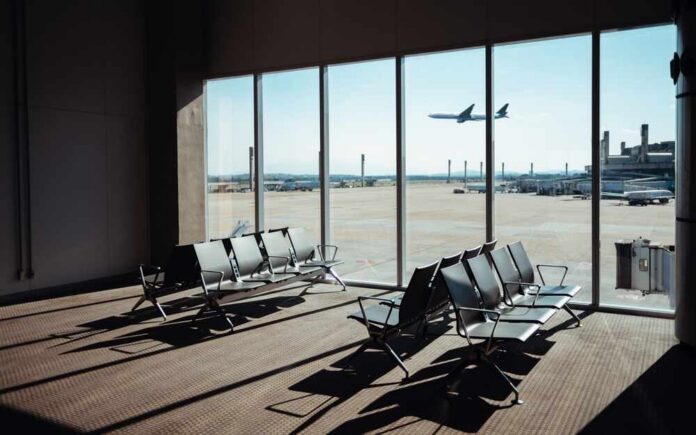
The math says Dallas/Fort Worth International turned 2025 air travel into a waiting game, which is why it was just labeled America’s most stressful airport.
Story Snapshot
- Dallas/Fort Worth International ranked most stressful based on 2025 data-driven factors.
- The delay rate hit 27.86% with a 2.76% cancellation rate, the highest among studied airports.
- Delays worsened compared with 2021, rising about one-third over that period.
- Access hassles like drive time added to the final stress score.
What the ranking measured and why it matters
Rightway Parking compared fifty-five major airports and crowned Dallas/Fort Worth International most stressful using five weighted factors: 2025 delay rate, 2025 cancellation rate, change in delay rate since 2021, distance from downtown, and typical drive time. The result is not a vibe check. It is a composite based on federal on-time records and practical access costs. Multiple outlets published the same core figures, which pushes the score into the mainstream travel conversation.
The 2025 Bureau of Transportation Statistics data produced the punch line. Dallas/Fort Worth International posted the highest delay rate among the airports reviewed at 27.86 percent and the third-highest cancellation rate at 2.76 percent. That double hit made it the only airport in the top three on both measures, which earned it the number one stress slot. The study also reported a notable jump in delays since 2021, with the airport’s delay rate rising by about one-third over that span.
How “on time” is actually defined
The Bureau of Transportation Statistics and the Department of Transportation Office of Inspector General define an on-time flight as one that reaches the gate within 15 minutes of schedule. That standard also shapes how delay causes get tallied across weather, the national airspace system, late arrivals, and more. This matters for readers because a small slip still counts as on time under the rule, and larger slips drive the delay rate that fed this ranking.
Delay causes are recorded only when a flight is at least 15 minutes late. When more than one cause applies, the system prorates delayed minutes among them. That means the official statistics can show weather, air traffic control, or late-arriving aircraft each taking a share of the same late flight. Rankings that rely on delay rates, like this one, reflect those rules and how minutes are split across causes.
Why Dallas/Fort Worth International rose to the top
The hub-and-spoke design amplifies pain when things go wrong. Dallas/Fort Worth International functions as a massive connector for domestic and international routes. When inbound flights run late, crews and aircraft run late too, and the schedule cascades. The airport’s long drive times from the city core add another layer of stress in this study’s method. That mix pushed it over peers that might have worse traffic or longer lines but fewer compounded delays.
Other airports placed high or low depending on similar trade-offs. Some had shorter drives but worse cancellations. Others enjoyed better on-time records but were far from downtowns. The framework weighed every factor equally, so a standout negative in one area could swamp modest positives elsewhere. That is how a not-the-busiest airport can still wear the crown for stress: it scored poorly across both the runway and the roadway at the same time.
What travelers can do right now
Travelers who must connect through Dallas/Fort Worth International can reduce risk with simple steps. Book morning departures to dodge the late-day ripple. Choose longer connection windows. Favor nonstop flights when possible. Track weather patterns on peak days. For tight schedules, use terminals with more frequent service to your destination to widen your rebooking options. These are common-sense moves that match how airlines recover when the system strains.
TSA Wait Times at Dallas Fort Worth International Airport (DFW) are longer than usual!
Location: (Terminal B – B9 General)
Current: 49 min
Typical: 13 min
Difference: +36 min
Trend: climbing (up 21% over the last 3 hours)Plan extra time for security screening.
Check our… pic.twitter.com/x8TMrYrH2H
— Qsensor – Airport & Flight Status (@TravelQsensor) October 7, 2026
For leisure trips, consider date flexibility and alternate North Texas airports if the route allows. Build a buffer on the arrival end when an event or cruise is at stake. If driving to the airport, add extra time to absorb traffic and parking delays, which the study counted into stress for good reason. No one enjoys padding a schedule, but in a hub with a one-in-four chance of delay, buffers beat missed connections and lost weekends.
The bigger picture for policy and operations
Public data sets and private rankings will keep shaping traveler choices. The clarity here is the Bureau of Transportation Statistics baseline: the 15-minute rule, the cause codes, and the monthly on-time tallies. Airports and airlines control only part of that equation, but they do control response plans, gate and crew allocation, and customer communication. Conservative common sense says hit the bottlenecks you can fix first and be transparent about the ones you cannot.
Sources:
foxnews.com, travelandtourworld.com, fortworth.culturemap.com, yourvalley.net, audacy.com, wfaa.com, transtats.bts.gov, oig.dot.gov