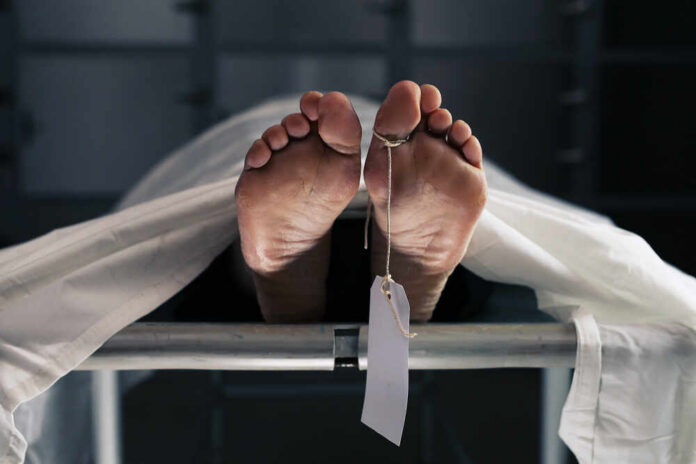
A Harvard Medical School morgue manager turned donated corpses into cash, selling brains, skin and hands to buyers across state lines for years before anyone stopped him.
Story Snapshot
- Harvard agreed to pay $53 million to settle lawsuits from families whose loved ones’ donated remains were stolen and sold.
- Former morgue manager Cedric Lodge and his wife Denise pleaded guilty to interstate transport of stolen human remains.
- Lodge was sentenced to eight years in prison in December 2025 after admitting he sold body parts for years.
- Harvard’s Anatomical Gift Program relied on trust with almost no external checks, allowing the scheme to run from 2018 to 2022.
How A Trusted Morgue Job Became A Black Market Pipeline
Cedric Lodge ran the morgue at Harvard Medical School’s Anatomical Gift Program, a place where families sent the bodies of loved ones for medical research and student training.
Instead of properly disposing of remains after their educational use, Lodge removed organs, brains, skin, hands, faces and dissected heads, and shipped them to buyers around the country.
Harvard to pay $53M in suit over selling donated corpses on black market https://t.co/EmwYWUrMIq pic.twitter.com/JESjGATcKg
— New York Post (@nypost) August 19, 2026
Federal prosecutors said Lodge let buyers walk through the morgue and pick out which remains they wanted. He then packed the parts and mailed them from his home in Goffstown, New Hampshire, collecting payment for human tissue that families believed would only serve science.
The Criminal Case That Exposed The Scheme
A grand jury indicted Lodge, his wife Denise, and three others in June 2023 on charges of conspiracy and interstate transport of stolen goods. Investigators said the operation ran openly for roughly four years before Harvard fired Lodge in May 2023.
Lodge pleaded guilty in April 2025. Chief United States District Judge Matthew Brann sentenced him in December to eight years in prison, calling out how he treated human remains “as if they were mere trinkets.” Denise Lodge received her own sentence the same day.
Prosecutors had pushed for a ten-year term, arguing the betrayal of donor trust deserved harsh punishment. The judge’s eight-year sentence still sends a clear message: stealing from the dead for profit carries real prison time, not just a scandal and a firing.
Harvard’s $53 Million Settlement With Grieving Families
Separate from the criminal case, families who donated bodies to Harvard sued the university, arguing it failed to protect their loved ones’ remains. A Boston court received a proposed $53 million settlement in 2026, ending a class action that had dragged on for years.
A Massachusetts judge gave preliminary approval to the deal, which resolves claims brought by families who say they trusted Harvard’s Anatomical Gift Program with a final act of generosity, only to learn parts of their relatives ended up sold on the open market.
Getting to a settlement wasn’t guaranteed. Harvard initially argued that it should not be held liable for an employee’s criminal acts. Massachusetts’s highest court rejected that defense in October 2025, ruling that the families’ claims plausibly showed a lack of good-faith oversight, allowing the lawsuits to move forward.
How Harvard Responded To The Scandal
Harvard Medical School called Lodge’s conduct “morally reprehensible” and said he was terminated the day it learned of the accusations. The school also said investigators believed Lodge acted without help or knowledge from anyone else at Harvard.
Harvard later told reporters the actions were “shocking, abhorrent, and an appalling violation,” expressing sorrow for the uncertainty and distress families endured while the case moved through the courts. Lodge himself told the court he knew what he did was wrong and felt deep regret for the harm caused to families.
I did not have Harvard paying $53 million to settle a lawsuit over selling donated corpses on the Black Market…Weirdest bingo card ever!
— Loose Cannon ⚽️🔴Premier League Champions🏆 (@Burnku) August 19, 2026
A Broader Warning About Trust-Based Institutions
This case is not really about one bad employee. It is about how little oversight exists inside systems that ask ordinary families to hand over something as sacred as a loved one’s body. Harvard’s donation program ran for years without the kind of independent checks that might have caught Lodge sooner.
Families who donate bodies do so out of trust, expecting dignity and scientific purpose in return. When an institution as prestigious as Harvard fails that basic promise, the $53 million settlement matters less as a number and more as an admission that oversight failed people who had no way to check on their loved ones themselves.
Sources:
nypost.com, en.wikipedia.org, thecrimson.com, justice.gov, nhpr.org, reuters.com, apnews.com, archaeologicalethics.org