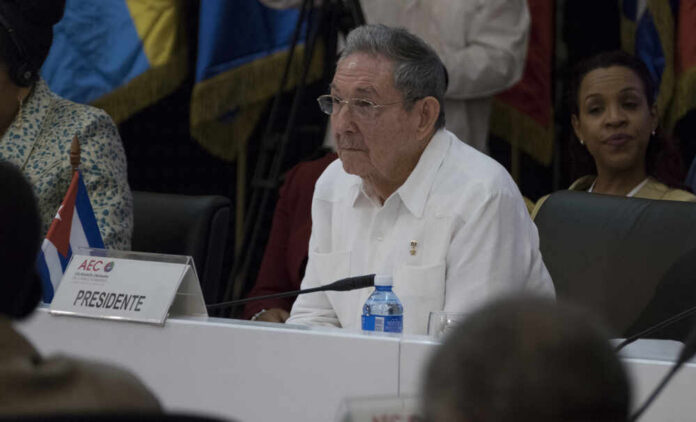
The Raúl Castro indictment story is less about one old shootdown than about whether Washington is finally treating a decades-old act as a live criminal case.
Quick Take
- Reports say the Justice Department is preparing charges against former Cuban President Raúl Castro over the 1996 Brothers to the Rescue shootdown [1][2][3].
- The underlying event remains stark: two civilian planes were shot down in international airspace, killing four people [1][3].
- Fidel Castro publicly accepted responsibility in a 1996 interview, which strengthens the case that the attack was state-directed [3].
- The timing matters because the reported indictment effort arrives as the Trump administration increases pressure on Cuba [2][5].
The 1996 Shootdown Still Drives the Case
The factual core has not changed since 1996: Cuban jets shot down two Brothers to the Rescue planes over the Florida Straits, and four men died [1][3].
That detail matters because it gives the case a clean moral outline and a hard legal edge. When a government uses force against civilian aircraft in international airspace, the argument for accountability becomes difficult to shrug off, even years later.
Trump administration prepares to seek Raul Castro indictment as it pressures Cuba, AP sources say https://t.co/uEz3A3Jcmb
— The Washington Times (@WashTimes) May 16, 2026
The strongest support for the reported indictment is not the leak itself, but the history behind it. Reuters-based coverage says the United States has long treated the shootdown as a deliberate act, and Miami Herald reporting says a federal judge later found the Cuban government murdered four people in international airspace [1][3].
In plain English: this is not a mystery crime scene. The open question is whether prosecutors can personally link Raúl Castro to the order.
Why Fidel Castro’s Admission Still Echoes
Fidel Castro’s 1996 CBS interview remains one of the most damaging pieces of the historical record because he said, “I gave the order” and assumed responsibility for what the air force did [3].
That admission does not automatically prove Raúl Castro’s individual guilt, but it strengthens the broader claim that the shootdown came from the top of the Cuban state. For prosecutors, that kind of statement can help turn an old political episode into a command-and-control case.
The weakness in the public reporting is just as important. The available material does not show the actual indictment, the grand jury presentation, or the documentary evidence tying Raúl Castro himself to the attack [1][2][3][5]. That gap matters.
Americans tend to distrust grand gestures without receipts, and rightly so. A serious case against a former head of state should stand on authenticated records, not on selective leaks and television suspense.
Why Washington Might Move Now
The reported timing suggests strategy as much as law. Coverage places the possible indictment alongside President Donald Trump’s hard line on Cuba, including pressure tied to fuel shortages and broader economic strain [2][3].
That does not disprove the case. It does, however, explain why skeptics will see a political signal as well as a prosecutorial one. When foreign policy and criminal law travel together, the public naturally asks which one is driving.
By JOSHUA GOODMAN, ALANNA DURKIN RICHER and ERIC TUCKER MIAMI (AP) — The Justice Department is preparing to seek an indictment against former Cuban President Raúl Castro, three people familiar with the matter told The Associated Press on Frid… https://t.co/VEJAMjmw8W
— Capital Gazette (@capgaznews) May 15, 2026
That skepticism will not erase the underlying facts, but it will shape how the story lands. Short breaking-news reports say the Justice Department is “preparing” charges, while the public still lacks official confirmation from Washington or Havana [1][2][5].
In a case this old, timing becomes part of the argument. Supporters will call it overdue accountability. Critics will call it symbolic timing. Both reactions are predictable because the evidence that would settle the matter remains mostly behind closed doors.
What Would Make the Case Credible
The only way to move the debate from speculation to proof is to release the materials that matter: the indictment, the supporting memorandum, the audio evidence, and the civil case record [3][4][5].
If prosecutors have strong command-chain evidence, they should be able to show who ordered what, when, and through which military channel. If they cannot, then the story risks becoming another example of politics outrunning proof, which helps nobody except the spin doctors.
That is why this case still has gravity. The dead are not abstractions, and the passage of time does not wash away a shooting over international waters. Yet American justice also loses moral force if it operates like a press release.
If the Justice Department files charges, the public should demand the same standard everywhere else: specific facts, authenticated evidence, and a clear theory of individual responsibility. Anything less is theater.
Sources:
[1] Web – DOJ Seeks Raúl Castro Indictment Over 1996 Brothers to the …
[2] Web – U.S. reportedly preparing criminal charges against Raúl Castro over …
[3] Web – Raúl Castro’s indictment expected to be unsealed in Miami
[4] YouTube – DOJ seeks to indict Raúl Castro in 1996 Brothers to the Rescue …
[5] Web – US Considers Indicting Former Cuban President Raúl Castro Over …