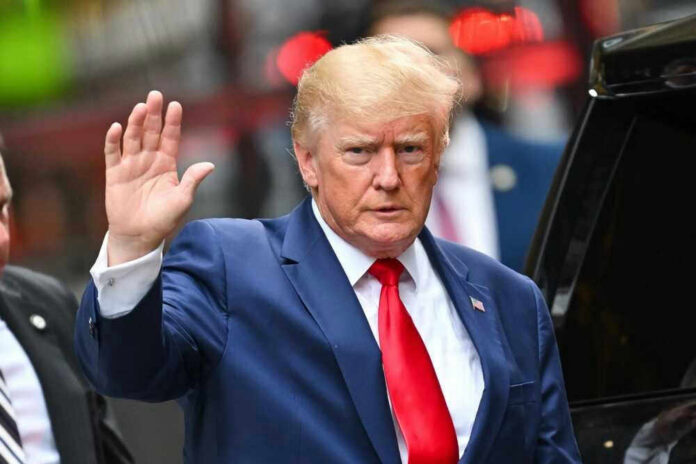
President Trump’s unapologetic celebration of Robert Mueller’s death has reignited the fiery political battle over the Russia investigation that consumed his first term and exposed the deep partisan wounds that still define Washington.
Story Snapshot
- Former Special Counsel Robert Mueller died at age 81, with his law firm WilmerHale confirming the passing on March 21, 2026
- President Trump posted a social media statement expressing gladness over Mueller’s death, saying, “he can no longer hurt innocent people”
- Mueller’s family revealed he had been battling Parkinson’s disease since 2025, which prevented him from testifying before Congress
- The former FBI Director led the controversial 2017-2019 Russia probe that neither charged nor exonerated Trump but fueled years of political warfare
Trump Breaks Silence on Mueller’s Passing
President Trump issued a blunt social media statement on March 21, 2026, hours after Mueller’s death was announced by his law firm, WilmerHale. The President expressed being “glad” about the former Special Counsel’s passing, referencing their contentious history and his failed attempt to remove Mueller from the Russia investigation.
This unusually direct response contrasts sharply with the neutral confirmations from Mueller’s family and firm, demonstrating Trump’s unwillingness to soften his stance even in death. The statement reignites the bitter feud that defined much of Trump’s first presidency.
Mueller’s Controversial Russia Investigation Legacy
Mueller led the 2017-2019 Special Counsel investigation into Russian interference in the 2016 election, examining whether Russia acted to aid Trump’s campaign. The probe concluded that Russia indeed interfered but did not result in charges against Trump, citing Justice Department policy against indicting sitting presidents.
This outcome neither accused nor absolved the President, leaving both sides to claim vindication. Trump attempted to fire Mueller during the investigation but was unsuccessful, intensifying the public feud between the two men. For conservatives who viewed the probe as a politically motivated witch hunt, Mueller’s death closes a painful chapter of government overreach.
Robert Mueller, former FBI director, Russia special counsel, dead at 81 https://t.co/9dTf0i5aLg pic.twitter.com/gaJHZHwcQG
— New York Post (@nypost) March 21, 2026
Distinguished Career Marred by Partisan Controversy
Mueller served as FBI Director for 12 years from 2001 to 2013, becoming the second-longest serving director after Congress passed a special law extending his tenure at President Obama’s request.
His career included high-profile prosecutions of figures like Manuel Noriega and John Gotti during his Justice Department years, and he earned respect for his Vietnam War service as a Marine officer.
However, his Special Counsel role transformed him from bipartisan law enforcement figure to lightning rod for conservative frustration with deep state investigations targeting a duly elected president.
In 2025, Mueller’s family disclosed he was battling Parkinson’s disease, which had weakened him to the point where he could not testify before the Republican-led House Oversight Committee. This revelation humanized a figure many conservatives viewed as emblematic of Washington’s weaponization of government power against political opponents.
His family described his service as “exemplary,” though millions of Trump supporters would dispute that characterization given the investigation’s impact on the President’s first term and the broader conservative movement.
🚨 BREAKING: Former Special Counsel Robert Mueller has died at 81.
Mueller led the investigation into Russia’s interference in the 2016 election and was widely known for his decades of public service. pic.twitter.com/AYx7MQqk2c
— Save America 001 (@save00th) March 22, 2026
Mueller’s death at 81 symbolizes the closing of the Russia investigation era, though its political reverberations continue to shape partisan divides in 2026. For conservatives who endured years of media hysteria over allegations that ultimately produced no charges against the President, the end of Mueller’s life represents overdue closure to a dark period of politically motivated prosecutions.
Trump’s willingness to express relief at his passing, while controversial, reflects the genuine anger many Americans still feel about an investigation they believe never should have occurred and the innocent lives it disrupted along the way.