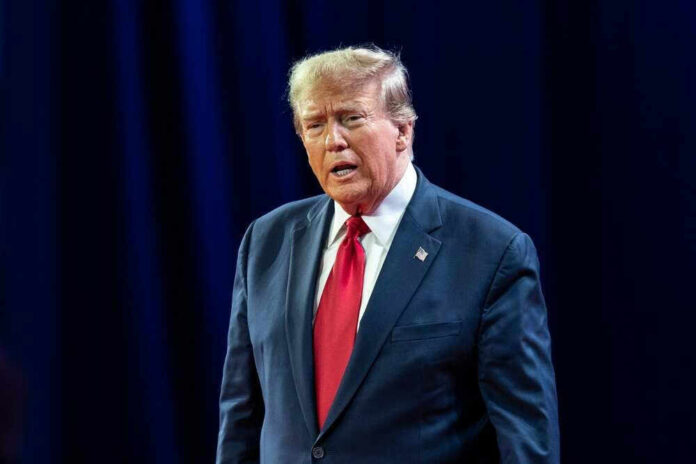
Just like the rest of America, President Donald Trump wants to know why a promising criminology student brutally murdered four University of Idaho students, and why he is now allowed to keep his motive a secret.
At a Glance
- Trump demands answers on Kohberger’s motive after guilty plea.
- Kohberger pleads guilty, escapes death penalty, gets life sentences.
- Families of victims divided on plea deal and lack of motive disclosure.
- Sentencing hearing to feature impact statements from victims’ families.
Trump Demands Answers
President Trump has once again stepped into the fray, demanding that Bryan Kohberger, the man behind the shocking murders of four University of Idaho students, reveal his motive.
Trump’s intervention comes after Kohberger accepted a plea deal on July 2, 2025, pleading guilty to four counts of first-degree murder and one count of burglary.
This plea ensures four consecutive life sentences without the possibility of parole, but has notably spared him from the death penalty.
Trump, voicing the frustrations of many, took to Truth Social to criticize the plea deal and demand transparency about Kohberger’s motives. The lack of a clear motive has left the public and the families of the victims in a state of bewilderment and frustration.
The case, which has gripped the nation since November 13, 2022, when four students were found stabbed to death in Moscow, Idaho, has been a painful journey for the victims’ families.
Kohberger, a criminology Ph.D. student, was apprehended on December 30, 2022, but the gag order that followed his arrest obstructed the flow of information, leaving many questions unanswered for over two years. The lifting of this gag order on July 18, 2025, has reignited public interest and scrutiny.
The Plea Deal Controversy
The plea deal, while ensuring Kohberger’s lifetime imprisonment, has been met with mixed reactions. Some families of the victims are relieved that Kohberger will never walk free, while others are outraged that the death penalty was removed from the table.
The absence of a trial means the motive behind the heinous acts remains a mystery, a point of contention that fuels public debate and dissatisfaction.
This plea deal also raises questions about the justice system’s handling of high-profile cases. The decision to forgo a trial has sparked discussions about the balance between securing a conviction and ensuring complete transparency and accountability.
As the sentencing hearing approaches, set for July 23, 2025, the families of the victims will have a chance to deliver impact statements directly to Kohberger. This moment is expected to be both emotional and pivotal, providing the families a platform to express their grief and anger, and their desire for answers.
Impact on the Community and Beyond
The impact of these murders extends beyond the immediate circle of families and friends. The University of Idaho and Washington State University communities have been left reeling, dealing with heightened security concerns and ongoing trauma.
The case has also sparked national conversations about criminology and the potential for those studying crime to become perpetrators themselves.
Kohberger’s background as a criminology student adds a chilling layer to the narrative, challenging assumptions about the relationship between academic study and criminal behavior.
Moreover, the handling of the case, from the gag order to the plea deal, may have lasting effects on public trust in law enforcement and the judicial system.
The extended period of silence, followed by a plea deal that leaves many questions unanswered, could erode confidence in the transparency and efficacy of these institutions.
The Broader Political and Social Debate
President Trump’s involvement has added a political dimension to the case, highlighting the intersection of crime, justice, and public discourse. His demand for motive disclosure resonates with a public eager for answers and accountability.
The case has also sparked discussions around plea deals and the death penalty, with opinions divided on whether justice has truly been served. As the sentencing hearing unfolds, the nation watches, waiting for closure, and hoping for a semblance of understanding behind the senseless violence.
This case serves as a somber reminder of the complexities surrounding crime, justice, and the search for truth. As we grapple with the aftermath, the need for transparency and accountability in our justice system has never been more apparent.