Every time Kīlauea hurls a thousand-foot fountain of molten rock skyward, it’s not just the earth that shakes—it’s the delicate balance of cultural reverence, scientific vigilance, and economic ambition on Hawaii’s Big Island that trembles with it.
Story Snapshot
- Kīlauea’s 2024–2025 eruptions have produced over 30 distinct lava-fountaining episodes, some reaching heights of 1,200 feet.
- These episodic events challenge scientists’ ability to forecast, while drawing throngs of visitors and spiritual practitioners to the volcano’s rim.
- Native Hawaiians, scientists, and park officials each navigate the volcano’s unpredictability, balancing safety, culture, and spectacle.
- Despite meticulous monitoring, no one knows when the current cycle will end, or if Kīlauea is on the brink of a more profound transformation.
Kīlauea’s Eruptive Spectacle: More Than a Tourist Attraction
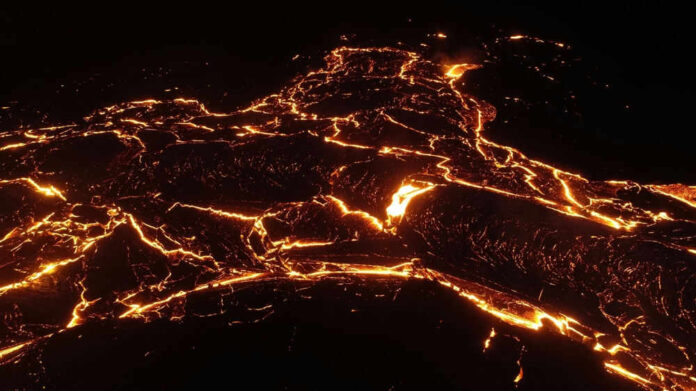
Since December 2024, Kīlauea has erupted in a series of episodes more frequent and dramatic than anything seen in decades. Lava fountains have shot hundreds—sometimes over a thousand—feet above Halemaʻumaʻu Crater, drawing spellbound crowds to Hawaiʻi Volcanoes National Park. For many, these displays are a bucket-list encounter with primal earth forces.
For scientists, they’re a front-row seat to a natural laboratory, but one where the experiment could spiral out of control at any moment. For Native Hawaiians, each eruption is the living breath of Pele, the volcano goddess, demanding both respect and ritual acknowledgment.
The spectacle has had a measurable impact: park visitation soared by nearly 50% in April 2025. Livestreams and social media put the eruptions in millions of living rooms worldwide, fueling both fascination and debate over how best to protect visitors, sacred spaces, and local livelihoods. Each episode, often lasting 10–12 hours, tests the park’s infrastructure and emergency planning, as thousands flock to the rim—sometimes within hours of new fissures opening and spraying fountains of lava high into the air.
Scientific Uncertainty and Cultural Certainty Collide
The U.S. Geological Survey’s Hawaiian Volcano Observatory is at the heart of the scientific response, constantly analyzing tremors, gas emissions, and vent behavior. The unpredictability of the current cycle has kept the volcano at a “WATCH” alert level for weeks. As of mid-August 2025, the most recent eruption ended abruptly after just 12 hours, but magma continues to rise, with scientists warning that another episode is likely imminent. Models point to a new phase beginning between August 18 and 22, but the only certainty is that Pele moves to her own rhythm, not to the timetables of volcanologists.
Meanwhile, Native Hawaiian cultural practitioners perform ceremonies at the crater’s edge, chanting genealogies that tie the present moment to centuries of eruptions chronicled in oral histories. For them, the volcano isn’t just a hazard or a spectacle—it’s a living ancestor, a sacred force whose outbursts must be met with humility and care. Their growing influence is evident in park policies, which now more clearly respect traditional protocols and seek to educate visitors on the cultural significance of the landscape they’re witnessing.
Economic Winds and the Shadow of Danger
Tourism businesses are reaping the benefits of the eruptions, with demand for guided hikes, accommodations, and volcano-viewing tours at record highs. Yet, the economic windfall comes with risks. Local residents face the dual challenges of increased traffic and the ever-present threat of poor air quality from volcanic gases. The park’s staff, stretched thin by surging crowds, must enforce safety perimeters and monitor new hazards as the landscape changes—sometimes overnight.
The local government coordinates emergency planning with federal scientists and the National Park Service, always with an eye toward the next possible disaster. The memory of the 2018 East Rift Zone eruption—when entire neighborhoods vanished under lava—remains fresh. While the current episodes have so far remained contained within the summit caldera, scientists warn that the situation could change with little warning. Each fresh plume of gas or tremor in the earth is a reminder: Kīlauea’s caprice remains the island’s most powerful force.
What Comes Next: The Unanswered Questions
The question on everyone’s mind—when will it end?—has no clear answer. USGS scientists, like Ken Hon, openly admit the limits of their predictive models, noting that each episode’s duration and intensity have grown less consistent as the eruption sequence continues. University of Hawaiʻi geologists suggest that shorter, less spectacular fountains may signal vent widening and reduced pressure, but no one is ready to declare the cycle over. For Native Hawaiians, the uncertainty itself is a reminder of the volcano’s autonomy—a force to be revered, not controlled.
As the next episode looms, the world watches. Some see only danger, others opportunity, but all who witness Kīlauea’s fury are reminded that on this volcanic island, nature, culture, and science are forever entwined in a dance as unpredictable as the volcano itself.
Sources: