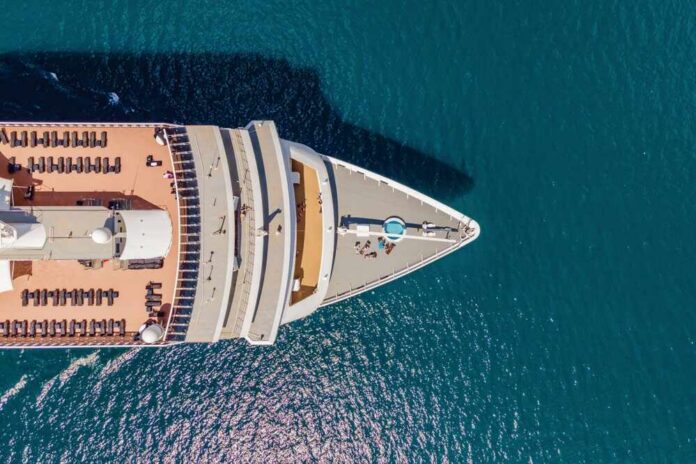
A luxury cruise ship interrupted its Mediterranean voyage to pull five dead men from the sea, a grim reminder that paradise routes cross paths with desperate journeys ending in tragedy.
Story Snapshot
- Princess Cruises’ Sapphire Princess recovered five deceased males from international waters 80 nautical miles northwest of Algiers on April 21-22, 2025
- The victims were not passengers or crew; authorities believe they were migrants attempting the dangerous North Africa-to-Spain crossing
- The crew spotted an orange lifejacket and deployed rescue boats for nearly three hours before resuming the 14-day voyage to Copenhagen
- Spanish National Police launched an investigation linking the deaths to a separate migrant boat found adrift with three bodies and two survivors
- The ship delivered the bodies to Spanish authorities in Cartagena and continued its itinerary without further disruption
When Vacation Routes Cross Tragedy’s Path
The Sapphire Princess crew spotted the orange lifejacket on April 21 while sailing from Cagliari, Italy, toward Cartagena, Spain. What followed transformed a routine luxury voyage into a recovery mission.
The crew deployed fast rescue boats and spent nearly three hours searching the waters, ultimately retrieving five bodies. None were passengers or crew members.
The ship coordinated with the Maritime Rescue Coordination Center throughout the operation, fulfilling obligations under the International Safety of Life at Sea conventions that require vessels to render assistance regardless of circumstances or schedules.
Passengers documented the somber scene through social media, their accounts adding visceral weight to what maritime authorities treat as a procedural duty.
The Sapphire Princess was en route on a 14-night itinerary from Civitavecchia to Copenhagen, with scheduled stops including Gibraltar and various Mediterranean ports.
The recovery delayed the voyage by approximately three hours. Princess Cruises issued a statement extending condolences and praising crew professionalism, emphasizing that the ship acted swiftly under Maritime Rescue Coordination Center guidance before resuming course.
The Mediterranean’s Deadly Migration Corridor
The western Mediterranean remains one of the world’s most lethal irregular migration routes. Thousands attempt crossings annually from North African countries like Algeria and Tunisia to Spain, often in overcrowded, unseaworthy boats operated by smuggling networks.
Weather conditions, poor vessel quality, and lack of provisions create fatal conditions. The 2025 migration surge, continuing pressures from post-pandemic economic instability, have intensified these dangers.
Commercial vessels, including cruise ships, regularly encounter distressed boats or bodies, a grim routine underscoring the humanitarian crisis playing out beneath tourism’s glossy surface.
Princess Cruises ship recovers 5 bodies in Mediterranean during voyage https://t.co/osI7bk3lo8
— FOX Business (@FoxBusiness) April 27, 2026
The timing of the Sapphire Princess recovery coincided with another grim discovery. On April 20-21, a French Navy patrol found a migrant boat drifting approximately 25 miles off Murcia, near Cartagena.
That vessel carried three bodies and two survivors of North African origin who reported being at sea for up to three weeks.
The survivors described possible violence onboard, though passenger counts and exact circumstances remained unclear. Spanish authorities delivered them to Cartagena, where the Sapphire Princess would soon dock with its own tragic cargo.
Investigating Connections and Causes
Spain’s National Police took the lead on the investigation, probing potential links between the five bodies recovered by the cruise ship and the separate migrant boat found adrift.
Authorities questioned the two survivors from the Murcia boat, seeking intelligence on smuggling networks, passenger manifests, and reports of violence.
No identifications of the five deceased males have been released publicly. The investigation centers on understanding how many people were aboard the migrant vessels, whether violence or starvation caused the deaths, and what smuggling operations facilitated the journeys.
The dual incidents highlight systemic issues that transcend individual tragedies. Smugglers pack migrants into fragile boats without adequate fuel, food, or navigation equipment, prioritizing profit over human life.
Survivors often lack clear information about fellow passengers, making casualty counts speculative. Violence can erupt over scarce resources or disputes with smugglers.
Spanish and Italian authorities face mounting pressure to address border security while honoring humanitarian obligations, a tension amplified by EU migration pacts that struggle to balance member state sovereignty with collective responsibility for asylum seekers and economic migrants.
Cruise Lines and the Duty to Rescue
Princess Cruises fulfilled mandatory international maritime law by recovering the bodies and coordinating with rescue authorities. The Safety of Life at Sea conventions, established by the International Maritime Organization, compel all vessels to assist persons in distress at sea regardless of nationality or circumstances.
Cruise operators face unique challenges when humanitarian duties interrupt commercial schedules, balancing passenger expectations with legal obligations.
The Sapphire Princess incident generated positive public relations for the cruise line, with coverage emphasizing crew compassion and professionalism rather than operational inconvenience.
The broader cruise industry increasingly encounters migrant-related incidents in the Mediterranean, raising questions about protocol standardization and crew training for such scenarios.
While insurance and regulatory frameworks address rescue operations, the emotional toll on passengers and crew receives less attention. Social media accounts from Sapphire Princess passengers described shock and sadness, a stark contrast to the cruise line’s leisurely atmosphere.
Maritime tracking sites confirmed the ship maintained its itinerary after Cartagena, arriving in Copenhagen on schedule on May 3, demonstrating the industry’s capacity to absorb such disruptions without financial penalty.
The Human Cost Behind the Headlines
The five deceased men remain unidentified, their families likely unaware of their fates. This anonymity typifies migrant tragedies, where victims disappear into bureaucratic processes and statistical tallies. North African communities bear the emotional and economic costs, with relatives left in agonizing uncertainty.
The survivors from the linked boat face interrogation, potential deportation, and trauma from weeks at sea witnessing death. For Cartagena port authorities, the arrivals represent logistical burdens, stretching resources already taxed by routine migrant rescues.
The political implications extend beyond Spain’s borders. EU member states debate responsibility-sharing mechanisms for asylum processing and border enforcement, with Mediterranean nations arguing they bear disproportionate burdens.
The Sapphire Princess incident and similar recoveries fuel narratives on both sides: humanitarian advocates cite them as evidence of failed policies forcing migrants into perilous crossings, while border security proponents point to smuggling network impunity and the need for stricter deterrence.
Sources:
Cruise Ship Sapphire Princess Recovers Five Bodies From the Mediterranean – Maritime Executive
Spain Italy Mediterranean Sea Princess Cruise Ship Incident – Travel and Tour World
Sapphire Princess Recovers Five Bodies at Sea on Way to Spain – Travel and Tour World
Princess Cruises Ship Recovers 5 Bodies Mediterranean During Voyage – Fox Business
Princess Cruise Ship Recovers 5 Bodies From Sea Near Spain’s Mediterranean Coast – NTD