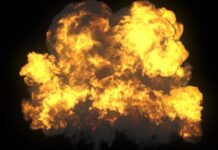
U.S. forces struck Iran’s Qeshm Island to stop a missile threat aimed at American aircraft, and the timing reverberated far beyond the Strait of Hormuz.
Story Snapshot
- U.S. officials said the military hit targets on Qeshm Island in a limited operation.
- The stated goal was to neutralize a surface-to-air missile launcher threatening U.S. assets.
- Explosions were reported on Qeshm Island as the strikes unfolded.
- Coverage stressed the operation’s narrow scope and defensive purpose.
What Happened And Why It Mattered
U.S. officials said American forces carried out limited strikes on Qeshm Island in Iran around November 2–3, 2026. Multiple outlets confirmed the action through separate officials, underscoring that the operation moved from plan to execution. The stated aim was not regime change or broad escalation. The mission focused on a surface-to-air missile launcher that officials said had been used to threaten a U.S. aircraft. That purpose shaped the scope, targets, and message to Tehran and U.S. allies.
Bright flashes light up the night sky before loud explosions erupt on Iran's Qeshm Island, near the Strait of Hormuz.
Eyewitness footage released Tuesday captures the blasts as a U.S. official confirms American forces carried out what were described as limited, defensive strikes… pic.twitter.com/4159kp0dP2
— Fox News (@FoxNews) November 3, 2026
Associated Press reported that Iranian state television acknowledged explosions heard on Qeshm Island, adding local signal to the U.S. account of a real strike. The island sits at the mouth of the Strait of Hormuz, a tight maritime lane that handles a large share of the world’s oil flow. Geography made the strike consequential. Military activity near this chokepoint always risks chain reactions: shipping insurance spikes, oil jitters, and hasty misreads by nervous air-defense crews.
The Target And The Terrain
Officials described the action as a defensive step against a missile launcher used to target U.S. assets. That focus matches what is known about Qeshm’s military footprint. Reporting has long pointed to missile and naval facilities on or near the island, making it a logical site for short-notice air-defense activity. The choice of a limited strike that aims to blind, disrupt, or remove a launcher signals a calibrated message: stop menacing U.S. aircraft or face rapid, precise costs.
The operation’s design fit a pattern used across recent conflicts: neutralize sensors or shooters that directly threaten aircrews, then pause. That approach shortens the ladder to escalation. It also supports a core conservative principle in national defense: act with clarity, defend U.S. lives, and avoid open-ended wars. A narrow strike on a defined threat aligns with that standard, especially when crews face active targeting in a crowded sky.
Election-Eve Optics And Strategic Signaling
The strikes landed right before U.S. midterm elections, a context media coverage noted across reports. The White House and the Pentagon framed the action as limited and defensive, not a rush to war. That framing addressed two audiences. Tehran heard that missile threats bring quick pain. Voters heard that the commander in chief would protect U.S. forces without chasing a wider fight. Both aims carry weight in a democracy that expects strength with restraint.
Explosions on Qeshm Island drew eyes to the region’s razor-thin margins for error. Air-defense teams watch fast-moving dots and make second-long choices. Pilots fly in stacked air corridors with tankers, drones, and patrols. A single missile shot can turn routine patrols into rescue missions. The United States sought to restore deterrence at that micro level: keep your launchers dark, or they become targets. That is practical, measurable, and rooted in common-sense force protection.
How Effectiveness Gets Judged
Battle damage assessment is where headlines fade and hard work begins. Military leaders do not judge success only by a crater. They ask if the enemy’s system still functions, and for how long. Government reviews show this step has challenged air campaigns for decades, because proving lasting military effect takes time and layered intelligence. That is why careful leaders talk about limited aims and defensive results after fast strikes like this one.
What To Watch Next
Future flashpoints will likely center on three questions. First, does Iran keep air-defense crews on a tighter leash near the Strait? Second, do U.S. patrols report fewer missile illumination events in the days ahead? Third, does shipping traffic move without new harassment? If the answers are yes, the strike achieved its narrow goal. If not, expect more pinpoint actions that hit sensors, launchers, and nodes before they can touch U.S. aircraft again.
Sources:
foxnews.com, nbcnews.com, timesofisrael.com, apnews.com, upi.com, nbcchicago.com, cnbc.com