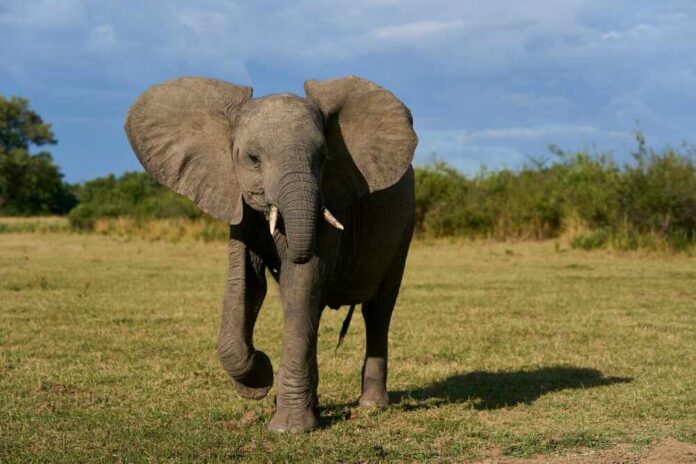
A notorious bull elephant named Oyewan has now claimed its third human life in Thailand’s Khao Yai National Park, trampling a 65-year-old tourist to death and raising urgent questions about failed wildlife management.
Story Snapshot
- Oyewan, a repeat-offender bull elephant, killed a Thai tourist on a morning walk, marking its third confirmed fatality with possible additional unsolved deaths.
- Thailand’s wild elephant population has surged from 334 in 2015 to nearly 800, fueling deadly human-elephant conflicts in tourist hotspots.
- Over 2014-2023, 341 incidents resulted in 360 human casualties, including 189 deaths, peaking in the high-tourism eastern regions near Khao Yai.
- Park authorities plan a Friday meeting to decide Oyewan’s fate—relocation or behavior modification—amid warnings about mating-season aggression.
Fatal Attack Unfolds in Khao Yai National Park
A 65-year-old tourist from Lopburi province died when wild bull elephant Oyewan trampled him during a walk with his wife in Khao Yai National Park, northeast of Bangkok. Park rangers intervened, scaring off the elephant and allowing the wife to escape unharmed.
Park chief Chaiya Huayhongthong confirmed this as Oyewan’s third kill, suspecting links to unsolved deaths. The park houses about 300 wild elephants, where mating season amplifies bull aggression.
Elephant kills tourist at national park in Thailand, third fatality linked to the same animal https://t.co/N3vOddeYpl
— CBS Mornings (@CBSMornings) February 2, 2026
Escalating Human-Elephant Conflicts Driven by Population Boom
Thailand’s wild elephant numbers rose from 334 in 2015 to nearly 800 recently, intensifying human-elephant conflicts amid deforestation, road expansion, and crop cultivation like maize and sugar cane.
These factors encroach on habitats, drawing elephants into human areas, especially during the rainy season from July to October. Khao Yai, in the high-risk eastern region, saw four elephant-vehicle attacks earlier this year with no injuries. Broader trends show over 220 human deaths since 2012, including tourists.
From 2014 to 2023, Thailand recorded 341 human-elephant conflict incidents across 34 provinces, resulting in 360 human casualties, with 189 deaths and 234 elephant casualties, including 166 deaths. Peaks occurred in 2018 and 2023, with the eastern region, like Chanthaburi and Prachinburi, facing the most due to forest shortages and crop allure.
Historical clashes date back decades, escalating post-1995 from Myanmar border pressures and peaking at Kui Buri National Park in 1995-1999 with poisonings and killings.
Stakeholders Grapple with Safety Versus Conservation
Chaiya Huayhongthong leads the Khao Yai response and coordinates the Friday meeting on Oyewan. Department of National Parks, Wildlife and Plant Conservation (DNP) oversees parks, tracks casualties, and administers contraceptives for population control.
Officials like Kanchit Srinoppawan and Mattana Srikrajang urge visitors to exercise caution and link the risks to increased vehicle traffic. Tensions exist between conservationists favoring relocation over culling and locals demanding fences and repellents after crop losses that have affected 156,000 farm families.
Chaiya stated, “He was the third person killed by Oyewan… We will probably decide to relocate him or change his behavior.” Oyewan remains in the park pending the decision.
Broader precedents include ongoing farm raids at Kui Buri and Khao Ang Rue Nai, plus 107 cases from 2012-2018 with 75 human casualties. Experts like Sermpan Saliman attribute elephant movements to food shortages and advise against poisoning or shooting.
Impacts Threaten Tourism and Local Livelihoods
Short-term effects include tourists’ fear of reducing visits to Khao Yai, a key attraction featuring elephants. In the long term, the population surge sustains conflicts, with 2023 seeing 48 cases.
Economic impacts include farm damage, such as over 60,000 trees at Kui Buri, and tourism revenue losses. Socially, 360 human casualties from 2014 to 2023 heighten public alarm. Politically, DNP faces scrutiny; calls are growing for traffic diversion, fencing, and behavioral studies to address habitat loss.
Sources:
PMC study on human-elephant conflicts in Thailand (2014-2023)
Anadolu Agency: Elephant attacks raise fears for tourists in Thailand
Nation Thailand: Human-elephant conflict background
WDEF: Elephant kills tourist at national park in Thailand, third fatality linked to the same animal
CBS News: Scientists using behavioral studies to help solve Thailand elephant-human conflict