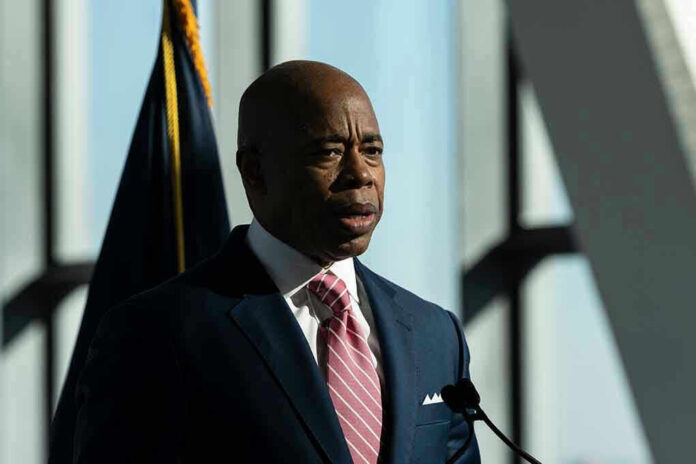
President Donald Trump’s Department of Justice recently dropped a legal bombshell: New York City Mayor Eric Adams has been targeted over his sanctuary city policies.
At a Glance
- Eric Adams faced federal investigations over alleged corruption and foreign campaign donations.
- The DOJ, under the Trump administration, dismissed the case, leading to mass resignations among prosecutors.
- Adams claims vindication, while critics argue that there is political interference in justice.
- The case’s dismissal raises concerns about the future of public accountability.
Eric Adams: From Promising Reformer to Legal Turmoil
Eric Adams, initially elected as a moderate Democrat who promised law and order, became embroiled in federal investigations just a year into his tenure. Accusations of illegal foreign donations and corruption surrounded his administration.
As the investigations intensified, several high-ranking officials in his administration faced resignations and arrests. The scrutiny only grew as the 2024 presidential elections approached, with Donald Trump regaining the White House.
Trump's DOJ Smacks New York City Mayor Eric Adams With Lawsuit Over Sanctuary City Policieshttps://t.co/f8tkLvpKYK
— RedState (@RedState) July 25, 2025
Adams, who once campaigned on a platform of public safety, saw his administration’s credibility crumble under the weight of these allegations.
The federal investigators accused his campaign of accepting illegal contributions, notably from Turkish sources, to secure city contracts and expedite building inspections.
Such claims stirred the pot of political discourse, blending city governance scandals with national political agendas.
The DOJ’s Controversial Dismissal: Political Maneuvering or Justice?
In a move that shocked the legal community, the DOJ, now led by Trump appointees, ordered the dismissal of the case against Adams. The decision was met with outrage from within the DOJ itself, leading to the largest wave of resignations among federal prosecutors in decades.
Critics argue this dismissal was politically motivated, aimed at aligning Adams with federal immigration policies favored by the Trump administration.
Adams declared his exoneration, emphasizing his innocence and decrying the investigation as politically charged. However, the circumstances around the dismissal have left many questioning the independence of the DOJ and the potential manipulation of justice for political gain.
The dismissal not only halted the legal proceedings but also set a precedent that could influence future cases of public corruption.
Implications for New York City and Beyond
The fallout from this legal drama extends far beyond Adams’ office. For New York City residents, the case has further eroded trust in local government and its ability to function transparently and effectively.
The mass resignations have disrupted federal prosecutorial efforts, impacting ongoing and future cases that rely on seasoned legal professionals.
Economically, the city faces potential delays in projects and contracts due to administrative upheaval. Socially, there’s a growing cynicism about political accountability and justice, a sentiment that resonates in other major cities facing similar governance challenges.
The case’s dismissal has also sparked a debate about the role of federal intervention in local corruption cases, a contentious issue that could shape national political narratives.
Expert Opinions and Future Outlook
Legal experts and former prosecutors have expressed deep concern over the DOJ’s actions, warning of long-term damage to prosecutorial independence and the rule of law.
The case’s handling is seen as a potential blueprint for future federal-local interactions, especially under administrations with divergent political priorities.
Political analysts are closely watching the implications for the 2025 mayoral race, with Adams likely to face a divided electorate. His claims of vindication may rally some supporters, but the overarching narrative of political interference and corruption casts a long shadow over his administration’s legacy.
As the city heads toward another election cycle, the lasting impact of this case will continue to shape public discourse and governance strategies in New York and beyond.