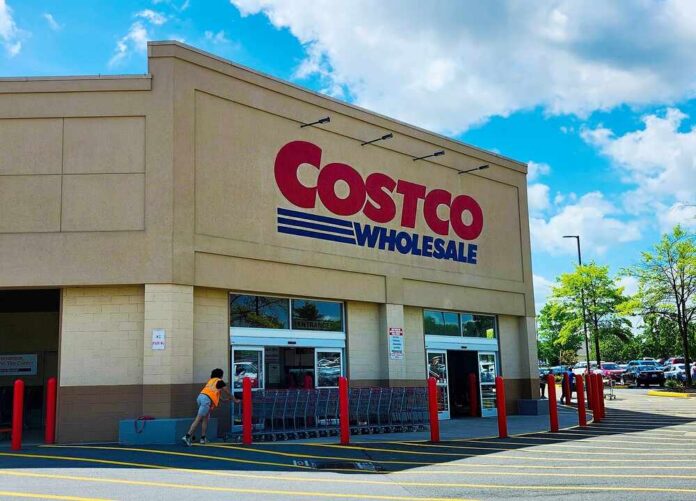
Costco has joined dozens of companies suing the Trump administration for tariff refunds as liberal courts attempt to strip presidential authority over trade policy, potentially costing taxpayers hundreds of millions while weakening America’s negotiating power with China and other trading partners.
Story Overview
- Costco filed suit seeking full refunds of tariffs paid in 2025 before the Dec. 15 deadline
- The federal appeals court ruled 7-4 that Trump lacked authority under the Emergency Powers Act
- Supreme Court justices appeared skeptical of tariff authority during November oral arguments
- White House warns of “enormous economic consequences” if hundreds of millions must be refunded
Costco Rushes to Beat Liquidation Deadline
Costco filed its lawsuit Friday in the U.S. Court of International Trade, seeking protection from a looming December 15 deadline that could permanently bar refunds of tariffs already paid.
The retail giant argued that U.S. Customs and Border Protection denied its request to extend the liquidation date, which finalizes tariff computations on imported goods. The company warned it risks losing money already paid, even if the Supreme Court eventually rules the tariffs were illegally imposed.
Here's what is really happening.
Costco wants to preserve its eligibility for tariff refunds IF the SCOTUS eventually rules the tariffs are illegal.The only way to preserve that right is to file suit for a refund prior to Dec. 15th.https://t.co/Bb8zv9QTUE
— Brick Suit (@Brick_Suit) December 2, 2025
Liberal Courts Challenge Presidential Trade Authority
The U.S. Court of Appeals for the Federal Circuit dealt Trump a significant blow in August, ruling 7-4 that the president lacked authority under the International Emergency Economic Powers Act to impose reciprocal tariffs and fentanyl tariffs on imports from trading partners, including Canada, China, and Mexico.
The court held that “the core Congressional power to impose taxes such as tariffs is vested exclusively in the legislative branch by the Constitution,” directly challenging the executive’s authority over trade policy.
Supreme Court Skepticism Threatens Trade Strategy
During the November 5 oral arguments, a majority of Supreme Court justices appeared skeptical of the Trump administration’s legal arguments defending presidential tariff authority.
The high court agreed to hear the case on an expedited basis, though the timing of a final decision remains unclear. This judicial skepticism threatens to undermine Trump’s broader trade strategy and America’s ability to respond quickly to unfair foreign trade practices.
Economic Consequences Mount as Companies Seek Refunds
Dozens of companies have filed similar protective lawsuits, potentially exposing hundreds of millions in taxpayer-funded refunds if courts ultimately side against presidential authority.
White House spokesman Kush Desai emphasized that “the economic consequences of the failure to uphold President Trump’s lawful tariffs are enormous.”
The administration maintains that these tariffs were essential tools for protecting American workers and countering unfair trade practices by adversaries such as China.
Constitutional Authority Under Attack
The broader legal challenge represents another attempt by the judicial system to constrain presidential powers that have been exercised for decades to protect American interests.
Trump’s tariffs targeted critical issues, including reciprocal trade fairness and the deadly fentanyl crisis, driven mainly by Chinese precursor chemicals flowing through Mexico and Canada.
Conservatives should be concerned that limiting executive trade authority will hamstring future presidents from responding decisively to economic threats and unfair foreign competition that damages American manufacturing and workers.