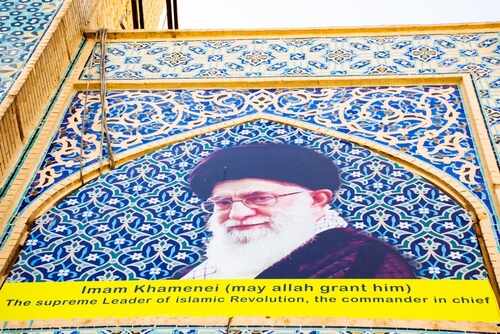
Iran’s ruling regime has reportedly selected Mojtaba Khamenei, the son of the assassinated Supreme Leader, to inherit absolute power in what critics are calling a dangerous step toward dynastic theocracy that undermines even the pretense of Iran’s revolutionary legitimacy.
Story Snapshot
- Mojtaba Khamenei emerges as the leading contender to succeed his father following the late February 2026 assassination in U.S.-Israel airstrikes
- Assembly of Experts confirms selection made by March 8 but delays formal announcement amid reports of reluctant candidates
- Hereditary succession threatens to fracture clerical unity and expose the regime as a monarchy masquerading as an Islamic republic
- Islamic Revolutionary Guard Corps consolidates power behind the scenes while the constitutional process provides a facade of legitimacy
Succession Process Accelerates After Assassination
Ayatollah Ali Khamenei died in late February 2026 during coordinated airstrikes by Israel and the United States, confirmed by Iranian state media on March 1. The attack triggered Iran’s constitutional succession protocol for only the second time since the 1979 Islamic Revolution.
An interim leadership council formed immediately under Article 111, comprising Guardian Council member Alireza Arafi, Chief Justice Gholam-Hossein Mohseni-Eje’i, Parliament Speaker Mohammad Bagher Ghalibaf, and President Masoud Pezeshkian.
The 88-member Assembly of Experts, a body of vetted clerics, began deliberations to select a successor wielding control over military, judiciary, nuclear policy, and internal security.
Mojtaba Emerges as Controversial Frontrunner
Mojtaba Khamenei, the late leader’s second son, rose to prominence as the primary candidate despite lacking significant executive experience and facing accusations of nepotism. The death of former President Ebrahim Raisi in 2024, previously considered a top contender, cleared the path for Mojtaba’s ascension.
By March 6, Parliament member Mohsen Zanganeh stated two reluctant candidates remained, with a new leader expected by March 8. Assembly members confirmed on March 8 that a choice had been made, pending formal announcement.
Mojtaba’s elevation represents a break from his father’s reported opposition to hereditary succession, which Ali Khamenei feared would taint the regime as monarchical rather than revolutionary.
Iran named Mojtaba Khamenei, the son of the late Ayatollah Ali Khamenei, as its next supreme leader on Sunday. https://t.co/PNQgMKHVU2
— KOKH FOX 25 (@OKCFOX) March 9, 2026
IRGC Power Trumps Constitutional Formalities
While the Assembly of Experts nominally selects the Supreme Leader, realpolitik analysis reveals the Islamic Revolutionary Guard Corps and regime elites hold decisive influence. Ali Khamenei cultivated IRGC dominance in Iran’s economy and security apparatus to compensate for his own mid-ranking clerical status when he assumed power in 1989.
That transition, orchestrated by Akbar Hashemi Rafsanjani after Ayatollah Khomeini’s death, required constitutional amendments to allow a hojatolislam rather than a senior ayatollah to lead. The current succession unfolds amid a heightened crisis following U.S.-Israel strikes on nuclear sites during the 2025 Twelve-Day War, empowering hardline military factions favoring continuity over reform.
Hereditary Selection Risks Regime Fracture
Mojtaba’s appointment, if confirmed, threatens to expose fundamental contradictions in Iran’s theocratic system. The Supreme Leader’s role was designed to vest ultimate authority in a qualified religious scholar, not a dynastic heir.
Historical precedent shows proposed successors face a “curse”—Ayatollah Montazeri was dismissed in 1989 for criticizing mass executions, while other candidates died or fell from favor.
Mojtaba lacks the black turban signifying descent from the Prophet Muhammad, a credential held by other potential leaders like Alireza Arafi. His selection could fracture clerical unity and provoke public backlash against what dissidents would portray as monarchy disguised as Islamic governance, potentially destabilizing a regime already facing legitimacy challenges.
#BREAKING 🚨Mojtaba Khamenei has been chosen as Iran’s new Supreme Leader
Quick Profile👇
Mojtaba is considered to have particularly close ties with the Islamic Revolutionary Guard Corps (IRGC), which reportedly exerted heavy pressure that helped secure his appointment. He is… pic.twitter.com/bHENTcjOP5
— Tomer Almagor (@almagor_tomer) March 8, 2026
The succession drama underscores a broader pattern where revolutionary ideals yield to power consolidation. For Americans watching Iran’s nuclear ambitions and regional aggression, this transition reveals a regime prioritizing survival over principles.
As Trump administration policies exert maximum pressure on Tehran, the installation of an inexperienced heir backed by military strongmen may signal either desperate weakness or dangerous unpredictability. Either scenario demands vigilance from policymakers committed to protecting U.S. national security interests and supporting Iranian citizens yearning for freedom from clerical tyranny.
Sources:
2026 Iranian Supreme Leader election – Wikipedia
The Curse of Succession in Iran – Stimson Center
How succession works in Iran and who could be the country’s next supreme leader – MPR News