A JetBlue pilot says a drone slammed into his jet at 3,000 feet over New York, yet investigators cannot find a single scratch.
Story Snapshot
- Pilot of JetBlue Flight 948 reports a direct hit from a drone above the cockpit during approach to John F. Kennedy International Airport
- Federal Aviation Administration investigation finds no damage on the Airbus A321 despite the dramatic radio call
- Rare alleged mid air drone strike exposes tension between pilot judgment, hard evidence, and airport security
- Case raises questions about drone enforcement, personal responsibility, and institutional transparency in crowded American skies
A dramatic claim over the New York coastline
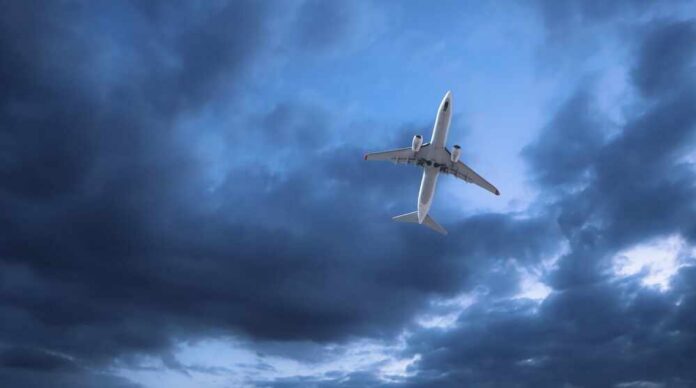
JetBlue Flight 948 was dropping through 3,000 feet toward John F. Kennedy International Airport just after seven in the morning when the calm routine broke. On the radio, the pilot told air traffic control, “We collided with a drone back there in the turn… it hit us right above the cockpit.”
The Airbus A321 had left Las Vegas overnight and was crossing the coastline near Sea Bright, New Jersey, about ten to twelve miles from the runway. For the people on board, nothing seemed wrong. The jet kept flying and landed normally minutes later.[2][7]
That short message from the cockpit lit up newsrooms and social media feeds around the world. Headlines shouted that a drone had struck a JetBlue jet over New York, hinting at a near disaster in crowded morning airspace.
If the report proves true, this would be one of the first known collisions between a small drone and a commercial passenger plane in United States airspace, a scenario long feared by safety officials but rarely seen outside computer models and test labs.
The shock was clear: a cheap hobby device possibly hitting a multi million dollar airliner packed with travelers.[2][3][6][12]
What inspections really found on the JetBlue jet
Once Flight 948 reached the gate, JetBlue did what any serious airline must do when a pilot reports an impact. Passengers walked off the aircraft in a normal way, and the airline pulled the plane from service for a full post flight inspection. Mechanics and engineers examined the area above the cockpit and other key surfaces.
JetBlue then released a careful statement: the inspection found no damage and no evidence of a collision. Federal Aviation Administration officials backed that account and said their own checks also saw no physical proof of a strike.[1][2][5]
A JetBlue pilot reported their plane possibly struck a drone at 3,000 feet while on final approach to John F. Kennedy International Airport. The plane landed safely, and all passengers were able to exit normally. https://t.co/OirVItoMia pic.twitter.com/JlqKgCnToK
— CBS Evening News with Tony Dokoupil (@CBSEveningNews) June 29, 2026
This hard fact creates the core puzzle in the story. On one side stands a veteran pilot, trained to spot threats and trusted with lives, saying something hit the aircraft at a known altitude and location. On the other side stands the airline’s maintenance team and federal investigators, saying they looked and found nothing to match that claim.
The jet later flew again, which strongly suggests there were no hidden structural issues. Without dents, cracks, or scraped paint, it becomes hard to prove that a drone ever touched metal, even if a drone was nearby.[1][7]
How rare and serious drone strikes on airliners really are
Consumer drones have exploded in number in the past decade, but actual mid air collisions with large passenger jets remain incredibly rare. One policy study noted that, up to its publication, no commercial drone or small quadcopter had yet been confirmed to collide with an aircraft in United States airspace.
Drone impact tests show a small unmanned aircraft can rip engine blades, punch holes in noses, or even embed in a structure, especially if batteries ignite. But on real routes, airports see far more bird strikes than drone strikes, despite heavy worry over drones.[12][14]
Researchers have begun tracking suspected drone collisions and near misses worldwide, trying to separate rumor from fact. Out of a small set of confirmed collisions, several involve military aircraft or helicopters, not commercial passenger jets. Near midair incidents with drones are more common, but most end as “close calls” without contact.
The JetBlue report sits in an uneasy category. The pilot insists the drone hit. The inspectors insist the aircraft shows no mark.
Why this case hits a nerve on safety, trust, and enforcement
The Federal Aviation Administration bans drones from restricted airspace near airports for a reason. A reckless drone operator can risk hundreds of lives while standing on a beach with a remote. According to reports, the JetBlue jet was just north of Sea Bright when the pilot saw the object, a place coastal hobbyists know well.
If a drone truly flew at 3,000 feet in that corridor, the operator likely broke several federal rules at once, from altitude limits to controlled airspace violations. Those rules exist to protect the traveling public, not to crush hobbies.[2][3][10]
Airplane Ops: NYC | Drone Strike
A JetBlue Airways pilot reported hitting a drone as the flight was on approach for landing at JFK Airport on Monday morning.
The plane, which was coming from Las Vegas, landed safely, and the airline and FAA said no damage or evidence of… pic.twitter.com/R77PjYnYmi
— WayneTech SPFX®️ (@WayneTechSPFX) June 29, 2026
The Federal Aviation Administration has made clear that serious drone violations can now bring big civil fines and even criminal charges. That tougher stance aligns with common sense: if you put a drone in the path of a passenger jet, you should face real consequences.
But strong enforcement depends on solid proof. In this case, there is a dramatic radio call, but no damaged aircraft, no identified drone, and no captured operator. The risk is that the public tunes out “unverified strikes” as pilot overreaction, even when some may be real. At the same time, we cannot build policy on fear alone.
We need radar data, surveillance footage, and honest reports that match physical facts, or we end up with theater instead of security. For now, Flight 948 lives in that gray zone, a story that reminds us both how fragile trust is in our crowded skies and how much we still depend on human judgment backed by hard evidence.[1][3][10]
Sources:
[1] Web – JetBlue flight reports striking drone while landing at JFK
[2] Web – What happened to JetBlue Flight 948? FAA investigates reported …
[3] Web – DRONE STRIKE REPORTED at JFK Airport 29 JUN …
[5] Web – Possible drone collision with JetBlue jet under FAA investigation
[6] X – JetBlue flight 948 reported hitting a drone at
[7] Web – JetBlue flight reports drone strike near JFK, FAA investigates
[10] Web – A JetBlue flight struck a drone while approaching John F. …
[12] Web – DRONE STRIKE REPORTED at JFK Airport 29 JUN 2026 – Instagram
[14] Web – JetBlue aircraft strikes drone on approach to New York JFK A …
[16] Web – Flight history for JetBlue flight B6948 – Flightradar24
[17] Web – Drone Mid-Air Collision Cases: Legal Liability and Aviation Risks in …