Federal border crews hit pause in Big Bend National Park after a record $1.7 billion push collided with rugged terrain, loud local backlash, and hard questions about strategy and stewardship.
Story Snapshot
- Customs and Border Protection paused construction inside Big Bend National Park pending on-site review.
- A $1.7 billion award targeted Big Bend for barriers, patrol roads, and tech, sparking confusion and outrage.
- All five Big Bend border sheriffs said the terrain already blocks crossings and warned the plan is misfit.
- Former park leaders and advocates flagged legal waivers and damage to sensitive land and access.
What Triggered The Pause Inside A National Park
Customs and Border Protection temporarily halted Big Bend National Park construction while leadership visits the site to decide next steps. The pause followed clearing work and reports of damage near iconic areas, which fueled public pressure and political heat.
Officials and media described a fast-moving rollout tied to a large contract, unclear project maps, and waivers that bypassed standard environmental review, creating a trust gap with locals and park advocates.
Federal records show the government awarded a contract labeled for “border wall in Big Bend Texas,” signaling the largest upfront spend tied to the region.
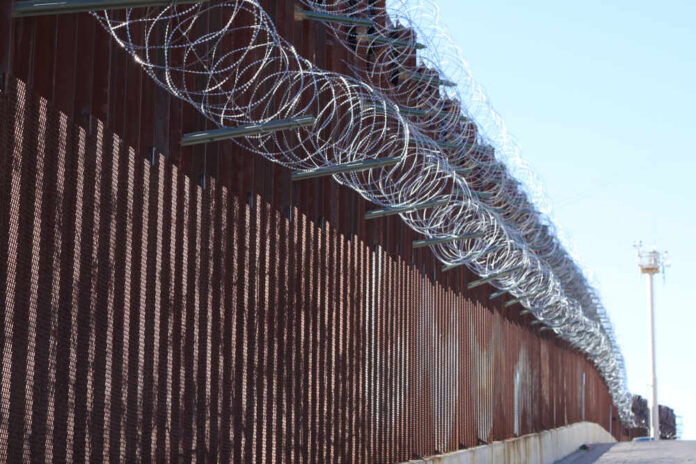
Customs and Border Protection later said plans would emphasize vehicle barriers, roads, and surveillance, not tall wall panels inside the park, yet critics pointed to bulldozers and fresh scars as proof the footprint was already too large. That split—what the papers say versus what the ground shows—set the stage for the pause.
Why Big Bend Became The Flashpoint
Five border sheriffs in the Big Bend region argued the landscape itself does the work: steep ranges, deep canyons, long desert stretches, and the Rio Grande block easy movement and already funnel traffic.
Terrell County Sheriff Thaddeus Cleveland, a Republican and former Border Patrol agent, said he backs border security but opposes vehicle barriers where a car cannot drive anyway. That stance undercuts the idea that more steel and roads automatically mean more security. It asks for fit, not symbolism.
Trump admin briefly pauses contentious border project in Texas' Big Bend National Park https://t.co/pI43L9tIIg pic.twitter.com/Gn21jKFLLK
— New York Post (@nypost) August 18, 2026
Former Big Bend National Park superintendents urged the Department of Homeland Security to reject waivers that let construction bypass environmental and cultural reviews.
Advocacy groups said crews tore through native plants and sensitive habitat and warned of damage to wildlife corridors and river access that drives local tourism. The message from park veterans and community voices was blunt: once you cut into Big Bend’s fabric, you do not stitch it back the same.
The Money, The Maps, And The Mixed Research
The $1.7 billion award and related Big Bend sector contracts formed a sweeping build plan, but basic questions lingered: what exactly would go where, and how would it be patrolled and maintained? Research on barriers offers a caution sign.
Studies note fences can reduce crossings in some places, yet results depend on terrain, manpower, and monitoring. Rugged ground makes barriers harder to watch and sometimes shifts crossings rather than stopping them outright. Big Bend is the poster child for that terrain challenge.
🇺🇲Border construction was halted today at Big Bend National Park, at least temporarily.
It just so happened that some of the park’s major attractions were in the way of a new patrol road and vehicle barriers being bulldozed along the southern border.
The work has drawn… pic.twitter.com/fOc7pLMVnW
— Mario Nawfal (@MarioNawfal) August 18, 2026
Common-sense priorities say: measure twice, cut once. Border security should follow the data, not the camera shot. If terrain already deters vehicles, vehicle barriers there add cost without gain.
If a patrol road opens smuggling lanes into backcountry, it harms security. If waivers speed work but erode public trust and spark court fights, the project loses time and support. Align the build with the mission: stop what is real, in the places it happens most, with tools that fit the ground.
What A Smarter Path Looks Like In Big Bend
Security planners can capitalize on natural chokepoints, add remote sensors and cameras where they can be monitored, and focus roads where agents truly need access. They can shift heavy construction away from the park’s most sensitive corridors and protect river access that sustains local economies.
They can also publish clear maps, explain impacts in plain language, and invite sheriff input on placement. That approach honors stewardship while tightening the net where it matters most.
Bottom Line
The pause buys time to fix the plan before dollars and dozers lock in mistakes. Big Bend’s grandeur is a national asset, and its terrain is already a security ally. The government should harness both.
Spend where return is highest, build where agents can hold ground, and avoid tearing up what nature already guards. That is not retreat. That is strategy worthy of the price tag—and the park.
Sources:
apnews.com, bigbendsentinel.com, fox26houston.com, washingtontimes.com, usnews.com, cnn.com, spectrumlocalnews.com, westernpriorities.org, newsweek.com, san.com